
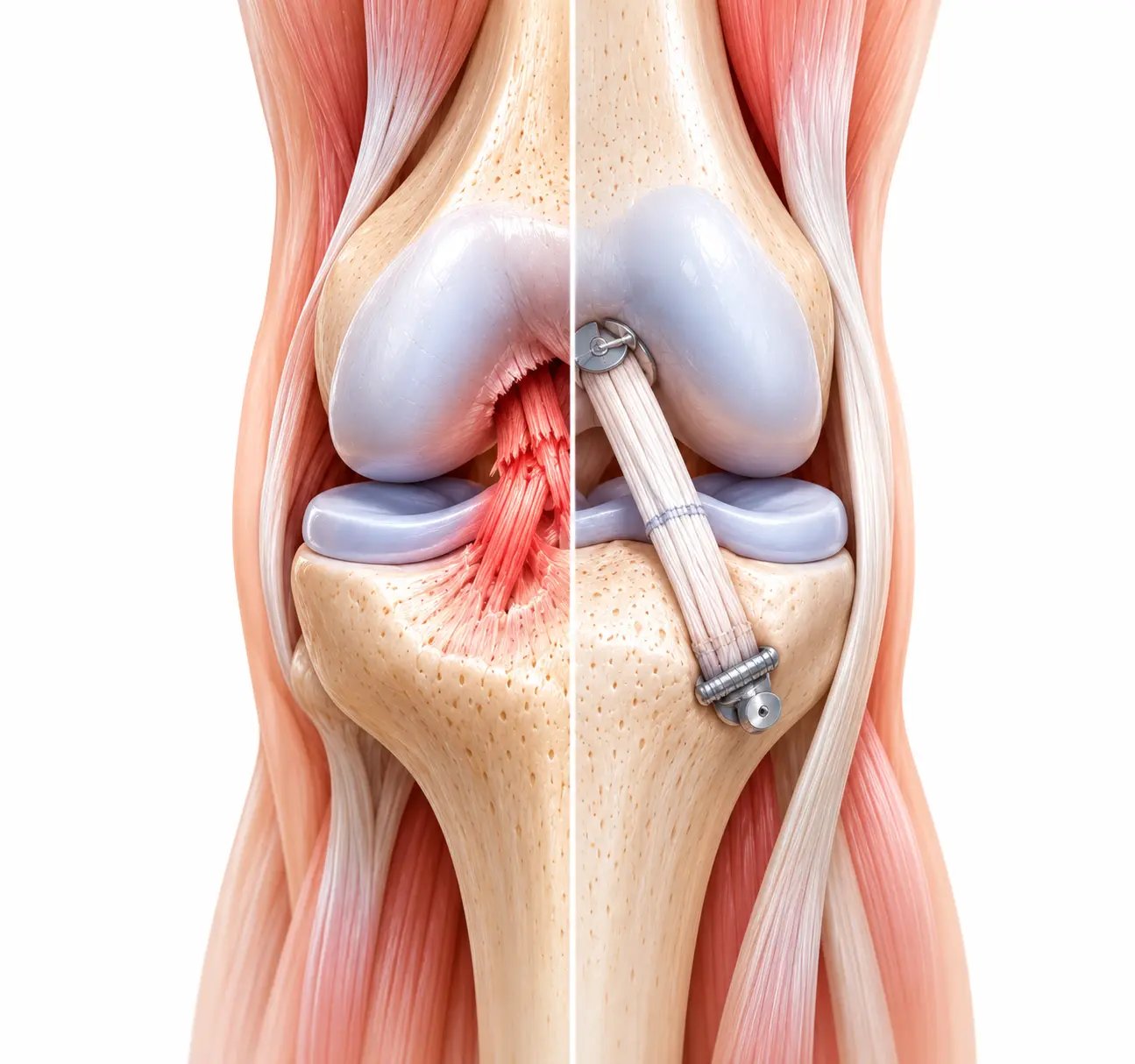
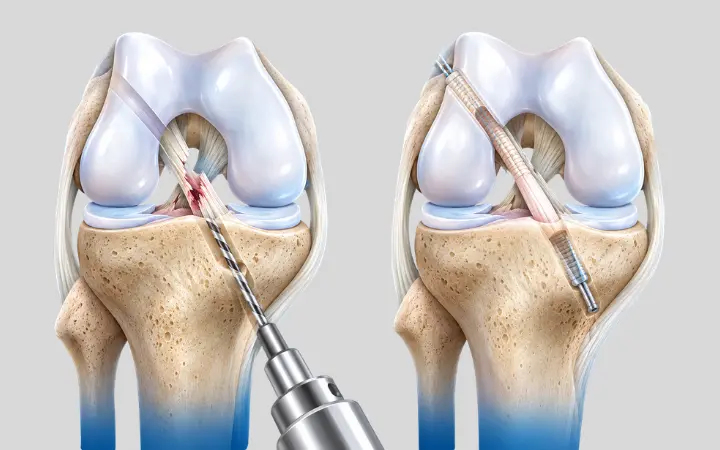
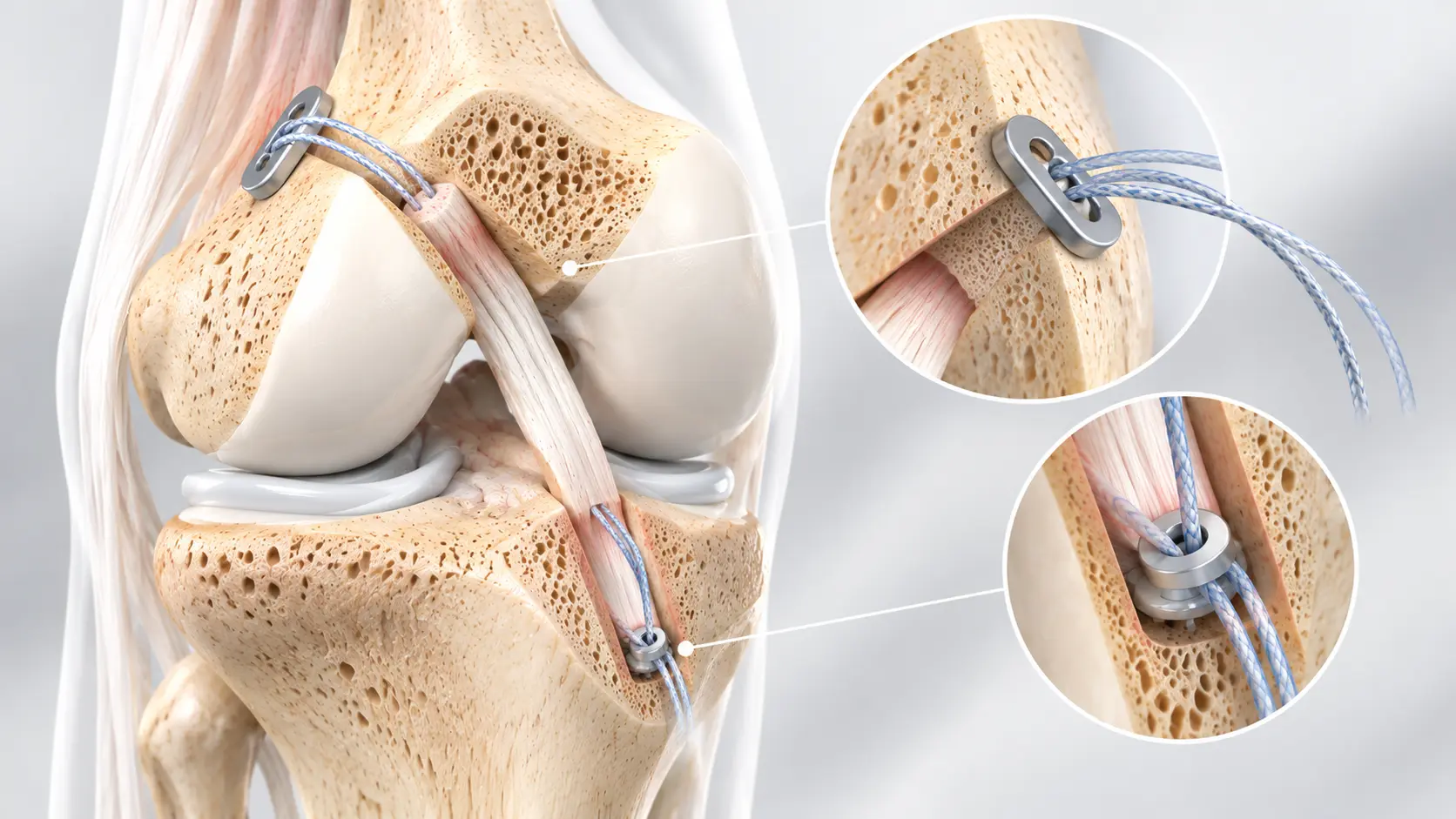

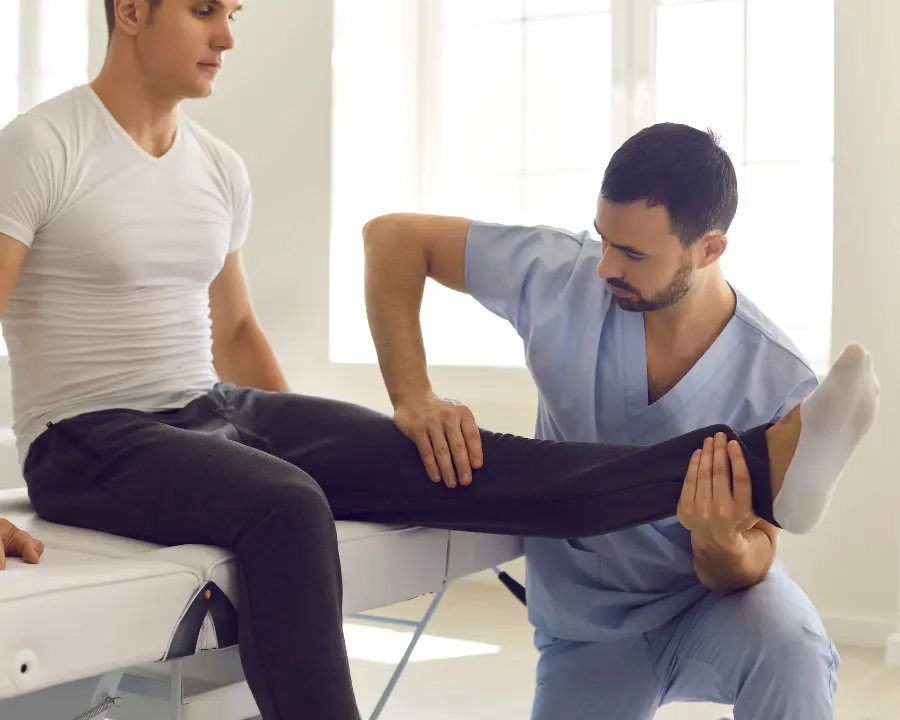

Hamstring Tendon Graft
The most widely used graft for ACL surgery. One or two tendons from the back of your own thigh are taken through a small cut, folded into a thick bundle, and become your new ligament.
Animation or OT footage showing the hamstring tendon being taken and folded into a graft.
What is a hamstring tendon graft?
At the back of your thigh are the hamstring muscles. Two of their tendons, the semitendinosus and the gracilis, run down past the inner side of the knee. These tendons are long, strong and not essential, which makes them well suited to becoming a new ACL.
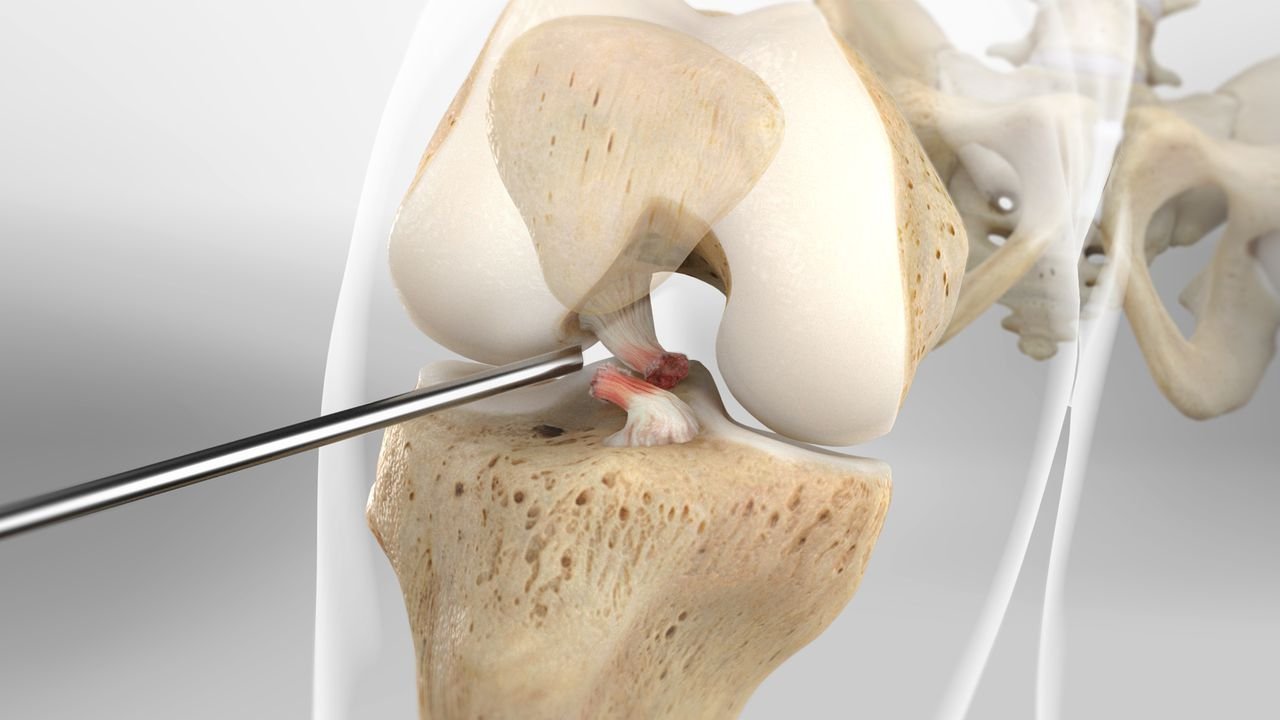
The tendon is taken through one small cut on the inner side of the leg, just below the knee. Nothing is cut from the front of your knee, which is the main practical difference between this graft and a patellar tendon graft.
In large national registries covering more than eighteen thousand patients, hamstring grafts and patellar tendon grafts had similar revision rates at two years. The choice between them is therefore less about which is stronger and more about which trade-offs suit your knee and your life.
Who this graft suits
Usually a good fit
- Most first time ACL reconstructions
- People who kneel, squat or sit on the floor regularly
- Patients who want the smallest possible scar
- Growing children and teenagers, since no bone is taken
- Anyone with a history of knee cap pain
May not be the first choice
- Athletes who depend heavily on hamstring power, such as sprinters
- Patients whose tendons are measured as too thin to make a thick graft
- Revision surgery where the hamstrings were already used
- Knees that are naturally very loose, where a stiffer graft may be chosen
- Where the surgeon prefers bone to bone healing for a specific reason
How the graft is taken
-
01
A small cut below the knee
A cut of about two to three centimetres is made on the inner side of the leg, just below the knee, where the tendons attach to the bone.
-
02
The tendon is freed and stripped
Side attachments are released and a tube shaped instrument is slid up along the tendon to release it cleanly from the muscle. Releasing those side attachments first is what prevents the tendon snapping short.
-
03
Muscle is cleaned off
The tendon is laid on a side table and the leftover muscle tissue is scraped away, leaving pure tendon that will heal into bone.
-
04
Folded and measured
The tendon is folded on itself four or five times and passed through sizing rings. This is the moment the graft thickness is confirmed, and it decides whether the second tendon is also needed.
-
05
Stitched and loaded
The ends are whip stitched and the fixation buttons or loops are attached, so the graft is ready before the tunnels are opened.
-
06
Kept under tension until use
The prepared graft is held under steady tension on the back table, which removes the slack so it does not stretch out once it is inside your knee.
A small nerve branch supplying skin runs across this area. A patch of numbness on the outer side of the scar is common after harvest, it is a skin sensation only, and it usually shrinks over the following months.
Why thickness matters
Of everything about this graft, thickness is the number that carries real weight. Registry data on more than eighteen thousand patients found that hamstring grafts under eight millimetres had a higher chance of needing revision surgery, and that risk fell steadily with every extra millimetre.
Under 8 mm
Associated with a higher revision rate. Surgeons work to avoid finishing here.
8 to 9 mm
The usual working range for most adults, with results comparable to other grafts.
10 mm and above
In the same registry data, the lowest early revision risk of all.
If one tendon does not give enough thickness, the surgeon can fold it five times instead of four, add the second tendon, or switch to a different graft altogether. This is judged on the table, which is why your consent form usually mentions more than one graft option.
Compare all graft and implant typesRecovery at a glance
Two things are specific to this graft. The back of the thigh feels tight and sore for the first few weeks, which settles with gentle stretching. And measured hamstring strength stays slightly below the other leg for several months, with most studies showing it largely recovering by around a year.
This is exactly why hamstring specific strengthening is built into the plan rather than left to chance, and why your return to sport is decided by strength testing rather than by the date.
Open the full recovery roadmapBenefits and trade-offs
Benefits
- Nothing is taken from the front of the knee, so kneeling stays comfortable
- One small scar, well hidden on the inner side of the leg
- No bone is removed, so it suits growing knees
- Revision rates comparable to patellar tendon grafts in registry data
- Thicker grafts had the lowest revision risk of any graft in that data
Trade-offs to know
- Measurable hamstring weakness for several months after surgery
- A patch of numbness near the scar, which may be permanent
- Thickness is only known during surgery, not before
- Tendon heals into bone more slowly than a graft with bone ends
- Deep bending may feel tight in the early weeks
The short version is that this graft moves the cost of surgery from the front of your knee to the back of your thigh. For most people that is a good trade, because thigh strength is trainable while front of knee pain, once it settles in, is hard to treat. For a sprinter or a hurdler, the calculation can go the other way.
Cost of this graft
Your reconstruction cost. The graft itself is your own tissue, so there is no separate graft charge.
This is one of the reasons hamstring grafts are so widely used in India. There is no purchase cost for the tissue, unlike donor grafts, so the bill is driven by the implants and the hospital stay rather than by the graft. Most health insurance policies cover ACL surgery after their waiting periods, and our team can help you with the paperwork.
Common questions
Will my hamstring be permanently weak?
Measured strength is lower for several months and most studies show it largely recovering by about a year, particularly with proper strengthening. Day to day activity is not affected. Athletes who rely on explosive hamstring power should discuss this specifically.
Does the tendon grow back?
In many patients a tendon like structure does reform along the old path over the following months. It is not identical to the original, which is part of why strengthening work still matters.
Why is there a numb patch near my scar?
A small skin nerve branch crosses the harvest area and is often stretched or cut. The result is numbness on the outer side of the scar. It affects sensation only, not movement or strength, and usually shrinks over time.
Can I still sit cross legged and squat on the floor?
Yes, once you have healed. This graft is often preferred for exactly this reason, because nothing is taken from the front of the knee, which is the part that complains when you kneel or squat.
What if my tendon turns out to be too thin?
The surgeon folds it an extra time, adds the second hamstring tendon, or uses a different graft. This is decided during surgery once the thickness is measured, which is why your consent covers more than one option.
Is hamstring better than patellar tendon?
Neither is better overall. In large registry data their revision rates were similar. Hamstring avoids front of knee pain and leaves a smaller scar, patellar tendon heals bone to bone. The right answer depends on your sport, your work and your knee.
This page explains a graft option in general terms. Which graft suits your knee is decided after a clinical examination and MRI with an experienced ACL surgeon in Indore, and is confirmed during surgery.

Dr. Prince Uchadiya

Thank You,
Patient!
Your appointment request has been received.
Our clinic team will call you shortly to confirm your consultation and share further details.
 Confirm on WhatsApp
