

ACL With Outer Side Augmentation
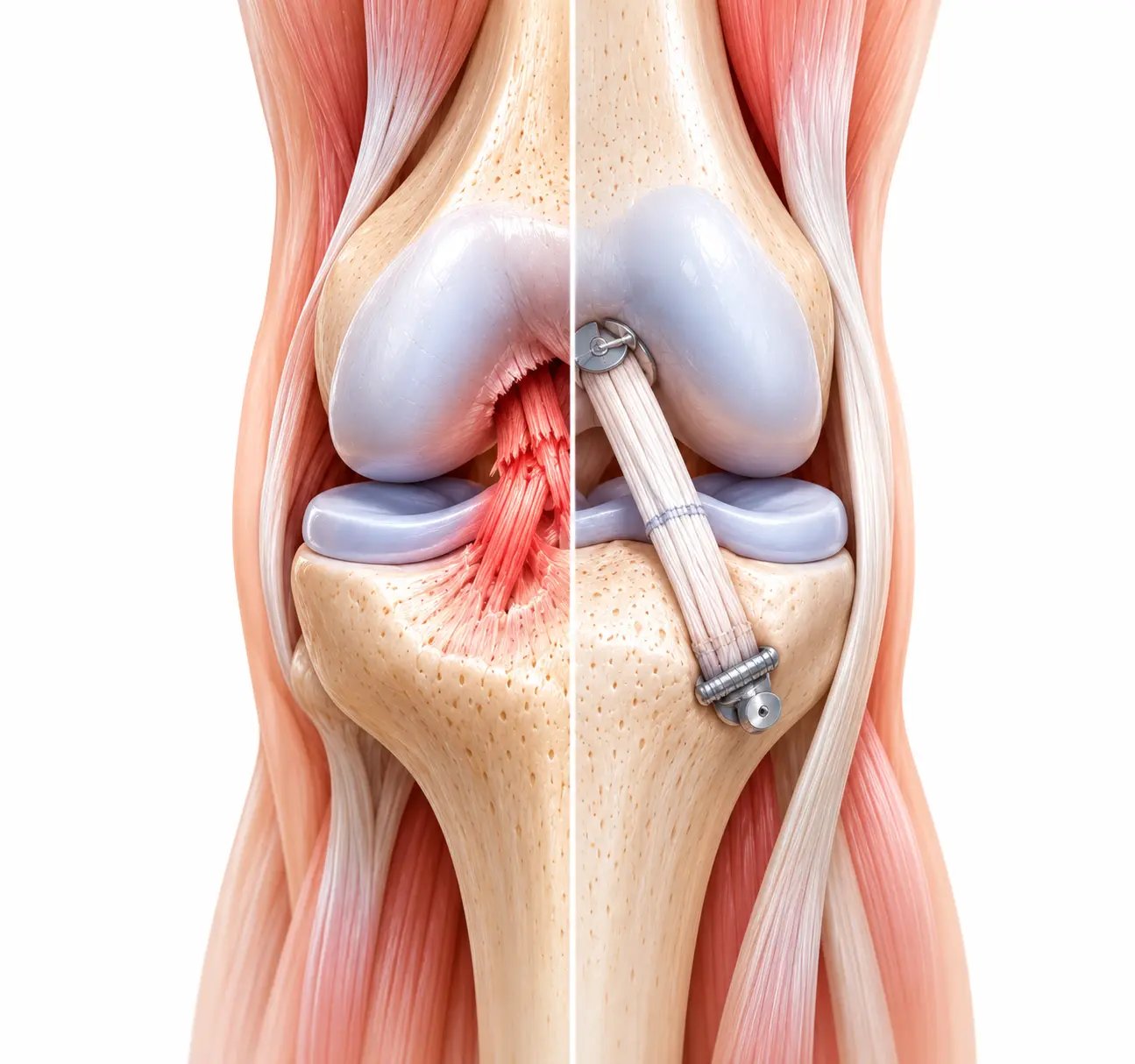
A small extra procedure on the outside of the knee, done along with your ACL surgery. It controls the twisting that the ACL graft alone may not fully hold, and in young pivoting athletes it has been shown to cut the re-tear rate.
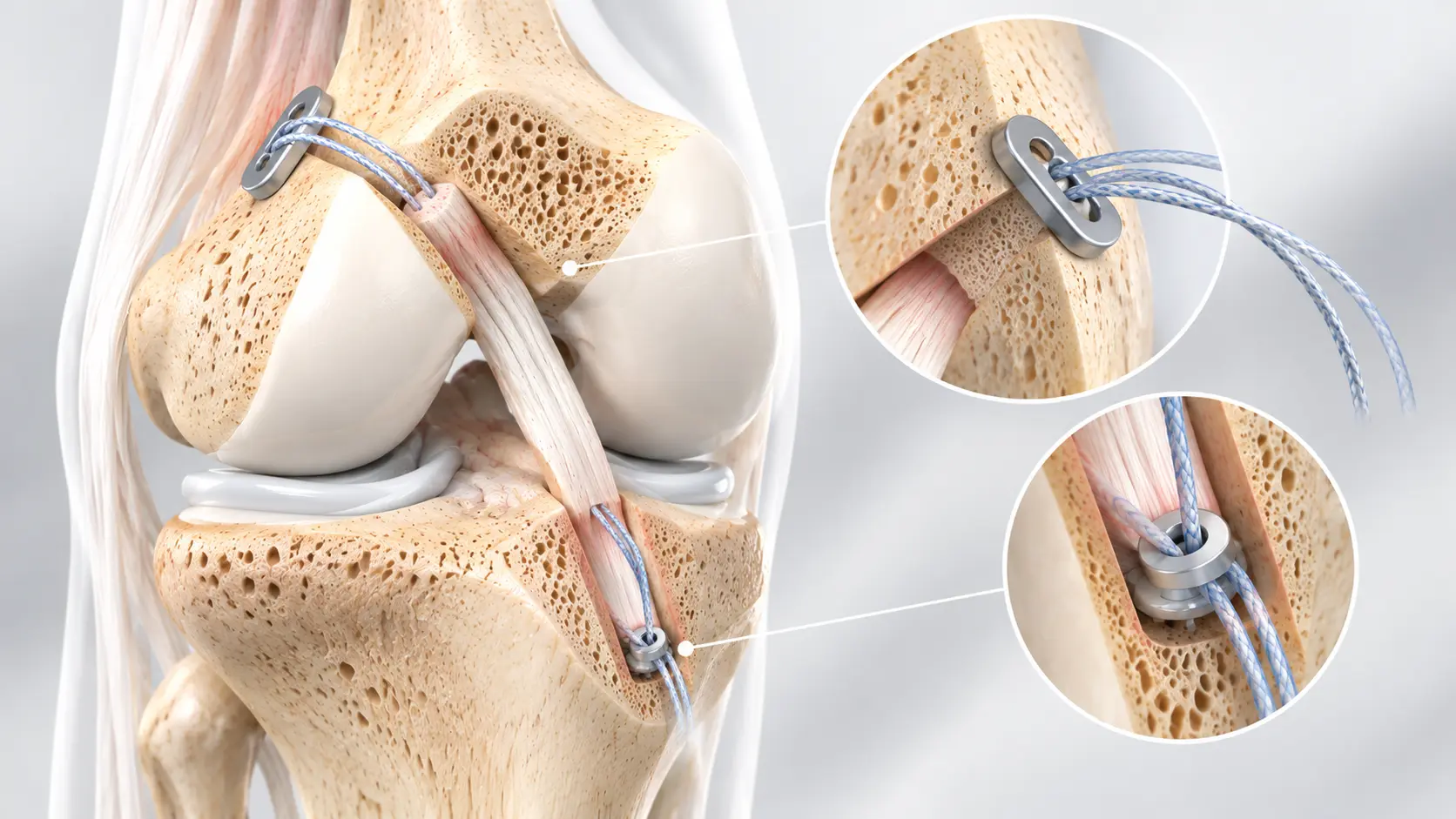
Animation or OT footage showing the outer side band being routed and fixed alongside the ACL graft.
What is outer side augmentation?
The ACL sits in the middle of the knee and is very good at stopping the shin sliding forward. Twisting is controlled partly by structures on the outer side of the knee. When those are also stretched, an ACL graft on its own can be left doing a job it was not built for.
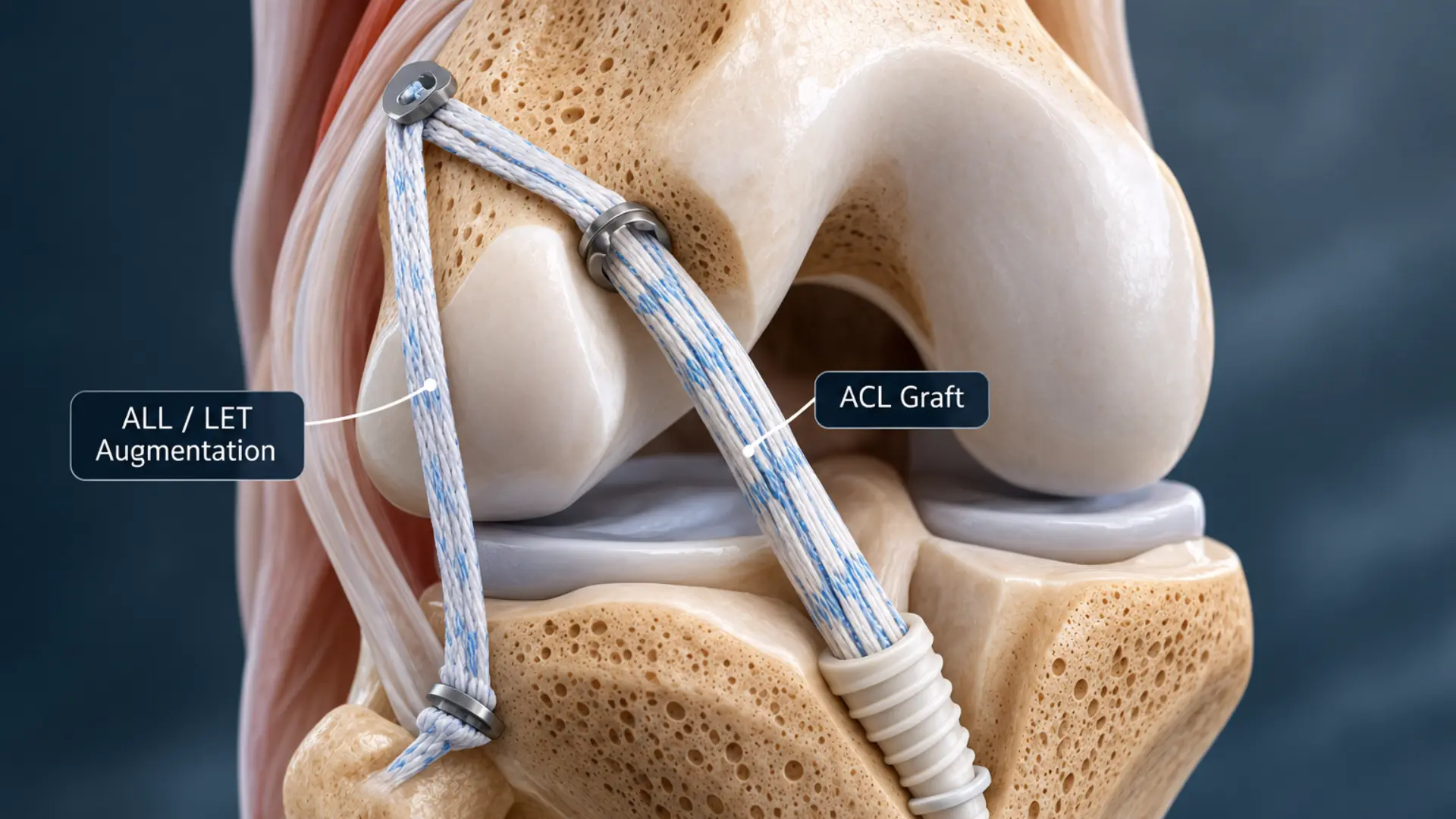
There are two ways to build it. In the commoner one, a thin strip of the thick tissue that already runs down the outer thigh is left attached at the bottom, passed under the outer ligament and fixed to the thigh bone. In the other, a separate small graft is used to rebuild a specific structure called the anterolateral ligament. Both aim at the same thing, better control of twisting.
The reason this technique gets attention is a large randomised trial in young athletes. Adding this outer side procedure cut graft rupture from about eleven percent to about four percent at two years, and cut persistent rotational looseness from forty percent to twenty five percent. That is a meaningful difference in the right patient.
Who this technique suits
This is for knees at high risk of a second tear, not for every ACL. The trial that proved its value selected patients who had at least two of the first three features listed below.
Usually a good fit
- Young patients, roughly in the fourteen to twenty five age range
- Competitive pivoting sport such as football, kabaddi or basketball
- A knee that shows marked twisting looseness on examination
- Naturally loose joints, or a knee that bends backwards past straight
- Revision ACL surgery, where the first graft has already failed
May not be needed
- Older patients with moderate activity and a stable feeling knee
- Little or no rotational looseness when the knee is examined
- Revision cases where simply correcting tunnel position is enough
- Patients who want to avoid a second scar on the outer side
- Any active infection or skin problem over the outer knee
How the surgery is done
-
01
Anaesthesia and rotation check
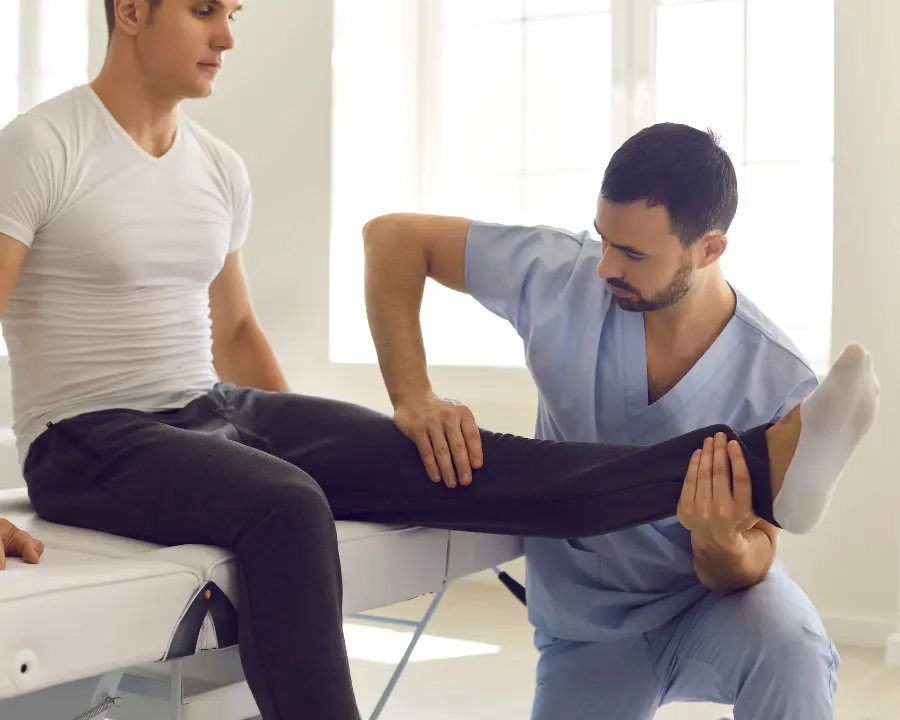
Under spinal or general anaesthesia the knee is tested for twisting looseness. This test is much clearer when the muscles are relaxed, so it often confirms the plan made in the clinic.
-
02
The ACL is reconstructed first
The usual keyhole reconstruction is completed, with the graft placed and the tunnels prepared as planned. The outer side work is added on top of a finished ACL, not in place of it.
-
03
A small cut on the outer side
A separate cut of a few centimetres is made over the outer part of the knee to reach the thick band of tissue that runs down the thigh.
-
04
A strip is raised and routed
A narrow strip is cut from that band and left attached at its lower end. It is passed underneath the outer side ligament of the knee, which sets the angle it will pull from.
-
05
Fixed with the knee bent
The strip is turned back and fixed to the thigh bone with the knee bent and the foot held neutral. Tension here is deliberately gentle, because pulling it tight can over-tighten the outer compartment.
-
06
Rotation rechecked and closure
The twisting test is repeated to confirm the knee no longer shifts, and full bending and straightening are checked before both cuts are closed.
Over-tightening is the error this technique is judged by. Fixed too tight, the outer compartment carries more pressure than it should, which is the reason surgeons tension it gently and recheck movement before closing.
Which graft is used
The outer side work usually needs no new tendon from elsewhere, and it can be combined with whichever graft is chosen for the ACL itself.
Strip of your own outer band
The usual method. A narrow strip is taken from tissue already on the outer thigh.
A separate small graft
Used when the anterolateral ligament is rebuilt as its own structure, with its own tunnels.
Any ACL graft alongside
Hamstring, peroneus longus, quadriceps or patellar tendon can all be used for the ACL itself.
Recovery at a glance
Expect the first three months to feel a little sorer on the outer side than an ACL surgery alone. In the trial, scores in the augmented group were slightly lower at three and six months and had caught up completely by twelve months, with return to sport on average about a month later.
Open the full recovery roadmapBenefits and trade-offs
Benefits
- Graft rupture fell from about eleven to about four percent in high risk young athletes
- Persistent twisting looseness fell from about forty to twenty five percent
- Takes load off the ACL graft during the months it is healing
- Widely used in revision surgery, where risk is already higher
- Usually needs no tendon from a new site
Trade-offs to know
- A second small scar on the outer side of the knee
- More soreness in the first three months than ACL surgery alone
- Irritation from the fixation was more common, and a few patients needed it removed
- Slightly longer surgery and higher cost
- Long term effect on the outer compartment is still being studied
The evidence is strongest where it was tested, which is young high risk patients having a hamstring graft. For an older patient with a stable feeling knee and no twisting looseness, the extra scar and soreness buy very little. This is a decision we make from your examination, not from your age alone.
Cost of this surgery
Your ACL reconstruction cost plus the fixation used on the outer side and the extra operating time.
Because the outer side strip usually comes from your own tissue, the added cost is mainly the fixation and theatre time. Most health insurance policies cover ACL surgery after their waiting periods, and our team can help you with the paperwork.
Common questions
Why does my knee need something extra on the outside?
Because a bad twisting injury often stretches more than the ACL. If the outer side structures are also loose, the new ACL graft takes more twisting load than it is designed for, which raises the chance of it tearing again.
How do you decide if I need it?
Mainly from the examination. We look at how much your knee shifts on a rotation test, whether your joints are naturally loose, your age and the sport you want to return to. The test under anaesthesia confirms it before we proceed.
Will I have another scar?
Yes, a small one of a few centimetres on the outer side of the knee. This is the main visible difference compared with a standard ACL reconstruction.
Will my knee feel stiff or too tight?
It should not. The band is tensioned gently and the knee is moved on the table before closing. In the trial, bending and straightening at two years were the same as in patients who did not have it.
Does the fixation ever need removing?
Occasionally. Irritation from the fixation on the outer side was a little more common in the trial, and a small number of patients had it removed as a minor day procedure.
Could it cause arthritis in the outer side later?
This is the open question. Some imaging studies show changes in the outer compartment, others show very little, and we do not yet have long term answers. It is one more reason to reserve the technique for knees that genuinely need it.
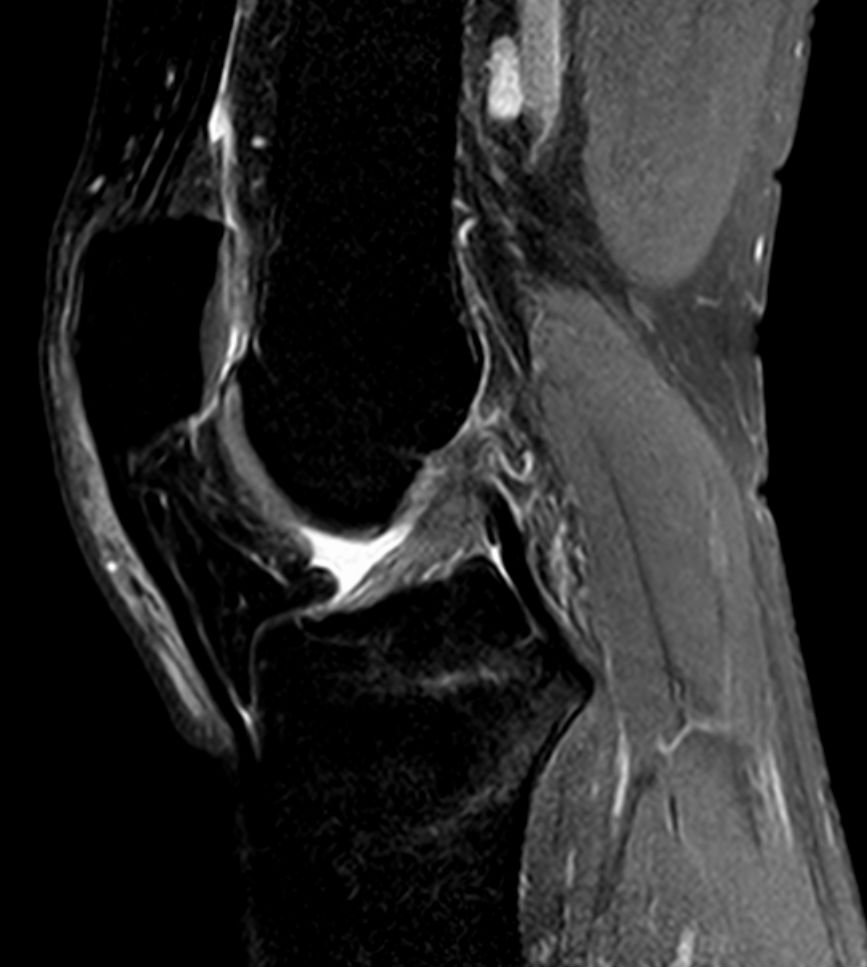
This page explains a surgical technique in general terms. What suits your knee is decided after a clinical examination and MRI review with a specialist ACL and sports injury surgeon in Indore.


Dr. Prince Uchadiya

Thank You,
Patient!
Your appointment request has been received.
Our clinic team will call you shortly to confirm your consultation and share further details.
 Confirm on WhatsApp
