

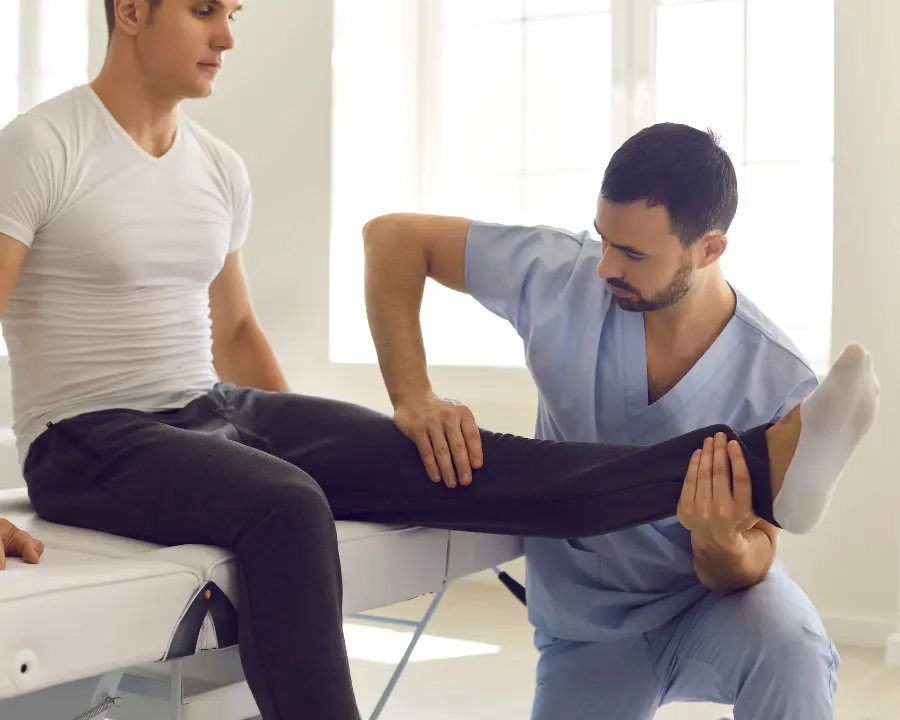

Suture Tape
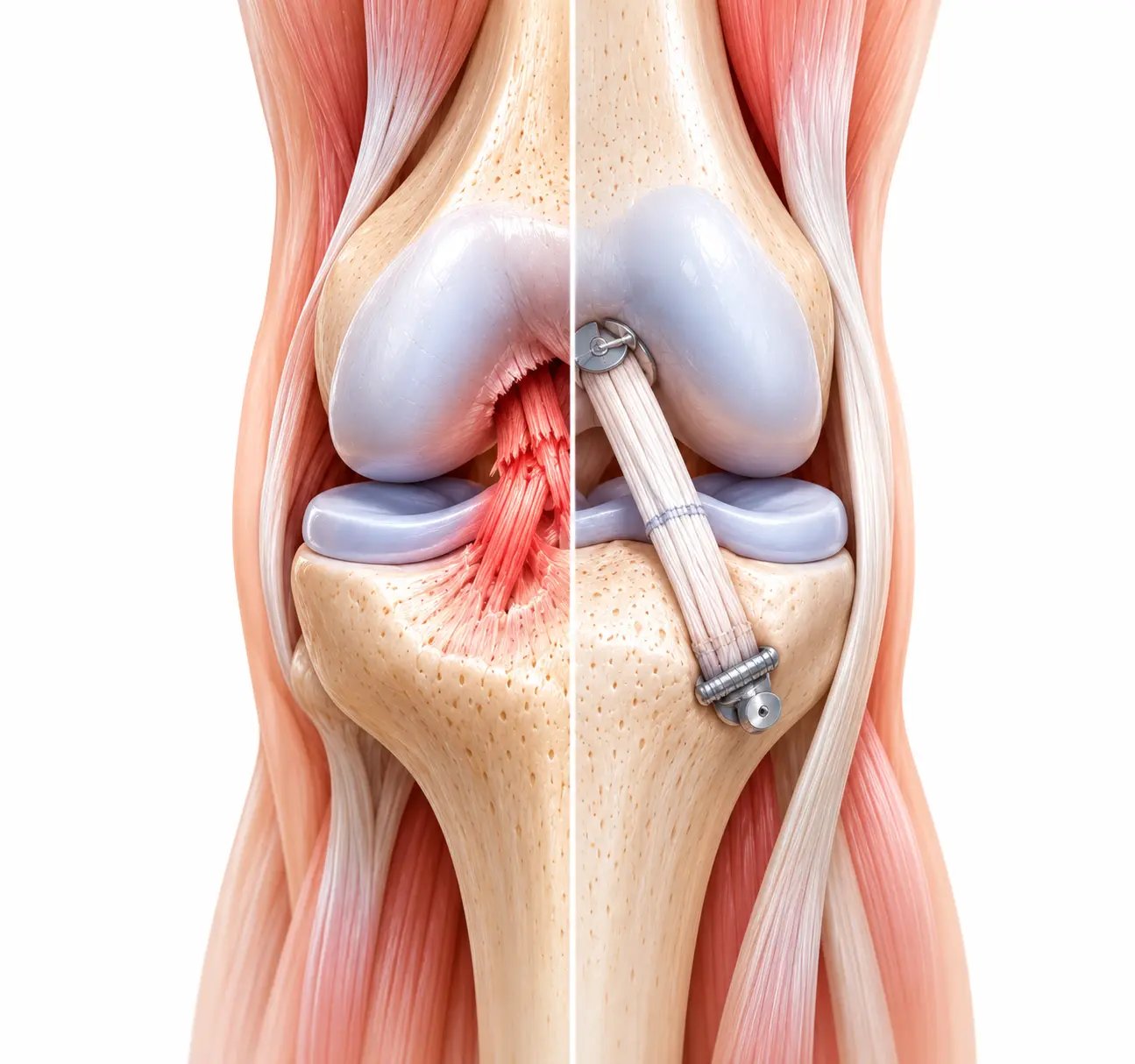
A flat, ribbon shaped braid of very strong fibre, about as wide as a shoelace tip. It is used to protect or reinforce tissue that is healing, rather than to replace it.
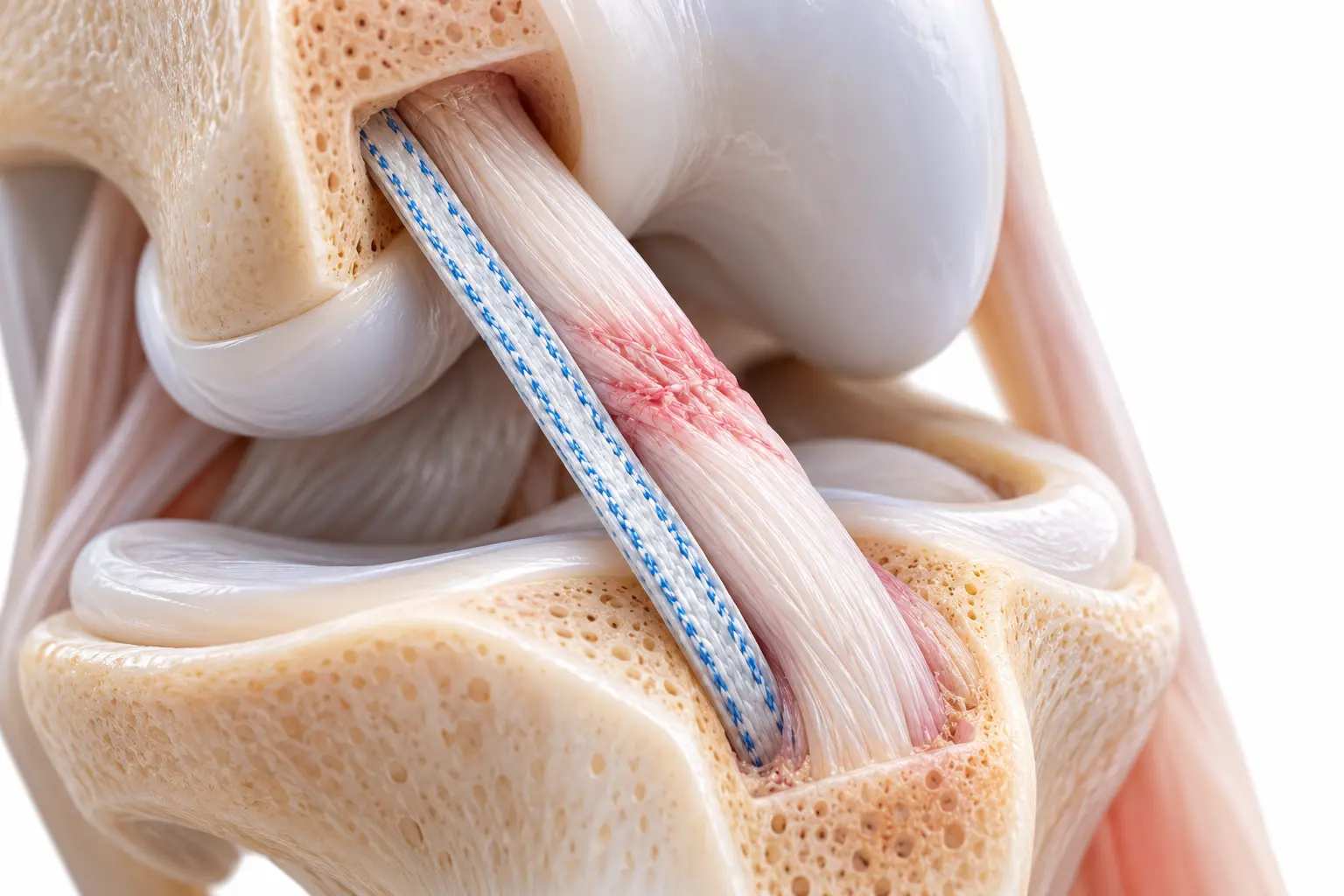
What is suture tape?
Ordinary surgical thread is round. Suture tape is the same family of material woven flat instead, into a thin ribbon. That single change in shape is the reason it exists.
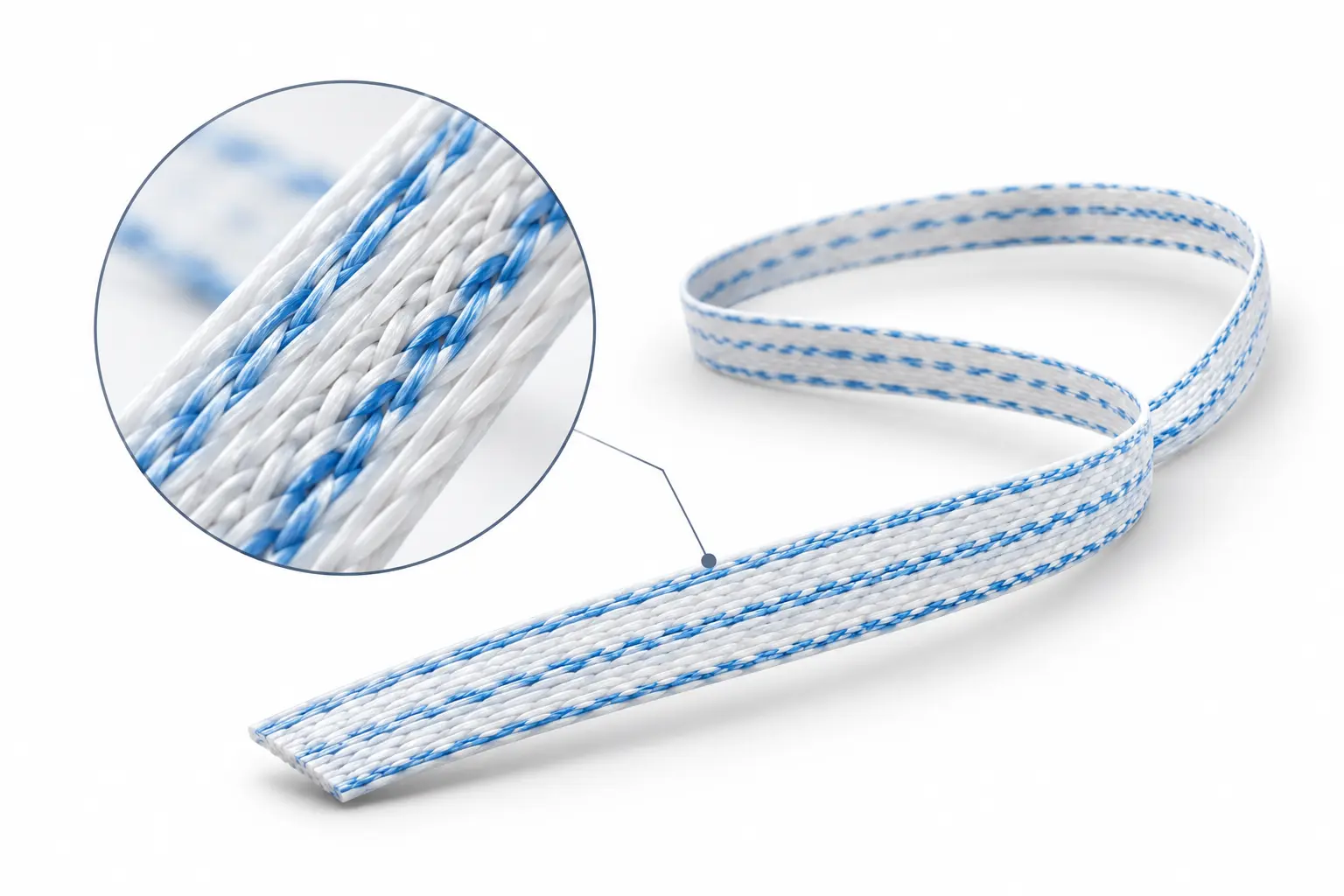
The material itself is an ultra strong woven fibre, far stronger than the tissue it sits beside. That is deliberate. The tape is not meant to share the work equally with your ligament, it is meant to catch the sudden loads that the healing tissue cannot yet take.
This is worth being clear about, because the name confuses people. Suture tape is not an artificial ligament and it is not a graft. It is a seat belt. Your own tissue, or your graft, remains the thing that does the long term job.
Where it is used in the knee
Commonly used for
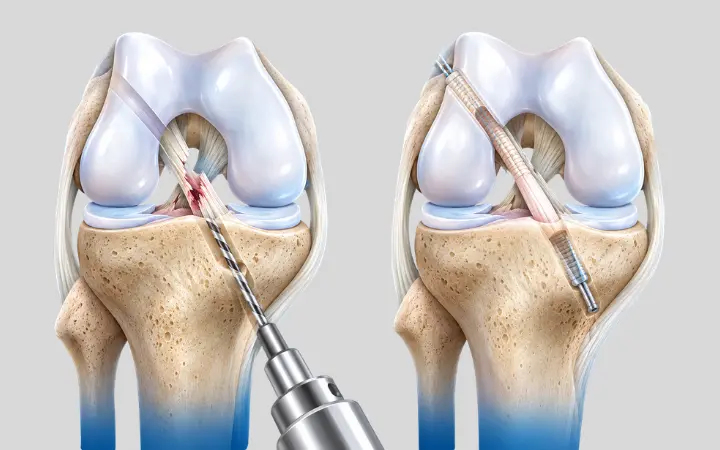
- Internal brace augmentation alongside an ACL graft
- Primary ACL repair, protecting the stitched ligament while it heals
- Pulling a torn meniscus root back to its attachment
- Reinforcing a repaired inner side ligament of the knee
- Ankle and other ligament repairs outside the knee
Not used for
- Replacing a torn ligament on its own, as a synthetic substitute
- Cases where the surgeon judges the graft needs no protection
- Patients who prefer the least possible permanent material
- Situations where the anchor cannot grip, such as very soft bone
- Any knee with active infection
How the tape is placed
-
01
The main repair is completed first
The graft is placed, or the ligament is stitched, before the tape is thought about. The tape is always an addition to a finished repair, never a substitute for one.
-
02
The tape is loaded at the top end
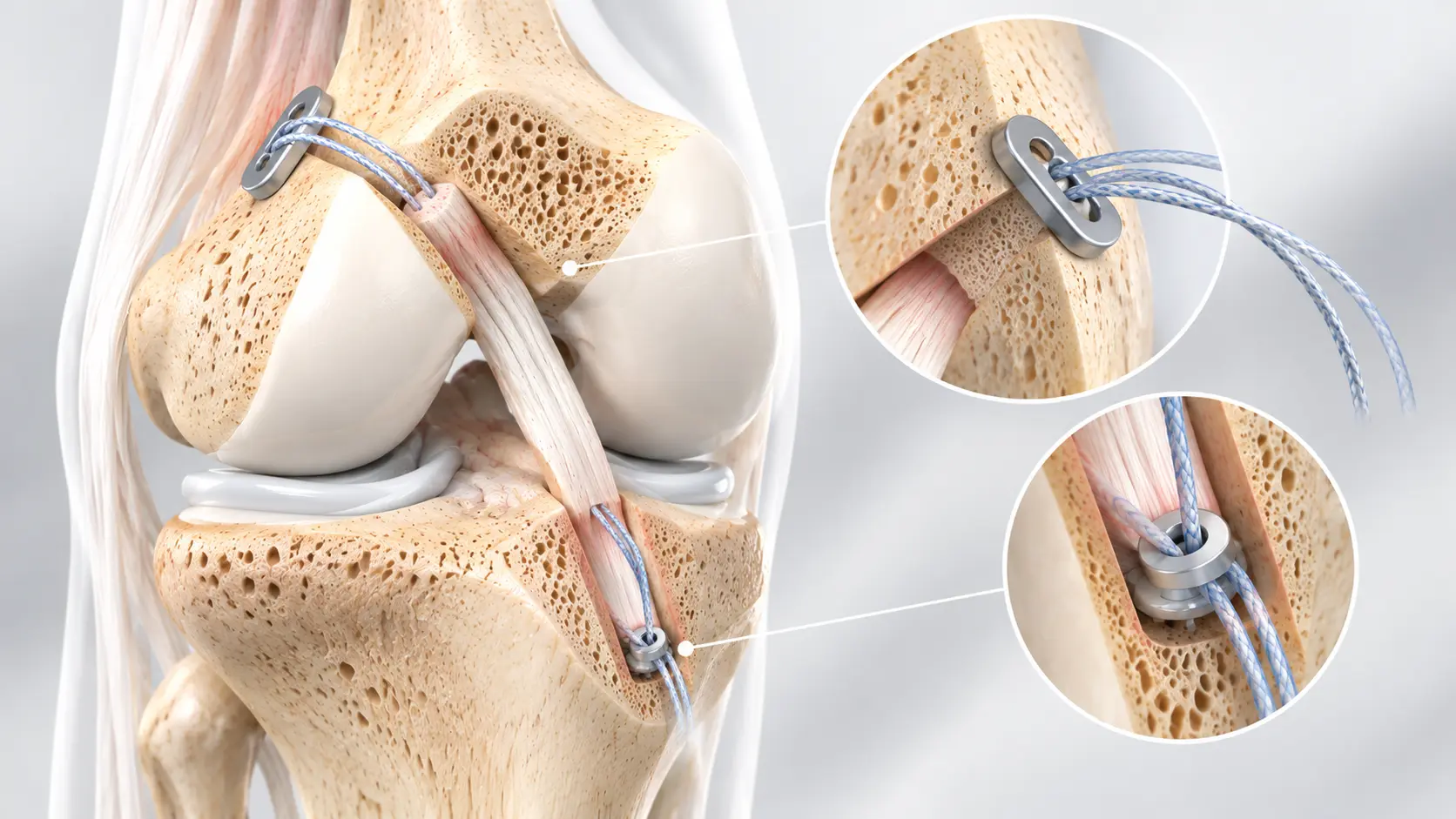
It is threaded through the same button that holds the graft, or fixed into the bone with its own small anchor, so it runs beside the tissue rather than through it.
-
03
The knee is positioned
For an ACL brace the knee is held straight before the lower end is fixed. The position at this moment decides how the tape will behave through the whole range of movement.
-
04
The lower end is anchored
A small anchor is placed into the shin bone and the tape is secured to it, snug but deliberately not tight.
-
05
Movement is checked
The knee is bent and straightened fully to confirm the tape is not restricting it and that the graft is still taking its share of the load.
-
06
Ends trimmed and closed
Loose ends are cut short so nothing rubs inside the joint, and the knee is closed.
Snug, not tight, is the whole art of this implant. Too loose and it does nothing. Too tight and it takes load away from the graft, which can slow the graft's own healing, or it can limit full movement. This is the single step that separates a good internal brace from a poor one.
Tape, stitch and anchor
These three words often appear together in operation notes, and they are not the same thing.
Round suture
Standard thread for stitching tissue to tissue. Strong, but concentrates its pull on a narrow line.
Suture tape
Flat ribbon that spreads load. Used when something must be held over months, not just tied.
Anchor
The small plug set into bone that the tape or suture is fixed to. It is what gives the tape something to pull against.
On the evidence, suture tape augmentation of an ACL reconstruction has an encouraging but not settled record. Pooled analysis of hamstring graft studies has reported fewer graft failures with the tape and no increase in complications, and a five year series using independently tensioned tape reported a very low re-rupture rate. Against that, studies in adolescents have not shown a clear reduction in failure. The reasonable position is that it is a sensible extra layer for a knee at higher risk, not a guarantee for everyone.
Compare all graft and implant typesWhat this implant means for your recovery
The tape earns its place in the middle of that timeline, not at the start. A new graft is strongest on the day it is fixed, then the body begins remodelling it and it temporarily weakens before it strengthens again. The tape is there to cover that dip.
Here is the part patients most often get wrong. Having a tape in your knee does not let you return to sport sooner. It protects the graft while it heals at its own pace. Your milestones and your return to sport testing do not change.
Open the full recovery roadmapBenefits and trade-offs
Benefits
- Protects the graft during the weeks when it is weakest
- Flat shape spreads load instead of cutting into tissue
- Fewer graft failures reported with hamstring grafts in pooled data
- May allow a slightly smaller graft, so less tissue is taken
- Versatile, with the same material used for meniscus and other ligaments
Trade-offs to know
- An extra implant, which adds to the cost
- Permanent synthetic material inside the knee
- If tensioned too tightly it can shield the graft or limit movement
- No clear benefit shown in adolescent studies
- Most evidence is short to medium term
Worth separating two uses, because they are judged differently. In a primary ACL repair the tape is close to essential, since a stitched ligament has very little strength of its own and needs protection to survive. In a reconstruction it is optional, an extra layer chosen for knees at higher risk of a second tear rather than for everybody.
Cost of this implant
Tape plus the anchor needed to secure it. This sits on top of your reconstruction cost.
Because this is an addition rather than a core part of the operation, it is worth seeing it as a separate line in your estimate. Ask what the tape and anchor add, and why they are being recommended for your knee. Most health insurance policies cover implants as part of the procedure, and our team can help you with the paperwork.
Common questions
Is this an artificial ligament?
No. Artificial ligaments were designed to replace the ACL entirely and have a poor long term record. Suture tape does the opposite job. It protects your own graft or ligament while that tissue heals and takes over.
Is it metal? Can I have an MRI?
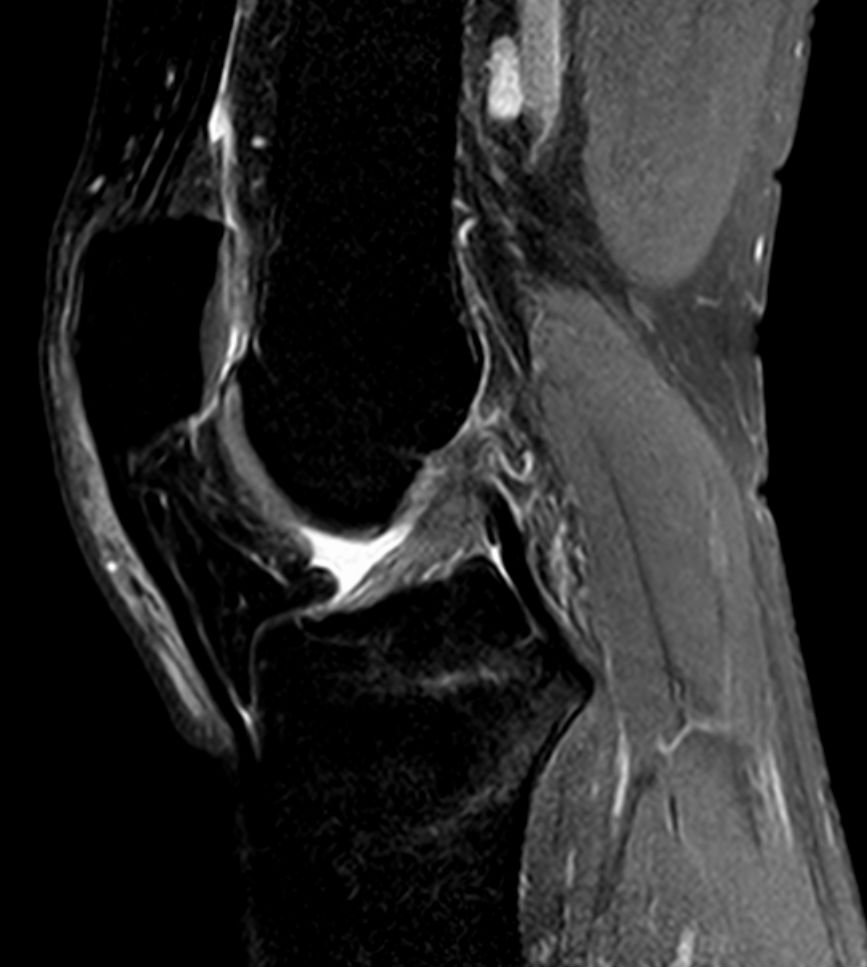
The tape itself is a woven fibre, not metal. The anchor holding it may be plastic, absorbable material or metal depending on what is used. All of them are safe in an MRI scanner.
Will it make my knee stiff?
It should not. The tape is tensioned with the knee in a set position and deliberately left snug rather than tight, and full bending and straightening are checked on the table before closing.
Does it mean I can start running earlier?
No. It protects the graft while it heals, it does not speed up healing. The nine month sport milestone and the strength testing before clearance stay exactly the same.
Will it be removed later?
Usually not. It is designed to stay permanently and patients rarely need anything done about it afterwards.
Should I ask for it to be added?
Ask whether it is right for you rather than asking for it by name. It makes most sense in a repair, in revision surgery, in young pivoting athletes and where the graft is on the thinner side. For a straightforward reconstruction in a lower risk patient, it may add cost without adding much.
This page explains an implant in general terms. Whether your ligament needs suture-tape reinforcement depends on your graft, tissue quality, and re-injury risk, and is decided with a top ACL surgeon in Indore.

Dr. Prince Uchadiya

Thank You,
Patient!
Your appointment request has been received.
Our clinic team will call you shortly to confirm your consultation and share further details.
 Confirm on WhatsApp
