



Can a meniscus tear be repaired?
Many can, and it is worth asking for. Whether yours can comes down to where the tear sits, what shape it is, and how long it has been there.

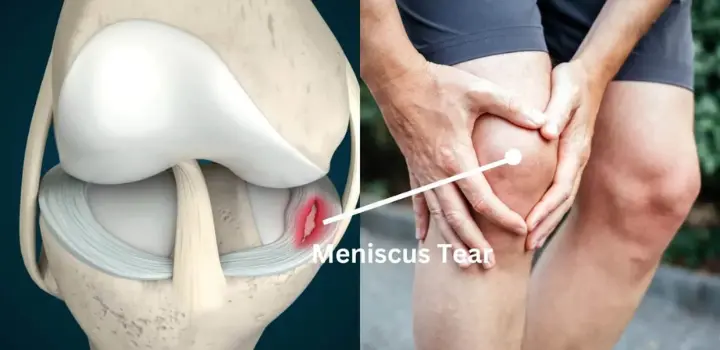
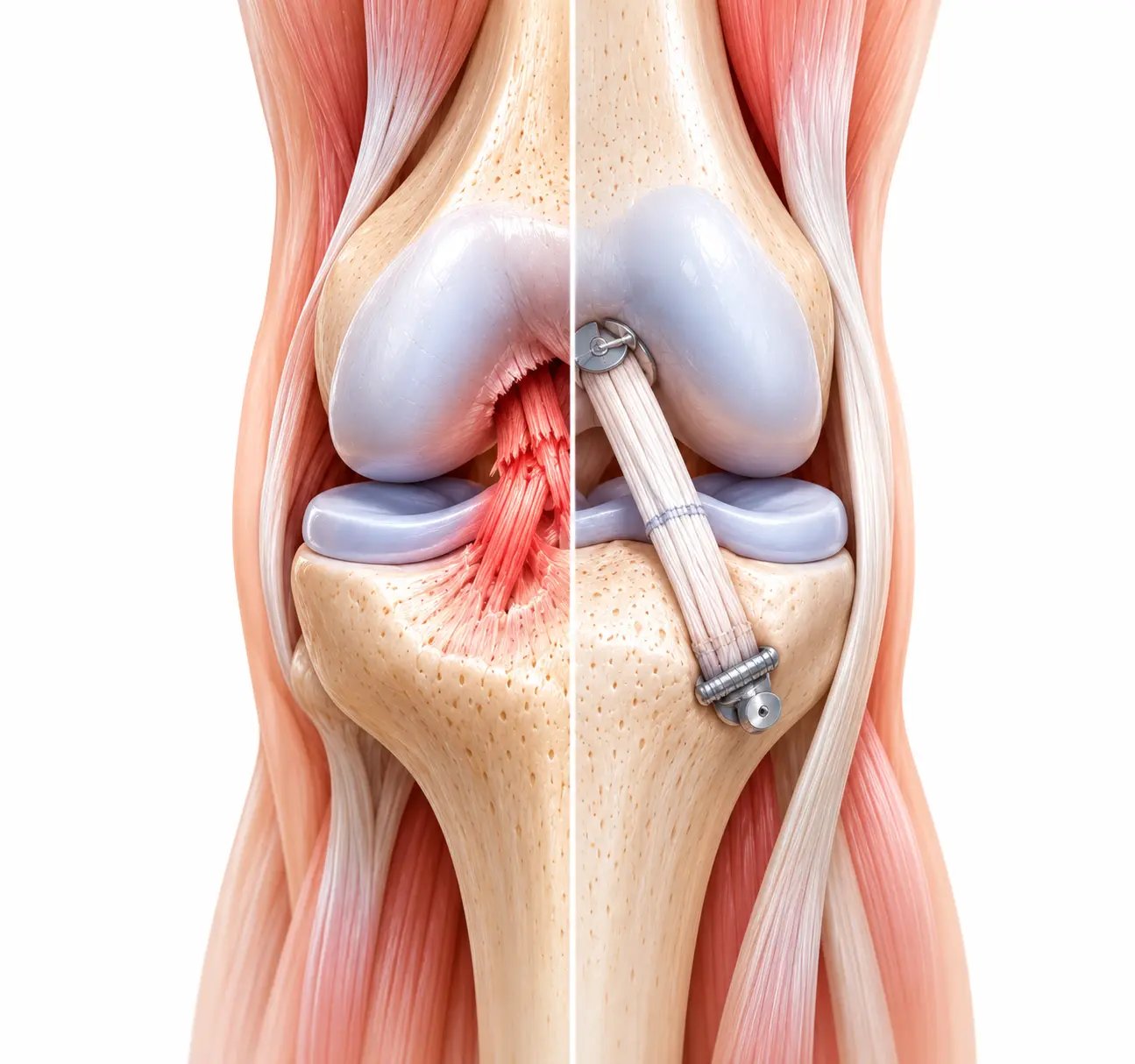
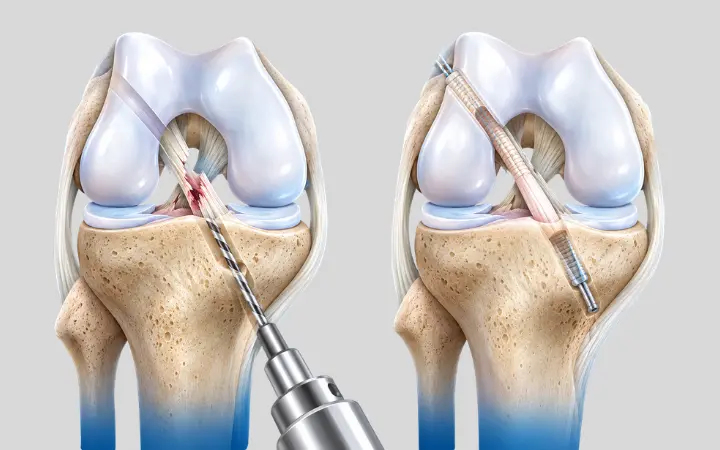
Yes, many meniscus tears can be repaired, meaning stitched back together rather than trimmed away. Whether yours is one of them depends mainly on where it sits, because only the outer part of the meniscus has a blood supply.
This matters more than most patients realise. The meniscus is your knee's shock absorber, and once a piece is removed it does not grow back. Removing it relieves symptoms quickly, but it raises the load on the cartilage underneath for the rest of your life.
There is a catch worth knowing upfront. Repair takes longer to recover from than trimming, often four to six months instead of four to six weeks. That trade is usually worth it when you are young. It is not always worth it when you are not.
Why saving the meniscus matters
Each knee has two menisci, C-shaped wedges of tough cartilage sitting between the thigh bone and the shin bone. They are not spare parts. They do a specific mechanical job.
- They spread the load. The rounded end of the thigh bone sits on a nearly flat shin bone. The meniscus fills that mismatch and spreads your body weight across a much wider area.
- They absorb shock. Every step, jump and landing passes through them.
- They add stability. The inner meniscus in particular acts as a secondary restraint, which is why it takes extra strain in an ACL deficient knee.
Take a piece away and the load that was spread over a wide area concentrates onto a smaller patch of cartilage. The knee feels fine afterwards, often for years. The consequence shows up much later, as wear in exactly that spot.
Trimming solves today's symptom. Repairing protects the next thirty years. That is the whole decision in one sentence.
This is why surgical thinking has shifted. A generation ago, torn meniscus tissue was routinely trimmed because it was quicker and recovery was faster. Long term follow up of those patients changed the profession's mind. Today the question a good surgeon asks first is can this be saved, and trimming is what happens when the answer is no.
The blood supply map
Here is the single fact that explains most repair decisions. Blood reaches only the outer rim of the meniscus. Tissue with blood can heal. Tissue without it cannot, however neatly it is stitched.
This is also why age matters. Blood supply to the meniscus reduces over the years, so a tear in the same position has a better chance of healing in a twenty year old than in a fifty five year old. It is not that older patients are refused repair. It is that the tissue behaves differently.
Surgeons can also help the biology along, for example by gently abrading the rim or creating small channels to bring blood into the repair site. These techniques widen the range of what is repairable, but they do not abolish the map.
Which tear patterns can be repaired
Your MRI report almost certainly names the pattern. Here is what each one usually means for repair.
Scroll the table sideways to see all columns.
| Tear pattern | Repairable | What it means |
|---|---|---|
| Longitudinal or vertical | Usually yes | A split running along the length of the meniscus, often in the outer zone. The classic repairable tear. |
| Bucket handle | Usually yes | A long tear where the fragment flips into the joint and can lock the knee. Repairable, and needs attention quickly. |
| Root tear | Yes, and should be | The meniscus detaches from its bony anchor. Left alone it stops working altogether, so repair matters a great deal here. |
| Radial | Sometimes | Cuts across the fibres and disrupts the ring. Modern techniques repair many of these, which was not the case previously. |
| Flap or oblique | Sometimes | Depends heavily on where it sits and how much good tissue remains alongside it. |
| Horizontal cleavage | Usually not | Splits the meniscus into upper and lower layers, typically degenerative. Repair is attempted selectively, mostly in younger patients. |
| Complex or degenerative | Usually not | Several tear directions in worn tissue. There is often nothing sound to stitch to. |
That combination means a fragment may be trapped inside the joint. It is one of the few genuinely time sensitive situations in knee surgery. The longer it stays displaced, the less likely it is to be repairable, so get it looked at in days rather than weeks.
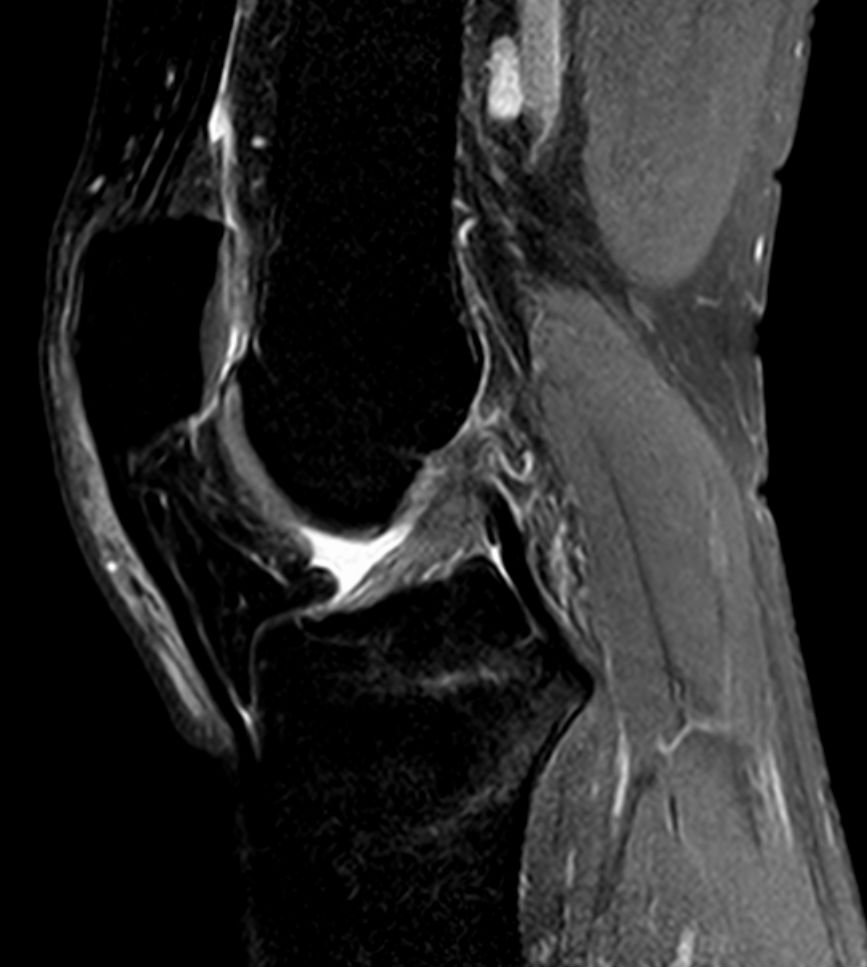
One honest caveat about reports. The final decision is made during the operation, not from the MRI. A scan suggests the pattern. Only direct inspection shows the tissue quality, how mobile the fragment is and whether the edges will hold stitches. Your surgeon should tell you beforehand what they expect and what they will do if the knee looks different inside.
Repair or trim, the real trade-off
This is where patients deserve plain numbers rather than reassurance, because the two operations feel very different in the first six months.
Put simply, repair asks you to pay in time and discipline now in exchange for keeping the tissue. Trimming gives you a fast recovery and takes the payment later, often decades later.
For a young patient with a repairable tear, that maths is usually straightforward, and most surgeons will push for repair even though it means a harder few months. For an older patient with worn tissue and no realistic chance of healing, insisting on repair would mean a long difficult recovery from an operation likely to fail anyway.
About the repair techniques
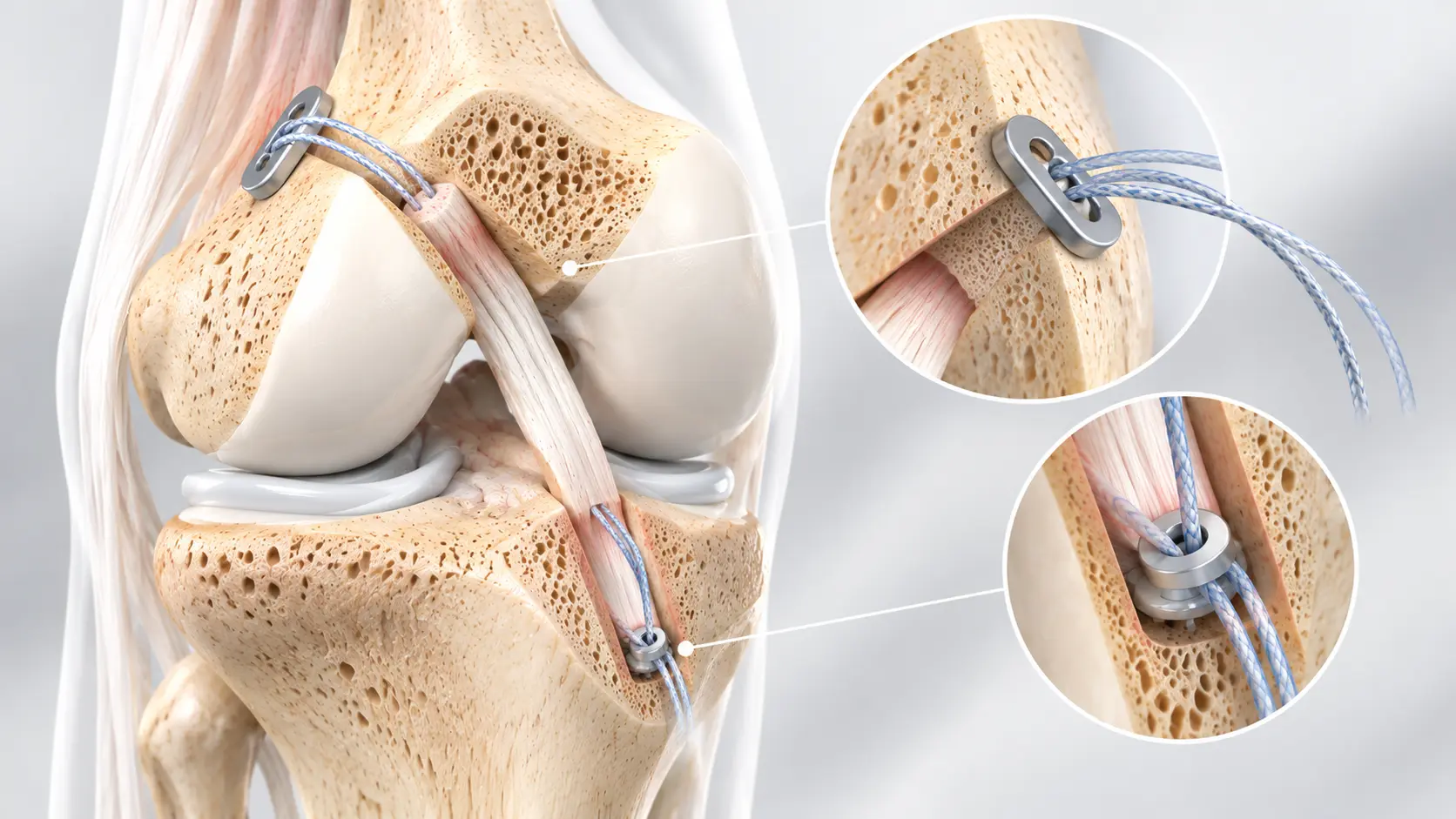
You may hear two names. All inside repair uses devices passed through the arthroscope with no extra incision, and is quicker and more comfortable. Inside out repair passes sutures out through a small additional incision and is still considered very reliable, particularly for certain tear locations. A review of 24 studies covering over two thousand menisci found failure rates of around 15.9 percent for all inside and 11.1 percent for inside out, which is a real but modest difference. Both are legitimate, and surgeons choose by tear position as much as by preference.
Why an ACL tear changes the odds
If you tore your ACL and your meniscus together, there are two things you should know, and they pull in opposite directions.
The good news
Meniscus repairs done at the same time as ACL reconstruction tend to heal better than repairs done alone. Drilling the bone tunnels releases blood and growth factors into the joint, which effectively bathes the repair in healing signals. Combining the two operations is one of the better situations for meniscus healing.
The warning
An ACL deficient knee is hard on the meniscus. Every episode of giving way shears the joint, and the inner meniscus takes much of that force. This is the main reason a knee that keeps buckling should not simply be left alone and watched.
A repairable meniscus tear alongside an ACL tear often converts a patient who could have waited into a patient who should be operated sooner. The window for repair is real, and it closes as the torn edges degenerate. If both are torn, do not let the decision drift for months.
If you are weighing up whether to have ACL surgery at all, that decision is covered separately in is ACL surgery always necessary, where a repairable meniscus tear is one of the factors that can override everything else.
When neither operation is the answer
This section exists because it is the part most commonly left out, and leaving it out leads to unnecessary surgery.
Many meniscus tears found on MRI in people over forty are degenerative. They did not come from one injury. They are gradual wear, and they are extremely common in knees that have no symptoms at all. If you scan enough middle aged knees, you will find meniscus tears in a large share of people who feel perfectly fine.
For this group, several good quality trials have compared arthroscopic trimming with a structured physiotherapy programme. The consistent finding is that physiotherapy produces similar results for degenerative tears without mechanical locking. The surgery was not better.
- Degenerative tear on MRI, gradual onset pain, no locking, in a patient over forty, usually means physiotherapy first
- Pain mainly on the joint line with stiffness and swelling after activity often settles with strengthening
- Some early arthritis alongside the tear makes surgery less likely to help, because the arthritis is driving the pain
The exception is mechanical symptoms. A knee that truly locks, catches or will not straighten has something physically obstructing it, and that is a different problem from a degenerative tear seen on a scan.
If surgery is advised for a tear found on MRI, ask this: are my symptoms mechanical, meaning locking or catching, or are they pain and swelling? If it is the second, ask whether a proper course of physiotherapy should be tried first. For many patients over forty, the honest answer is yes.
Common questions
How do I know if my tear is repairable before surgery?
Your surgeon can usually give you a likelihood from the MRI, based on the position of the tear, its pattern and how fresh it is. They cannot promise it. The tissue is assessed directly during the arthroscopy, and that is where the final call is made. What you should get beforehand is a clear plan A and plan B, so you are not surprised by what was done.
Does a meniscus tear ever heal without surgery?
Small tears in the outer blood supplied zone can settle on their own, particularly in younger patients, and the knee can become comfortable even when the tear is still visible on a scan. Tears in the inner zone do not heal. Degenerative tears generally do not heal either, but they often stop causing symptoms with strengthening, which is a different thing from healing.
What happens if I just live with it?
It depends entirely on the type. A stable degenerative tear with no locking can be lived with for years and often settles. A displaced bucket handle tear that blocks the knee should not be left, both because the knee will not function and because the chance of repairing it falls with time. An unstable fragment can also grind the cartilage it sits against.
How long does a meniscus repair take to recover from?
Expect roughly four to six months before sport, with the first six weeks involving restrictions on weight bearing and deep bending. Squatting and sitting cross legged are usually limited in the early phase, which matters a lot in Indian households, so plan for it. Trimming is far quicker at four to six weeks, which is precisely why the trade-off needs explaining properly.
What is the failure rate of a meniscus repair?
Broadly in the ten to twenty percent range, varying with tear pattern, position, patient age and whether it is done alongside an ACL reconstruction. A failed repair is usually managed by trimming the piece later, which means you end up where you would have been, having given repair a fair attempt. That is the reasoning behind trying to save it.
Can a meniscus be replaced if it has already been removed?
There are options, including donor meniscus transplantation and some scaffold implants, but they are specialised, not widely available, and they suit a narrow group of younger patients with pain in one compartment and otherwise reasonable cartilage. They are not a routine fix, and they are a weaker proposition than keeping your own meniscus in the first place.
My surgeon trimmed it instead of repairing it. Was that wrong?
Not necessarily, and usually not. Trimming is the correct choice for tears in the inner zone with no blood supply, for degenerative tissue that will not hold stitches, and for fragments too damaged to reassemble. The decision is frequently made once the knee is open. A fair question afterwards is simply to ask what was seen and why repair was not possible.
What should I ask before meniscus surgery?
Four questions. Based on my scan, do you expect this to be repairable, and what is your plan if it is not? Which zone is the tear in? Are my symptoms mechanical or is this pain that physiotherapy might settle? And what will my weight bearing and bending restrictions be in the first six weeks?
- Systematic review of 24 studies comparing all inside and inside out meniscus repair techniques across more than 2,000 menisci, reporting failure rates of 15.9 percent and 11.1 percent respectively.
- Randomised trials comparing arthroscopic partial meniscectomy with physiotherapy for degenerative meniscal tears, including the METEOR and FIDELITY trials.
- Arnoczky SP, Warren RF. Microvasculature of the human meniscus, the basis of the red and white zone classification.
- Studies of meniscus repair outcomes performed concurrently with anterior cruciate ligament reconstruction.
Dr. Prince Uchadiya, a specialist ACL and meniscus surgeon in Indore, performs arthroscopic meniscus repair and ACL reconstruction, and works on the principle that meniscus tissue is saved wherever the tear and the tissue allow it, because what is removed cannot be put back.
This article is for general information and does not replace an in person examination. Whether a particular tear can be repaired is decided by the surgeon managing your care, based on your scan, your examination and what is found during arthroscopy.