



Interference Screw
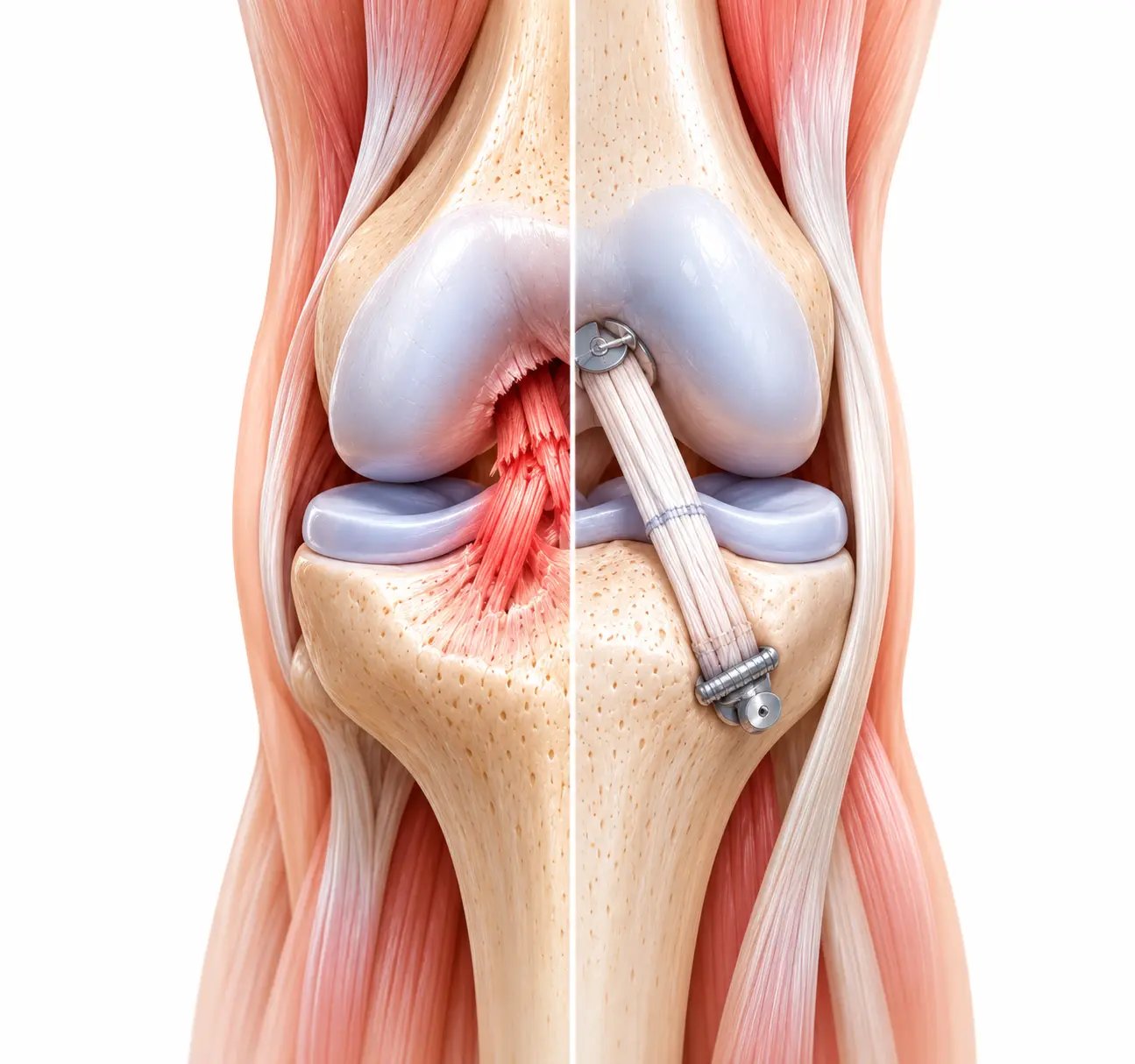
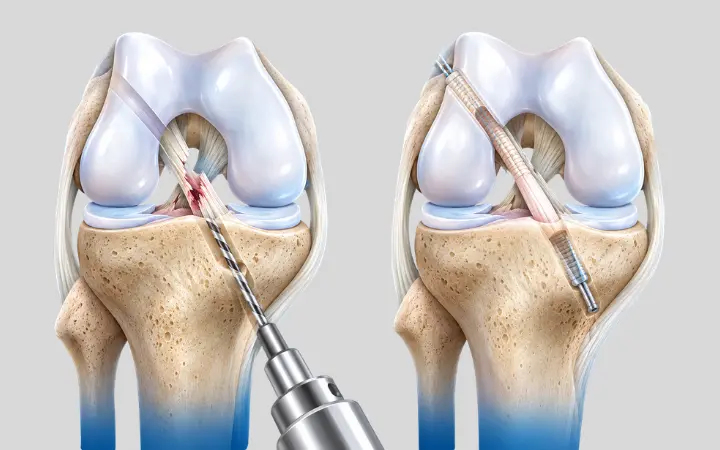
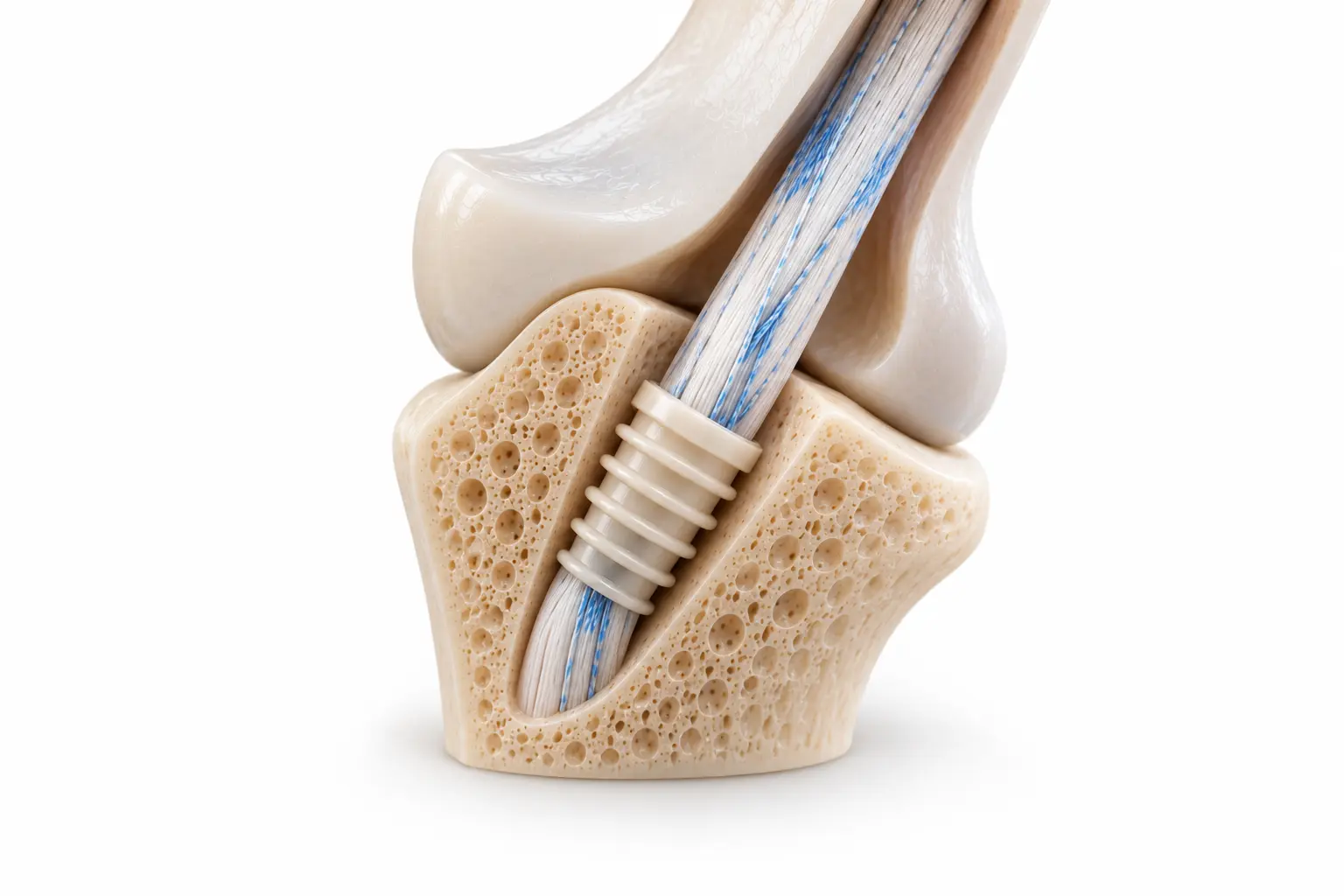
A threaded screw driven into the tunnel alongside the graft, wedging it firmly against the bone. It holds the graft right at the mouth of the tunnel, where the ligament enters the joint.
What is an interference screw?
Picture the graft lying in a drilled tunnel with a little space beside it. A screw is turned into that space, squeezing the graft hard against the tunnel wall. The grip comes from pressure, not from hanging.
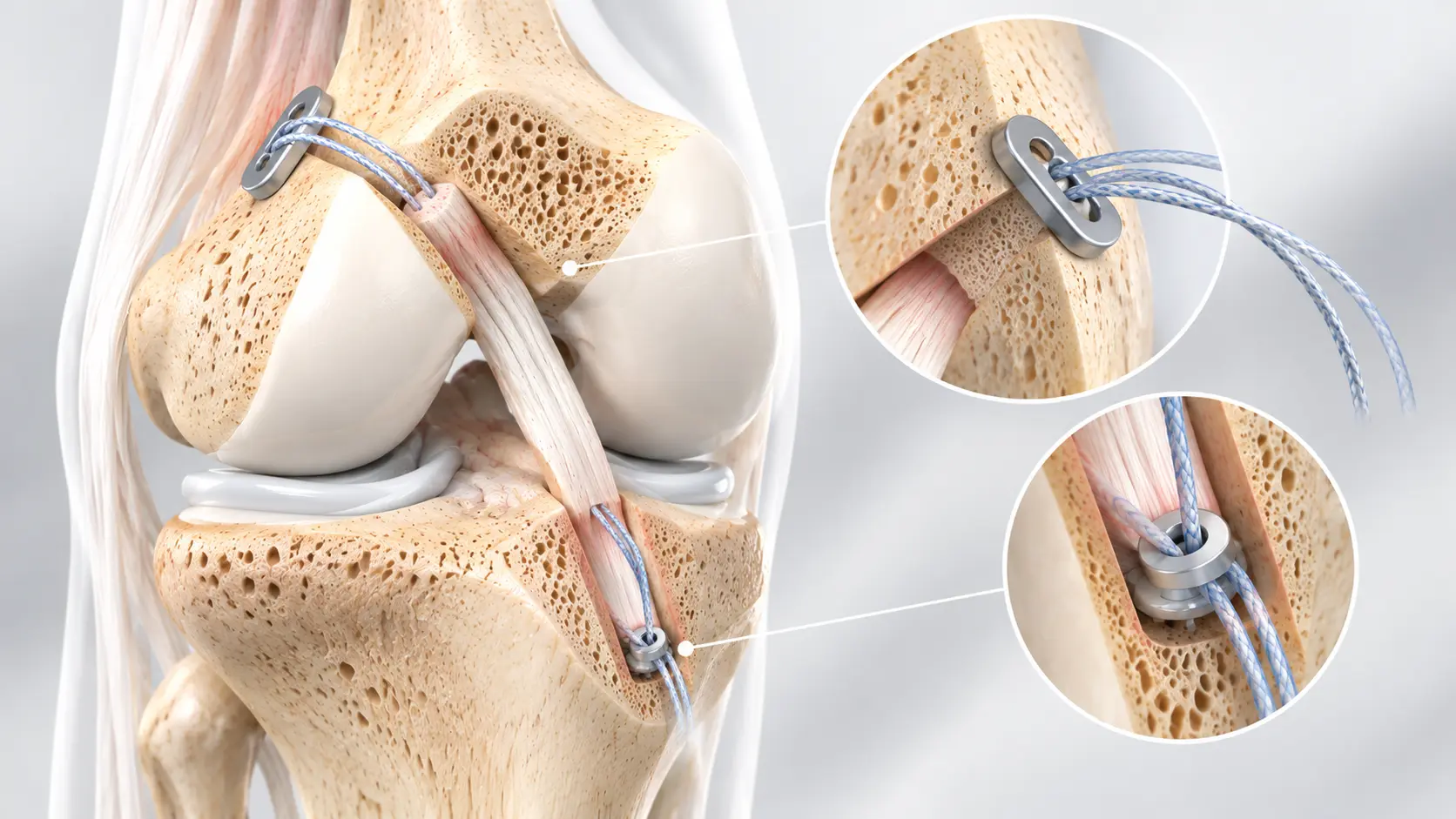
That position is the whole point, and it is called aperture fixation. A button holds the graft from outside the bone, which leaves a length of suture and graft free to shift slightly inside the tunnel. A screw holds the graft right where it leaves the bone, so there is very little free length to move at all.
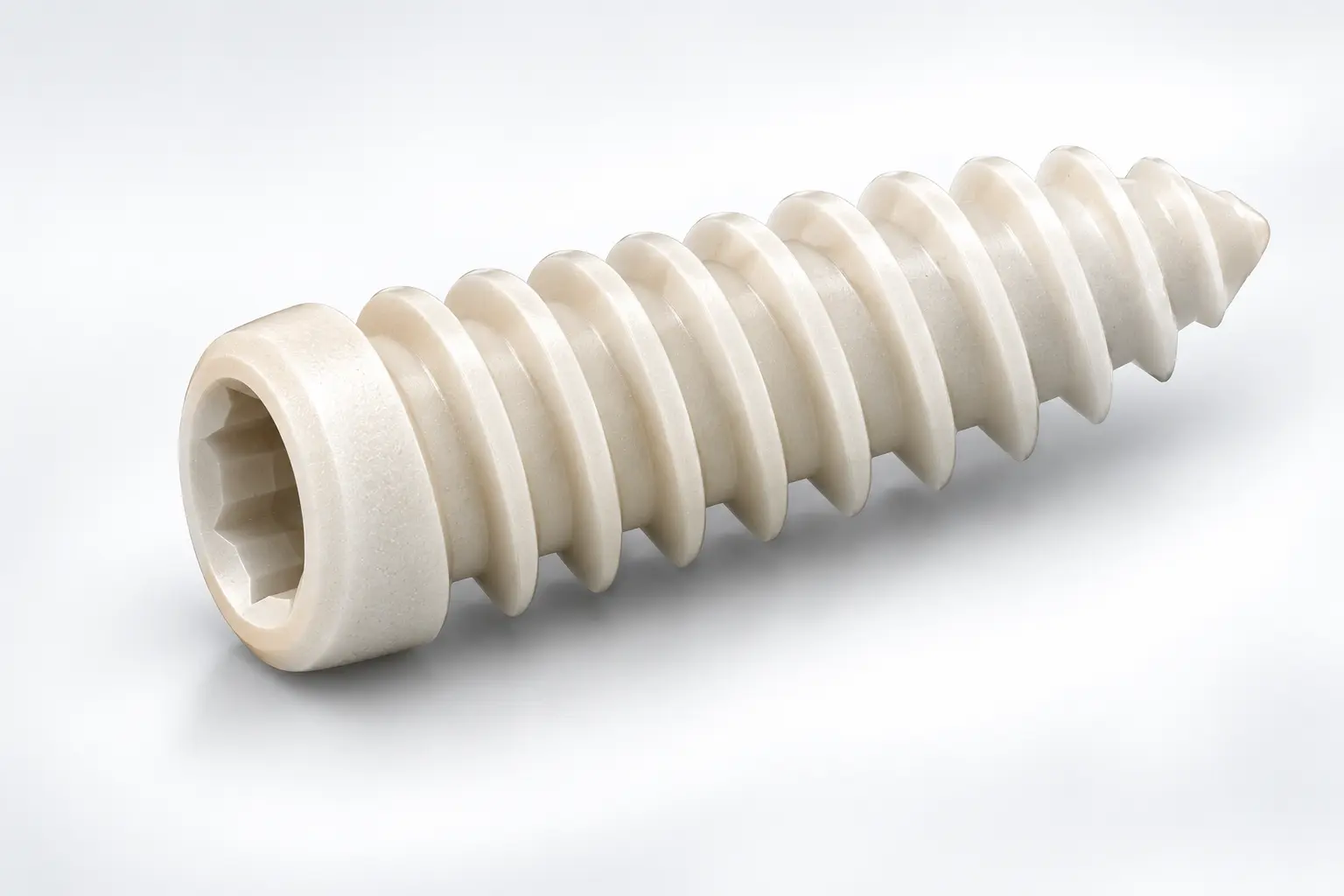
Screws come in two broad types. Metal ones, usually titanium, which stay unchanged for life. And absorbable ones, made from materials that slowly break down over a few years and are meant to be replaced by bone.
When this implant is used
Commonly used for
- Grafts with bone blocks, where bone is pressed against bone
- The shin bone end of soft tissue grafts
- Cases where the surgeon wants the graft held at the tunnel mouth
- As a second fixation alongside a button, in revision surgery
- Settings where implant cost needs to be contained
Less suitable for
- Growing knees, where a screw must not cross a growth plate
- Soft or poor quality bone, where the threads may not hold
- Short sockets used in all-inside techniques
- Wide or damaged tunnels after a previous surgery
- Situations where the graft must be retensioned after fixing
How the screw is placed
-
01
The graft is positioned and tensioned
The graft is pulled to the planned depth and held under steady tension. The screw locks in whatever position the graft is in, so this is set first.
-
02
A guidewire is passed beside the graft
A thin wire is slid into the gap between the graft and the tunnel wall. The screw will follow this wire, so its position decides which side the pressure comes from.
-
03
Screw size is chosen
Diameter is matched to the tunnel and to how much space the graft leaves. Too small and it will not grip, too large and it can crush or damage the graft.
-
04
The screw is turned in
It is advanced slowly along the wire, parallel to the graft. Staying parallel matters, because a screw that angles away from the graft loses much of its grip.
-
05
Depth and graft are checked
The screw head is sunk flush with the bone so nothing stands proud into the joint, and the graft is inspected through the camera to confirm it has not been damaged.
-
06
Stability is tested
The knee is bent and straightened and the graft is pulled on to confirm the hold before the instruments come out.
Two things decide how well a screw performs. Keeping it parallel to the graft, and choosing the right diameter. Both are judgement at the table rather than properties of the product itself.
Metal or absorbable
This is the choice patients hear about most, usually framed as old versus modern. The research does not support that framing.
Metal screw
Titanium, stays permanently, very strong grip, and does not break during insertion.
Absorbable screw
Dissolves over a few years and is meant to be replaced by bone. Leaves less material behind.
What studies show
Across twelve trials and 944 patients, knee function and activity scores were the same.
The one clear difference found in that pooled evidence was not in the outcome but in the complications. Every intraoperative complication recorded in those trials was an absorbable screw breaking while it was being inserted, and overall treatment failure was higher in the absorbable group. The reviewers also rated the certainty of all this evidence as very low, so the fair conclusion is modest. Both work, function ends up the same, and absorbable screws carry a known handling risk during surgery.
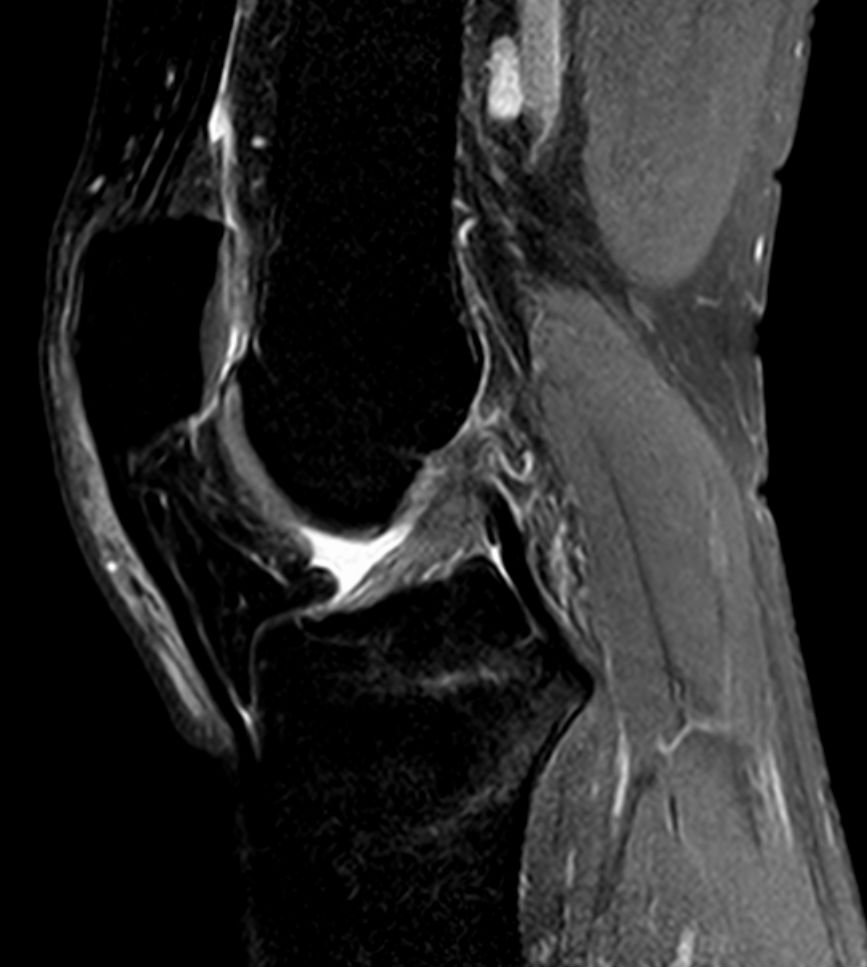
One practical point in favour of absorbable screws is imaging. Metal creates a blank patch on an MRI scan near the tunnel, which can make a later scan of that area harder to read.
Compare all graft and implant typesWhat this implant means for your recovery
As with every fixation, the screw is strongest on day one and matters less each week afterwards. Its job is to hold the graft completely still while your own bone grows into it. Once that union has formed, the screw is no longer doing the work.
If a bone block was used at the screw end, that union is usually quicker, because bone knits to bone the way a fracture heals. Your rehabilitation milestones still follow the graft, not the implant.
Open the full recovery roadmapBenefits and trade-offs
Benefits
- Holds the graft at the tunnel mouth, closest to the real ligament position
- Very little free length left for the graft to shift inside the tunnel
- Excellent with bone blocks, pressing bone directly against bone
- Usually the least expensive fixation option
- Decades of clinical use behind it
Trade-offs to know
- The graft cannot be retensioned once the screw is in
- A badly angled or oversized screw can damage the graft
- Absorbable screws can break during insertion
- Metal screws can obscure part of a later MRI scan
- Grip depends on bone quality, so soft bone holds less well
Most reconstructions in practice use a combination rather than a contest. A button on the thigh bone side, a screw at the shin bone end. They are not rivals, they are two tools matched to two different situations, and a knee fixed well with screws at both ends is a perfectly good knee.
Cost of this implant
Per screw. Metal and absorbable versions are priced differently.
Screws are generally the most economical fixation available, which is part of why they remain so widely used. Ask for the implant list in your estimate so you can see which type has been budgeted for each end. Most health insurance policies cover implants as part of the procedure, and our team can help you with the paperwork.
Common questions
Is a screw worse than a button?
No, they are different tools. A button hangs the graft from outside the bone, a screw grips it at the tunnel mouth. Bone blocks suit screws, short sockets suit buttons, and most reconstructions use one of each.
Should I ask for the dissolving type?
Not necessarily. In pooled trial data, knee function and activity levels were the same with both. Absorbable screws leave less material behind and interfere less with later scans, but they can break during insertion. Your surgeon chooses based on your bone and your graft.
Do absorbable screws fully disappear?
They break down over a few years, and the intention is for bone to replace them. In practice the replacement is not always complete, and small areas of leftover material or fluid filled spaces are sometimes seen on scans without causing symptoms.
Will a metal screw stop me having an MRI?
No. Titanium is safe in an MRI scanner. It does create a blank patch on the image close to the implant, which radiologists are used to working around, though it can make detailed assessment of that exact area harder.
Can the screw come loose or be felt?
It is sunk flush with the bone so nothing stands proud into the joint. Loosening is uncommon. Occasional tenderness over the shin bone where the screw sits usually settles with time.
Will it ever need to be removed?
Rarely. Removal is considered only if the screw causes symptoms or if it is in the way during a future revision surgery.
This page explains an implant in general terms. Which fixation suits your knee depends on your graft, tunnels, and bone quality, guided by a specialist ACL surgeon in Indore and confirmed during surgery.

Dr. Prince Uchadiya

Thank You,
Patient!
Your appointment request has been received.
Our clinic team will call you shortly to confirm your consultation and share further details.
 Confirm on WhatsApp
