

All-Inside ACL Reconstruction
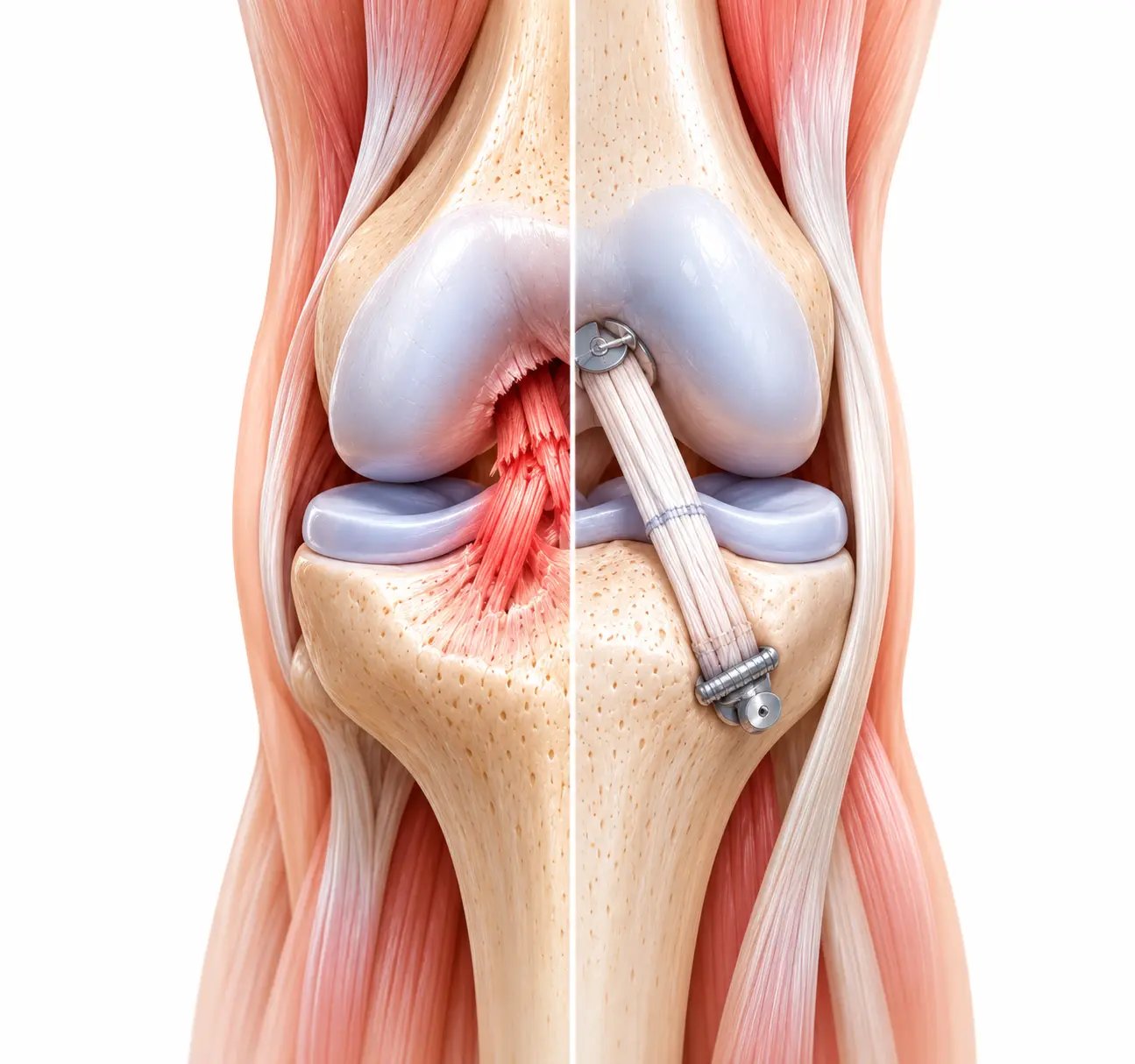
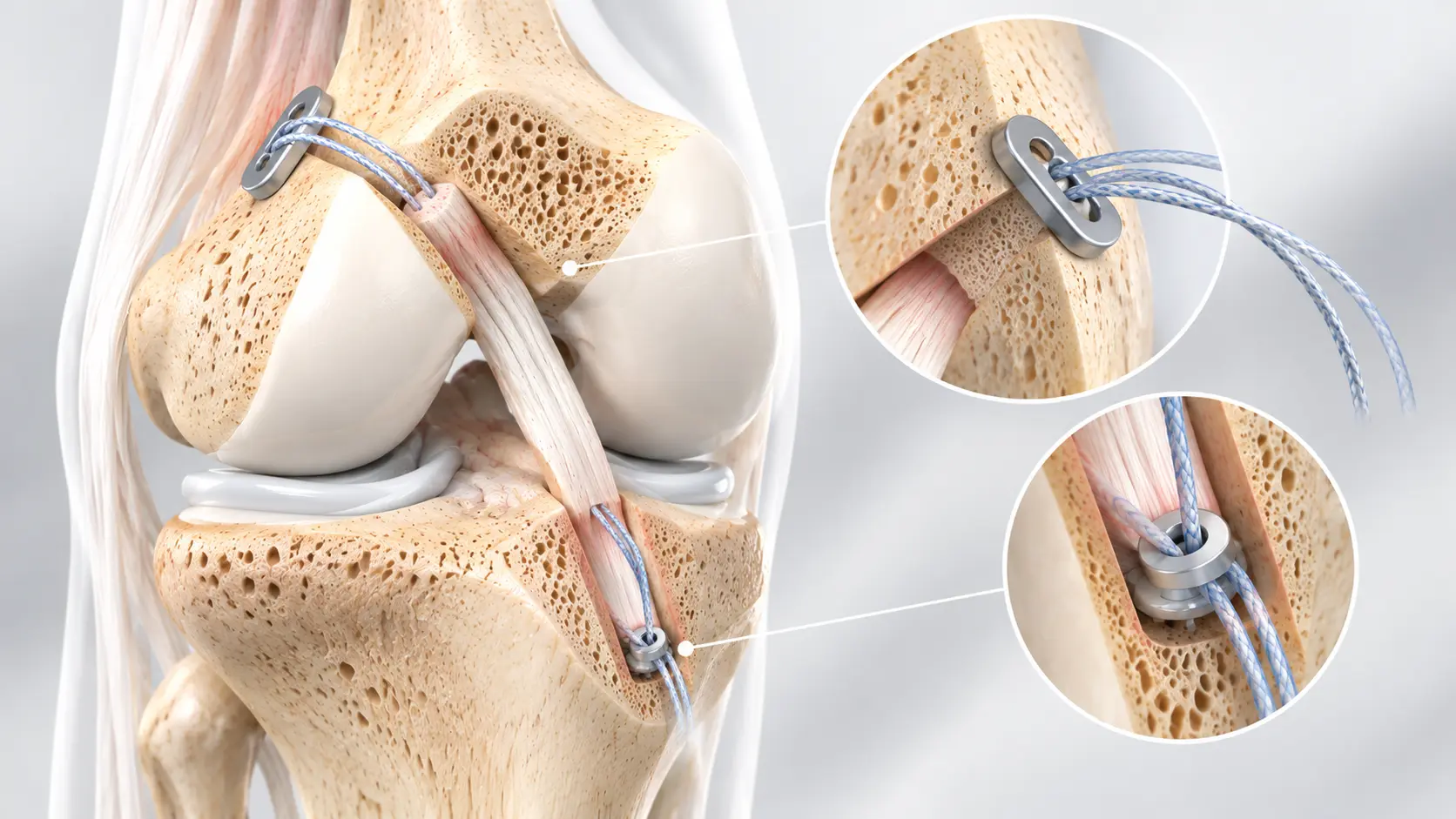
A bone sparing version of ACL surgery. Instead of drilling tunnels all the way through the bone, the surgeon makes short sockets from inside the knee and holds the graft with a button at each end.
Animation or OT footage showing all-inside ACL reconstruction, socket by socket.
What is all-inside ACL reconstruction?
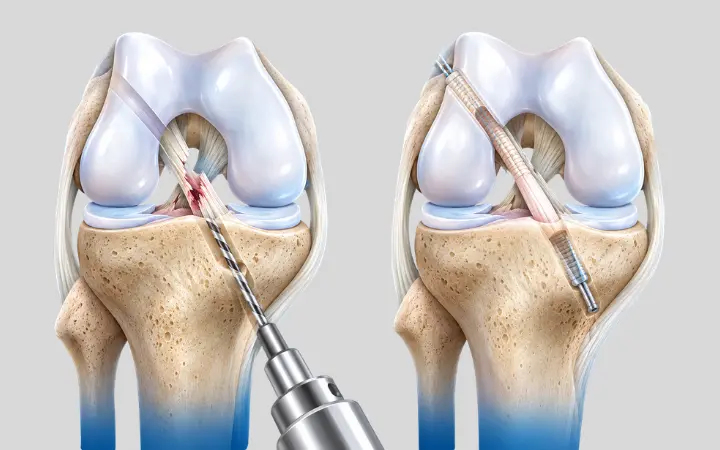
It is the same operation as a standard ACL reconstruction, done in a way that removes less bone. The new ligament sits in two short sockets instead of two tunnels that run right through the bone.
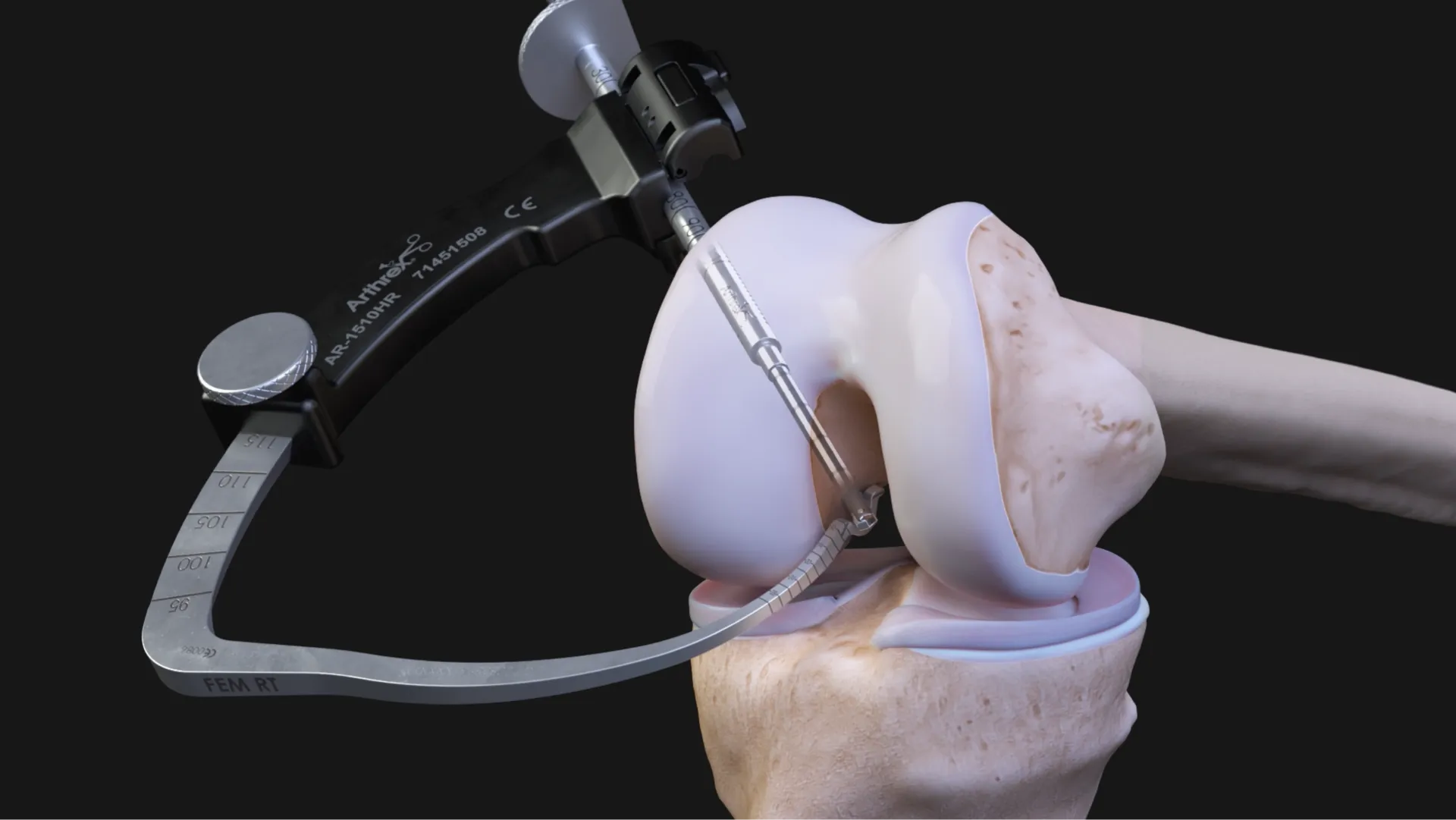
Because the sockets are short and blind ended, the outer wall of the shin bone is left largely intact. Most of the time a single hamstring tendon is enough, since it is folded on itself four or five times to reach the thickness the knee needs. The second hamstring tendon, the gracilis, is usually left in place.
Published comparisons so far show results that are broadly similar to standard ACL reconstruction, with small early advantages for the all-inside method in function scores and in how much the shin bone tunnel widens over time. It is a refinement of a proven operation, not a different operation.
Who this technique suits
Usually a good fit
- A first time complete ACL tear in a knee that gives way
- Patients who want the smallest possible cuts and less early pain
- Those who rely on hamstring power, since only one tendon is taken
- Younger patients where saving bone keeps future options open
- Growing children and teenagers in selected cases, where less bone drilling matters
May not be the first choice
- Revision surgery where old tunnels are wide or poorly placed
- Knees that need a bone block graft such as patellar or quadriceps with bone
- Very loose knees where the surgeon prefers a longer graft inside the bone
- A stiff or heavily swollen knee, which needs physiotherapy first
- Centres without the retro reamer and adjustable button system
How the surgery is done
-
01
Anaesthesia and examination
The surgery is done under spinal or general anaesthesia. Once you are relaxed, the knee is examined again to confirm how loose it is.
-
02
Camera inside the knee
A small camera is passed through a keyhole cut. The surgeon confirms the ACL tear and checks the meniscus and cartilage before anything is drilled.
-
03
One tendon is harvested
The semitendinosus tendon is taken through a cut of roughly two to three centimetres below the knee. The gracilis tendon is usually left untouched.
-
04
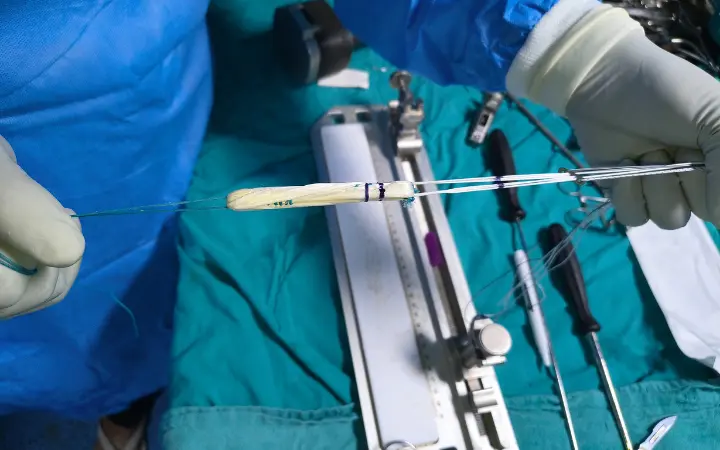
Graft is folded and buttons attached
The tendon is folded four or five times to build a short, thick graft. An adjustable loop button is stitched to each end so the graft can later be pulled in from both sides.
-
05
Sockets are made from inside out
A retro reamer is passed into the joint and opened up, then drilled backwards to create a short socket in the thigh bone and another in the shin bone. Only a thin guide hole reaches the outer surface.
-
06
Graft is docked, tensioned and closed
The graft is pulled into both sockets and the loops are tightened from each end until the knee is stable. The cuts are closed and physiotherapy usually begins the same day or the next morning.
Which graft is used
An all-inside reconstruction needs a short, thick graft rather than a long one, because it only has to fill two short sockets. That shapes the choice.
Semitendinosus alone
The usual choice. One tendon folded four or five times, so the gracilis stays in the leg.
Peroneus longus
Taken from the outer side of the leg when the surgeon wants to leave both hamstrings alone.
Quadriceps tendon
A soft tissue only strip can be used in selected cases where a thicker graft is needed.
Recovery at a glance
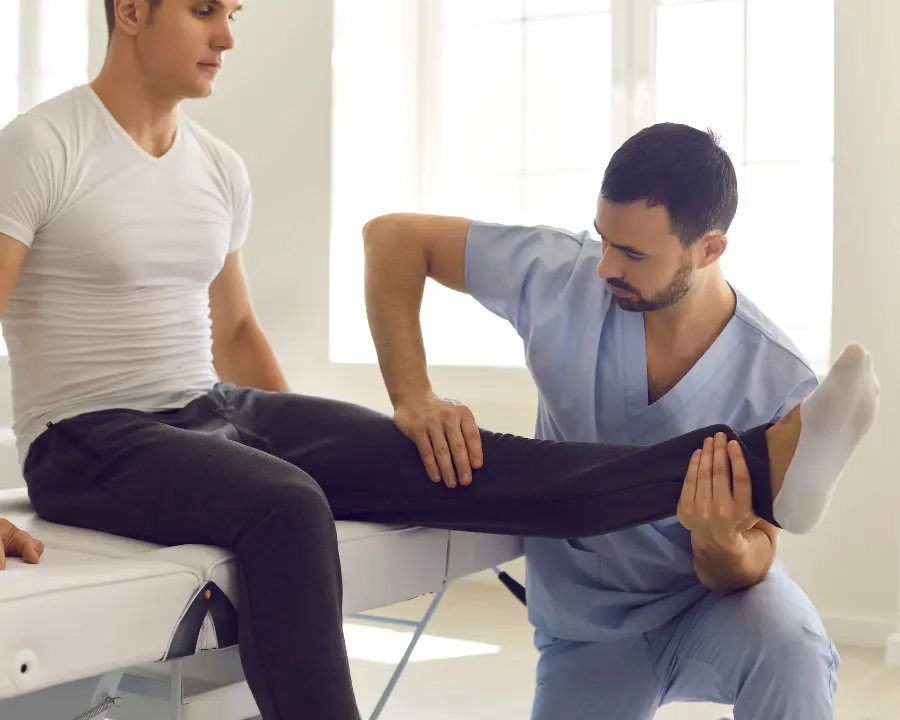
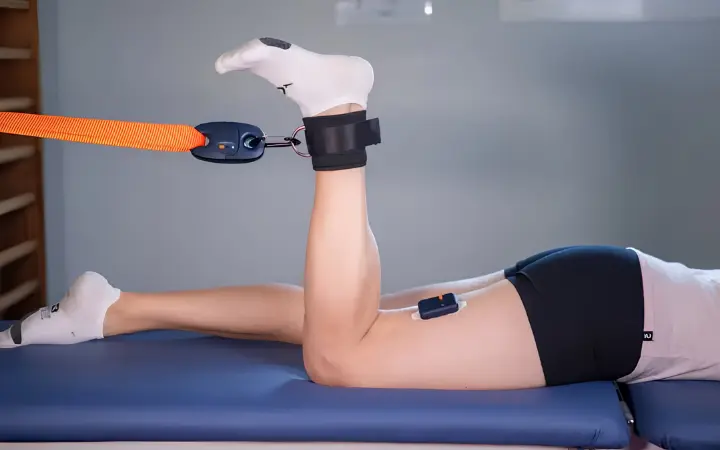
The rehabilitation plan is the same as for a standard reconstruction. The smaller cuts and single tendon often make the first two weeks more comfortable, but the graft still needs the same number of months to heal into the bone, so the milestones do not move forward.
Open the full recovery roadmapBenefits and trade-offs
Benefits
- Less bone is removed, so the shin bone is better preserved
- Usually only one hamstring tendon is taken, helping bending strength
- Smaller cuts and often less pain in the first weeks
- Tension can be adjusted from both ends during surgery
- Studies report less widening of the shin bone tunnel over time
Trade-offs to know
- Needs a retro reamer and adjustable buttons, so implant cost can be higher
- Technically demanding, so surgeon experience matters
- The graft sits in shorter sockets than in a full tunnel
- Long term stability and re-tear rates are similar, not clearly better
- Rehabilitation still runs for months, not weeks
Cost of this surgery
Depends on the button system used, room category and whether a meniscus repair is added.
All-inside surgery uses two suspensory buttons instead of one button and one screw, so the implant part of the bill can differ from a standard reconstruction. Most health insurance policies cover ACL surgery after their waiting periods, and our team can help you with the paperwork.
Common questions
How is this different from normal ACL surgery?
The ligament that is built is the same. The difference is in the drilling. A standard reconstruction makes tunnels that pass right through the bone, while all-inside makes two short sockets from inside the joint and keeps the outer wall of the shin bone mostly intact.
Is all-inside better than the standard technique?
It is not automatically better. Research so far shows similar stability and similar re-tear rates, with small early advantages for all-inside in comfort, function scores and tunnel widening. Your surgeon will suggest what suits your knee rather than what sounds newer.
Will a short socket hold the graft properly?
Yes. The graft is locked by a button that rests on the hard outer surface of the bone, which is a strong hold from day one. The socket length is planned so that enough of the graft sits inside bone on both sides.
Do you still need to take my hamstring?
Usually one hamstring tendon, the semitendinosus, is taken. Because it is folded four or five times, the second tendon can normally be left in place, which helps bending strength later.
Does this mean I can return to sport sooner?
No. The first few weeks are often more comfortable, but the graft heals into the bone at the same speed. Return to pivoting sport is still planned around nine months and only after you pass your strength and hop tests.
Do the buttons need to be removed later?
Usually not. The buttons and loops used are designed to stay in place permanently and are not felt by most patients.
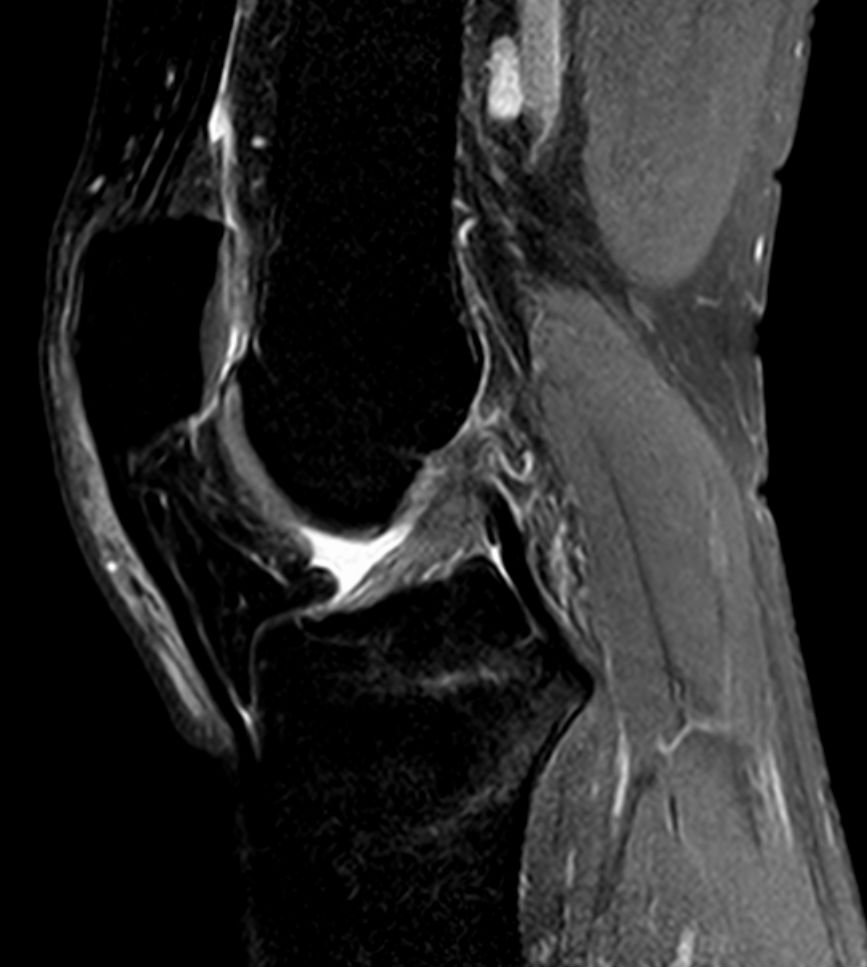
This page explains a surgical technique in general terms. What suits your knee is decided after a clinical examination and MRI review with an experienced ACL surgeon in Indore.


Dr. Prince Uchadiya

Thank You,
Patient!
Your appointment request has been received.
Our clinic team will call you shortly to confirm your consultation and share further details.
 Confirm on WhatsApp
