

Quadriceps Tendon Graft
A strip taken from the thick tendon above your kneecap. It gives one of the largest and strongest grafts available, with far less kneeling pain than a patellar tendon graft.
Animation or OT footage showing the quadriceps tendon strip being taken and prepared.
What is a quadriceps tendon graft?
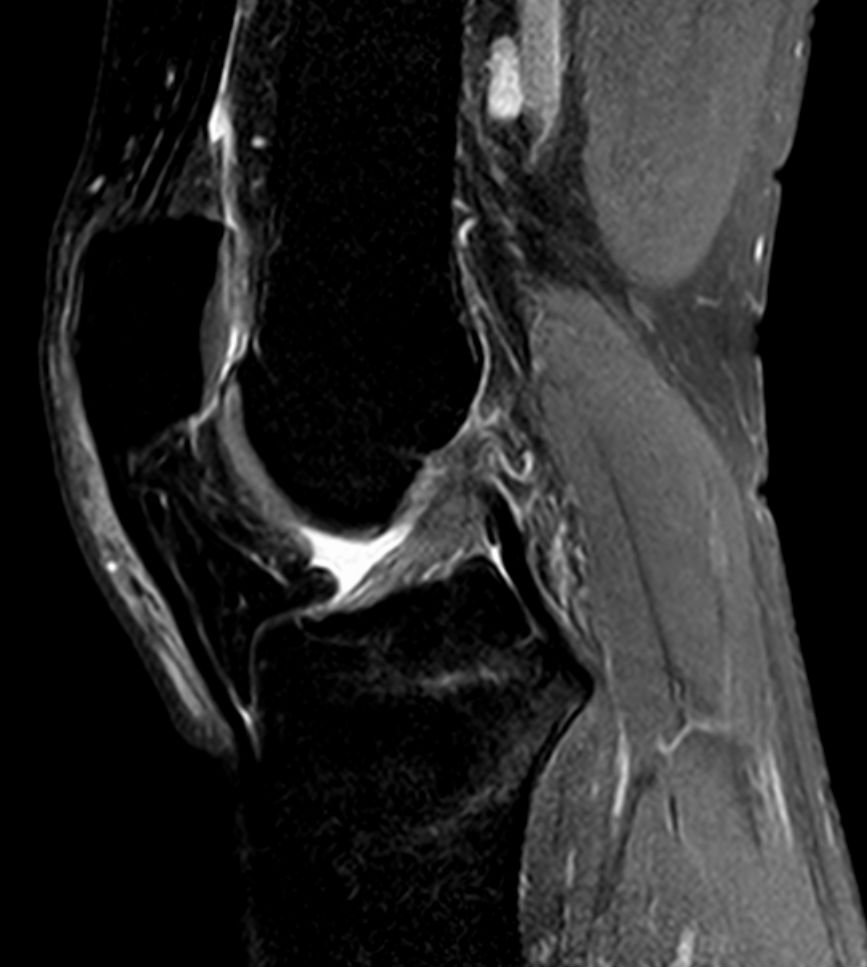
Above your kneecap sits the quadriceps tendon, the broad, thick band that connects your thigh muscles to the kneecap. It is one of the thickest tendons in the body, and only a strip of it is needed to build a new ACL.
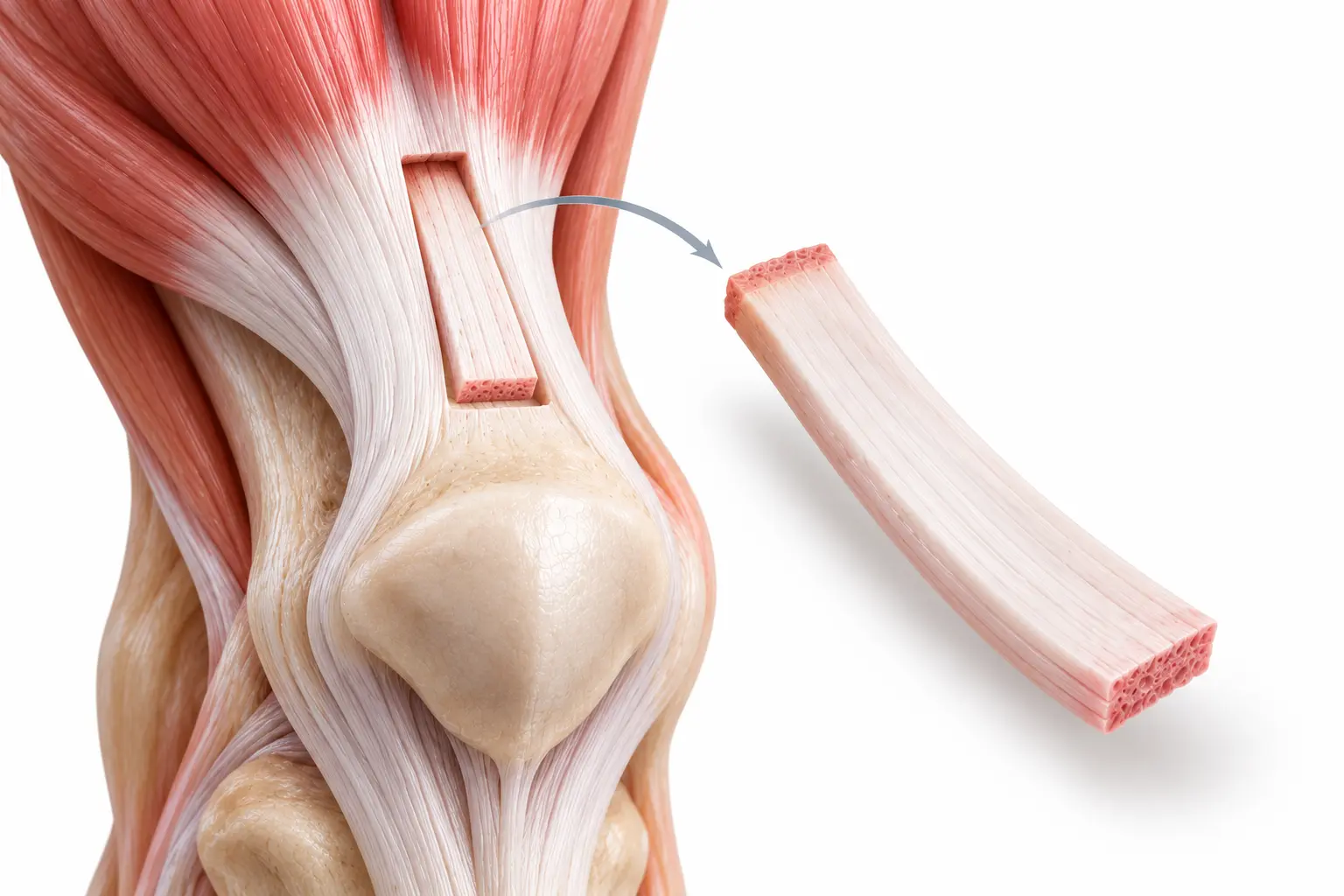
There are two versions. In the soft tissue only version, just tendon is taken. In the other, a small block of bone is taken from the top of the kneecap along with the tendon, which allows bone to heal directly to bone inside the tunnel.
This graft sits between the other two main options in a useful way. It is taken from the front of the knee like a patellar tendon graft, but far fewer patients report kneeling and kneecap pain afterwards. And unlike a hamstring graft, it leaves the muscles at the back of your thigh completely alone.
Who this graft suits
Usually a good fit
- Patients needing a thick graft, where hamstrings may fall short
- Revision surgery, where a fresh strong graft source is needed
- Athletes who depend on hamstring power, such as sprinters
- Those who want to avoid the kneeling pain of a patellar tendon graft
- Older teenagers and adults, including soft tissue only versions for growing knees
May not be the first choice
- Patients with existing quadriceps weakness or wasting
- Previous surgery or injury involving the quadriceps tendon
- A history of kneecap problems, where the bone block version is avoided
- Patients unable to commit to focused quadriceps rehabilitation
- Where the surgeon prefers a graft with a longer local track record
How the graft is taken
-
01
A short cut above the kneecap
A cut of about three to four centimetres is made just above the top edge of the kneecap, directly over the tendon.
-
02
The strip is marked out
A strip roughly ten millimetres wide is marked in the middle of the tendon, leaving healthy tendon on both sides so the remaining structure stays strong.
-
03
Depth is controlled carefully
The strip is cut to a planned depth rather than through the full tendon thickness, unless the full thickness version is being used. Depth control is what keeps the joint lining below from being opened.
-
04
Bone block taken, if chosen
If the bone block version is planned, a small rectangle of bone is cut from the upper pole of the kneecap with the tendon still attached to it.
-
05
The donor site is repaired
The gap left in the tendon is stitched closed. This step matters for how the front of the knee feels later and for the strength of the tendon that remains.
-
06
Sized, stitched and tensioned
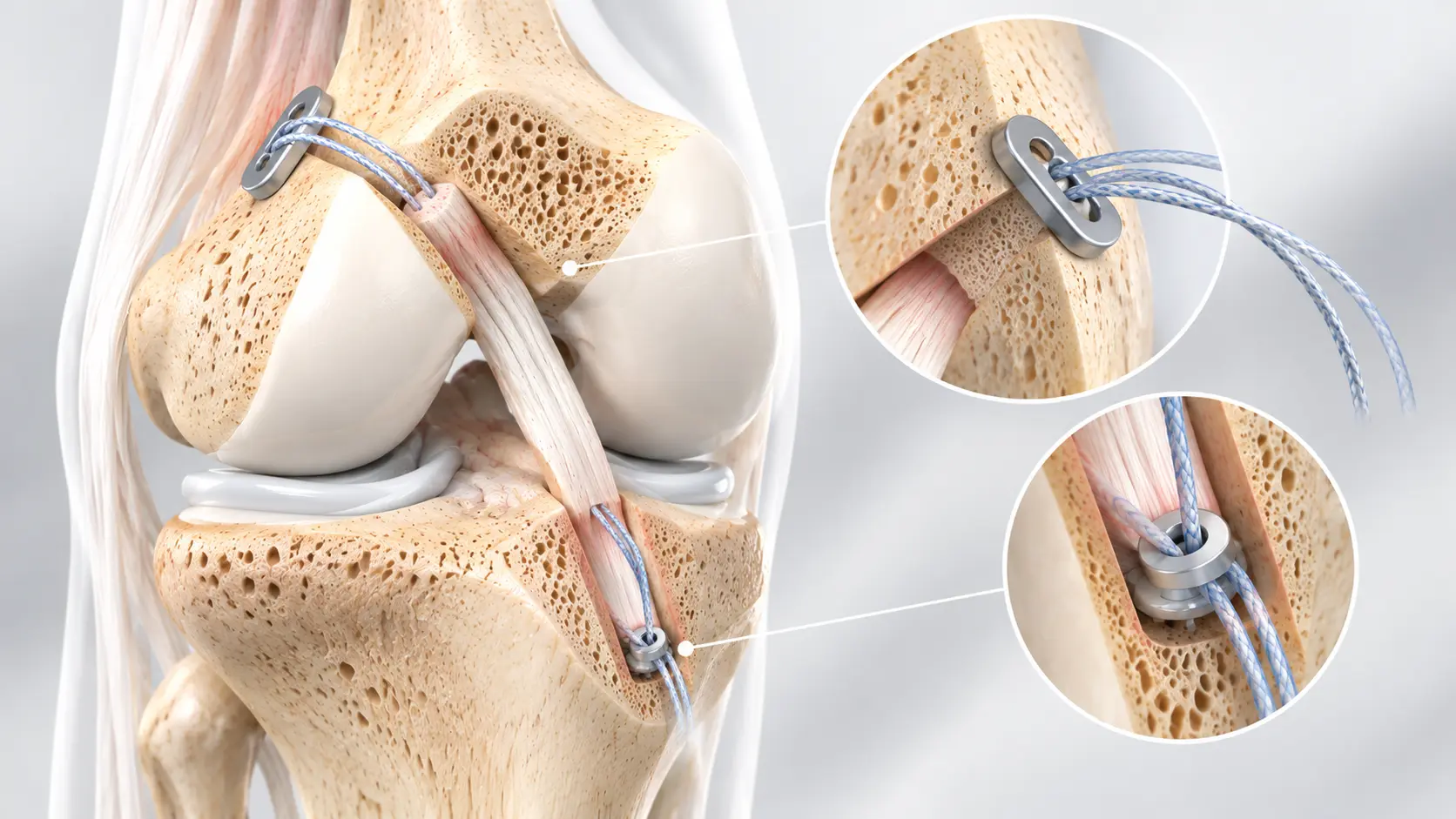
The graft is trimmed to the planned diameter, whip stitched at the ends, loaded with its fixation and held under tension until the knee tunnels are ready.
Two technical details decide how this graft feels afterwards. How deep the cut goes, which protects the joint lining underneath, and how well the donor gap is closed, which affects front of knee comfort and quadriceps strength recovery.
Thickness and strength
This is the graft's clearest advantage. The quadriceps tendon is naturally thick, so a strip of it reaches a good diameter without being folded several times, and the final graft usually lands comfortably in the nine to ten millimetre range.
Large cross section
More tissue in the tunnel than a typical folded hamstring graft of the same length.
Soft tissue version
Tendon only, no bone taken. Suitable for growing knees and avoids kneecap risk.
Bone block version
Allows bone to heal to bone at one end, at the cost of a small kneecap risk.
Pooled results across thousands of patients support this. One review of twenty one studies covering nearly three thousand patients found a lower graft failure rate and slightly less residual looseness with quadriceps grafts than with hamstring grafts. Separate trial data comparing the two found similar function scores and similar failure numbers, so the fair summary is that it performs at least as well, with the balance of evidence leaning slightly in its favour.
Compare all graft and implant typesRecovery at a glance
The specific thing about this graft is quadriceps strength. Because the tendon was cut, straightening power is weaker in the early months, and studies comparing grafts show the extensor deficit is more pronounced here than after a hamstring graft. Getting the thigh muscle switched on in the first week is therefore not a formality, it is the start of the main job.
The good news is that this is the most trainable deficit of any graft site. Supervised quadriceps work closes the gap, and it is measured with strength testing before you are cleared for sport.
Open the full recovery roadmapBenefits and trade-offs
Benefits
- A thick graft in nearly every patient, without multiple folds
- Far less kneeling and kneecap pain than a patellar tendon graft
- Hamstrings are left completely untouched
- Lower graft failure than hamstring grafts in pooled study data
- A soft tissue only version is available for growing knees
Trade-offs to know
- Quadriceps strength takes longer to come back than with other grafts
- A visible scar above the kneecap, longer than a hamstring scar
- With a bone block, a small risk of kneecap fracture
- Technically demanding to harvest at the right depth
- Shorter long term track record than hamstring and patellar tendon grafts
Compared with a patellar tendon graft, the evidence is fairly clear. Donor site pain and kneecap symptoms during sport and work were dramatically lower with quadriceps grafts in pooled analysis, with similar stability. Compared with a hamstring graft, the picture is closer, with similar function scores and some data favouring quadriceps on failure rate. The real trade you are making is accepting slower quadriceps recovery in exchange for a thicker graft and a quieter knee cap.
Cost of this graft
Your reconstruction cost. The graft is your own tissue, so there is no separate graft charge.
There is no purchase cost for the tissue. Some centres use a dedicated harvesting instrument for this graft, which can add a small amount to the bill. Most health insurance policies cover ACL surgery after their waiting periods, and our team can help you with the paperwork.
Common questions
Is my thigh muscle being cut?
No. The tendon above the kneecap is cut, not the muscle itself. A strip is taken from the middle of it and the gap is stitched closed, leaving the tendon in continuity on both sides.
Will my leg feel weak when straightening?
Yes, in the early months. This is the known trade-off with this graft, and the deficit is more noticeable than after a hamstring graft. It responds well to supervised strengthening, and your return to sport is cleared only after strength testing.
Will kneeling hurt like it does after a patellar tendon graft?
Much less often. In pooled analysis, donor site pain and kneecap symptoms during sport and work were far lower with quadriceps grafts than with patellar tendon grafts. For patients who kneel, squat or sit on the floor, this is a meaningful difference.
Should I choose the version with bone or without?
The bone block heals bone to bone at one end, which some surgeons prefer in high demand athletes. The soft tissue only version avoids any kneecap risk and suits growing knees. Your surgeon will match this to your sport and your age.
Could my kneecap fracture?
Only the bone block version carries that risk, and it is small. It is one of the reasons the soft tissue only version is preferred for many patients.
Why is this graft becoming more popular?
Because it combines a reliably thick graft with much less kneecap trouble than the patellar tendon option. The main caution is that its long term record is shorter, since it has been widely used for fewer years than the other two.
This page explains a graft option in general terms. Which graft suits your knee is decided after an examination and MRI with a top arthroscopic ACL surgeon in Indore, and is confirmed during surgery.

Dr. Prince Uchadiya

Thank You,
Patient!
Your appointment request has been received.
Our clinic team will call you shortly to confirm your consultation and share further details.
 Confirm on WhatsApp
