


Can a torn ACL heal on its own?
The short answer, what the MRI studies actually found, and how to tell whether your knee is one of the ones that can manage without a new ligament.


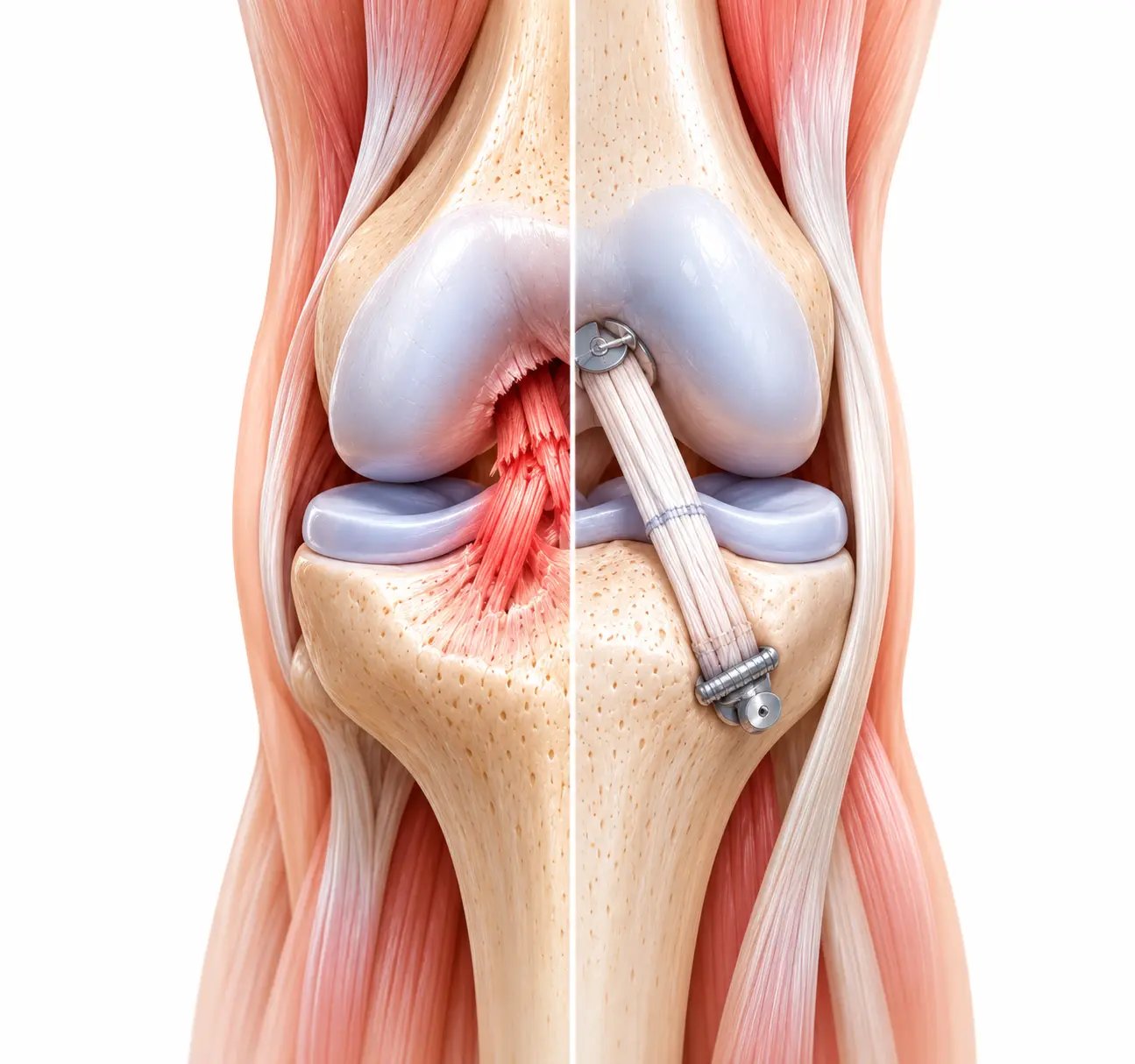
A completely torn ACL usually does not heal back to its original strength. In most people the two ends pull apart, sit in joint fluid, and never reconnect as a working ligament.
But that is not the whole picture. Some partial tears do heal. Some complete tears form a scar bridge that shows up as a continuous ligament on a repeat MRI. And a number of people with a torn ACL go back to normal life and even to sport without ever getting a new ligament, because strong muscles and good control can hold a knee steady.
So the real question is not whether the ligament can heal. It is whether your knee is stable enough to do what you want it to do.
Why the ACL does not heal like other ligaments
Tear the ligament on the inner side of your knee, the MCL, and it will usually heal by itself in six to eight weeks. Tear the ACL and it usually will not. Same knee, same kind of tissue, completely different outcome. Three things explain the difference.
- It sits inside the joint. The MCL lies outside the joint capsule, in soft tissue that forms a blood clot after injury. A clot is the scaffold healing needs. The ACL sits inside the joint, where there is no soft tissue around it to hold a clot in place.
- Joint fluid dissolves the clot. The knee is filled with synovial fluid, which contains enzymes that break down fresh clot almost as quickly as it forms. The scaffold washes away before repair tissue can grow across the gap.
- The ends retract. The ACL is under tension even at rest. When it snaps, the two ends spring apart, often by a centimetre or more. Healing tissue cannot bridge a gap that wide.
It is less that the ACL refuses to heal, and more that the knee is a hostile place to try.
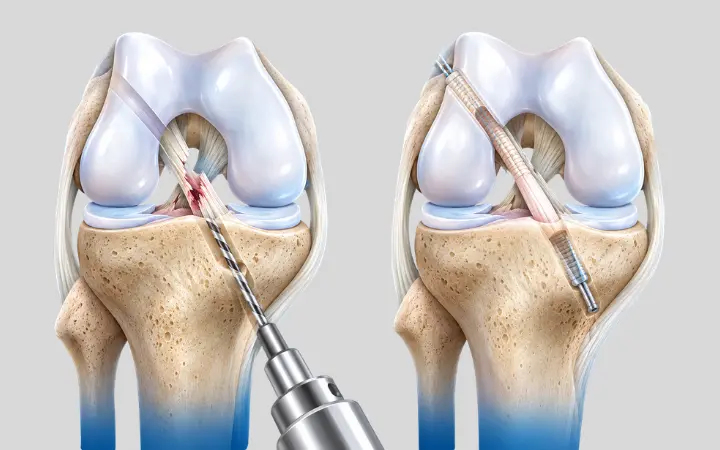
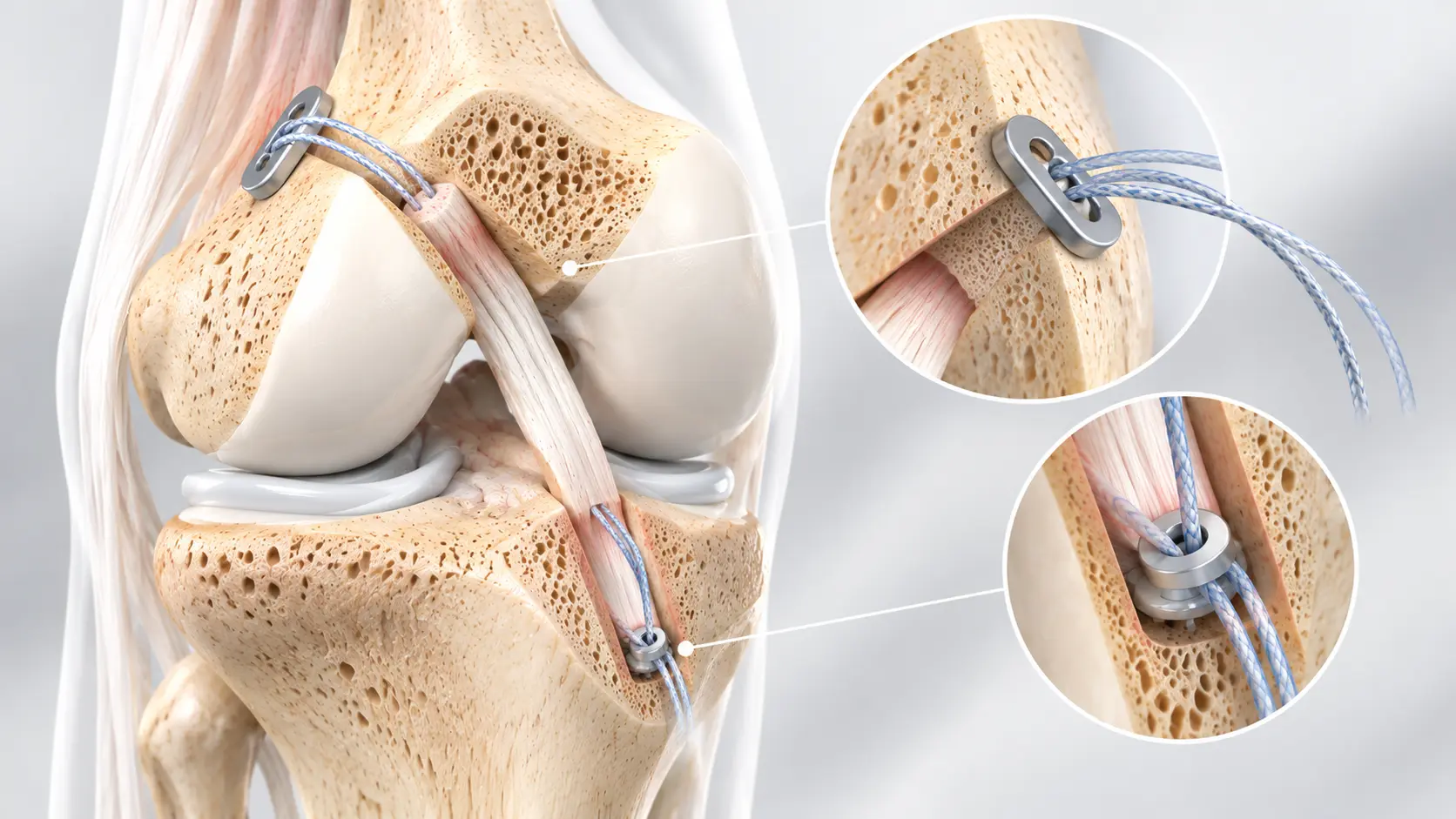
This is also why surgeons replace the ligament with a tendon graft rather than stitching the torn ends together. For decades, simply suturing the ACL back together failed often enough that the technique was abandoned. Modern primary repair has brought it back for a narrow group of patients, but only when the tear is fresh and in exactly the right place.
Partial tears are a different story
The ACL is not a single cord. It has two bundles that tighten at different angles of knee bend. A partial tear means one bundle is damaged while the other is still intact and still doing its job.
That changes everything, because the intact fibres act as a built in scaffold. Repair tissue has something to grow along instead of an empty gap. A genuine partial tear with a stable knee on examination has a reasonable chance of settling down with rehabilitation alone.
The catch is that the word "partial" gets used loosely. An MRI report saying partial tear does not always mean the knee is stable, and a report saying complete tear does not always mean it is loose. The scan shows the tissue. Only an examination shows what the knee actually does under load, and that is what decides treatment.
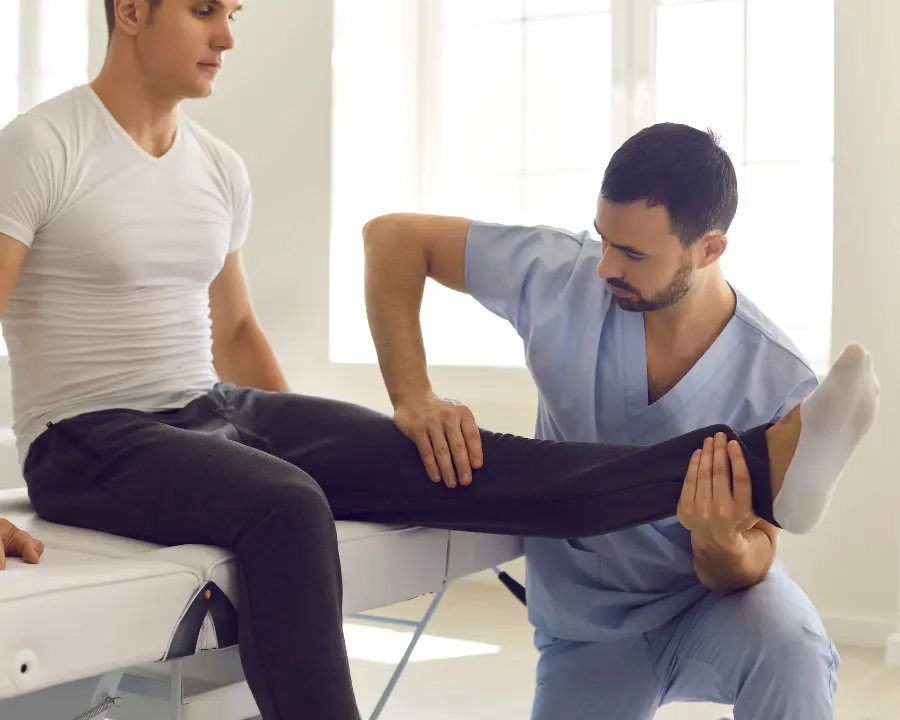
Two patients with identical MRI reports can need completely different treatment. The physical examination, specifically the Lachman and pivot shift tests, tells your surgeon how much the knee is sliding. That is the number that matters, not the wording on the report.
What the healing studies actually found
For a long time "the ACL never heals" was repeated as a hard rule. Over the last few years, MRI studies have shown that the rule is softer than it looked. This is the most honest summary of where the evidence currently sits.
Rehabilitation alone, followed for five years
Researchers went back to the KANON trial, which randomly assigned young active adults with a fresh ACL tear either to early surgery or to rehabilitation with surgery only if it became necessary. They then re-read the MRIs of the people who stuck with rehabilitation and never had surgery.
The people whose ligaments showed healing reported clearly better sport and quality of life scores than those whose did not, and better scores than the surgery groups as well. None of them met the criteria for treatment failure.
That sounds remarkable until you read the fine print. These were only the patients who had already done well enough on rehabilitation that they never needed surgery. Everyone who deteriorated and crossed over to an operation was no longer in this group. The numbers describe what happens in knees that were coping, not what happens to every torn ACL.
The hard numbers everyone should see together
| Situation | What the evidence suggests |
|---|---|
| Complete tear, no treatment, back to normal activity | The ligament rarely regains useful strength. Instability tends to persist if the knee was unstable to begin with. |
| Partial tear, stable on examination | Good chance of settling with structured rehabilitation. Needs re-testing, not assumption. |
| Complete tear, serious supervised rehabilitation | Around half of patients in the big trials never ended up needing surgery. Signs of MRI healing appeared in about half of those who stayed non-surgical. |
| Complete tear, pivoting sport, knee gives way | Healing is unlikely to be enough. Reconstruction is usually advised to protect the meniscus and cartilage. |
The cross bracing protocol, and why it is debated
If you have searched this question online, you have probably come across the cross bracing protocol. It is worth explaining properly, because it is the single biggest reason people now ask whether an ACL can heal.
The idea is to bring the torn ends back together and hold them there. The knee is locked in a brace at 90 degrees of bend for four weeks, then opened up very gradually over the following months. In the original Australian series of 80 patients, 90 percent showed evidence of healing on the three month MRI, and half had a thick continuous ligament.
Those results are real and they changed the conversation. But the same study and the work that followed raise serious caveats, and any honest article has to include them.
- There was no comparison group. The original study followed 80 patients in one clinic. Nobody was randomly assigned to anything, so the healing cannot be credited to the brace with confidence.
- Re-injury happened. Eleven of the 80 patients, around 14 percent, re-injured the ACL.
- Blood thinners are part of the protocol. Locking a knee at 90 degrees raises the risk of clots in the leg, so patients take an anticoagulant for roughly eight weeks. That is a real medication risk, not a minor detail.
- A later comparison was unfavourable. One study of pivoting sport athletes found far higher rates of recurring instability and of new meniscus tears in the braced group than in the reconstructed group, with many eventually converting to surgery.
- Timing is narrow. The protocol is only attempted when it is started within days of the injury. For most patients who reach a surgeon weeks later with a confirmed tear, the window has already closed.
Cross bracing is a promising idea that is still being tested, not a settled treatment. A proper randomised trial is underway. Until it reports, it is reasonable to discuss, reasonable to decline, and not something to attempt on your own from a video.
A healed ligament is not the only way to get a good knee
Here is the shift in thinking that helps most patients. The goal was never a perfect ligament on a scan. The goal is a knee that does not give way.
Some people reach that without any ACL at all. In research they are called copers. Their thigh muscles, their hamstrings and their movement control compensate well enough that the knee stays steady through daily life and often through straight line sport.
And this is not a fixed trait you either have or do not. In one well known cohort, just over half of patients passed the coper tests at first screening. After about ten sessions of progressive training over roughly five weeks, that rose to around two thirds, and close to half of those who initially failed converted to passing.
The first test after an injury is not the final verdict. It is a baseline you can train against.
Where this approach runs out of road is pivoting sport. Football, kabaddi, basketball, badminton, volleyball, martial arts, anything that involves planting the foot and turning hard. Those movements ask the ACL to do the one job muscles cannot replace, and coping strategies tend to fail under them.
Rehabilitation first is a legitimate choice for many people with an ACL tear, not a way of avoiding treatment. It stops being the right choice the moment the knee starts giving way during ordinary activity.
What happens if an unstable knee is left alone
Waiting is safe. Ignoring instability is not. There is a meaningful difference between the two, and it comes down to a single symptom.
Giving way is the knee shifting or buckling suddenly, usually when you turn or change direction. Each of those episodes is the thigh bone sliding on the shin bone, and the meniscus and cartilage sit directly in the path of that slide. The damage from repeated episodes accumulates, and unlike the ligament question, cartilage loss does not reverse.
Get examined sooner rather than later if any of these apply to you.
- The knee gives way or feels like it is about to, even on flat ground or stairs
- It locks, catches, or will not fully straighten, which can mean a torn meniscus is trapped in the joint
- It swells again every time you increase activity
- You are avoiding turning, or you no longer trust the leg
- You are young and play a pivoting sport, where the risk of further damage is highest
If none of these describe you, and your knee feels steady walking, climbing stairs and jogging straight, you have time to work with a physiotherapist and see how far you get before deciding anything.
How to find out where you stand
The question "will mine heal" cannot be answered from a report alone. It is answered by three things together.
- An examination. Lachman and pivot shift testing shows how far the knee is actually sliding. This matters more than the MRI wording.
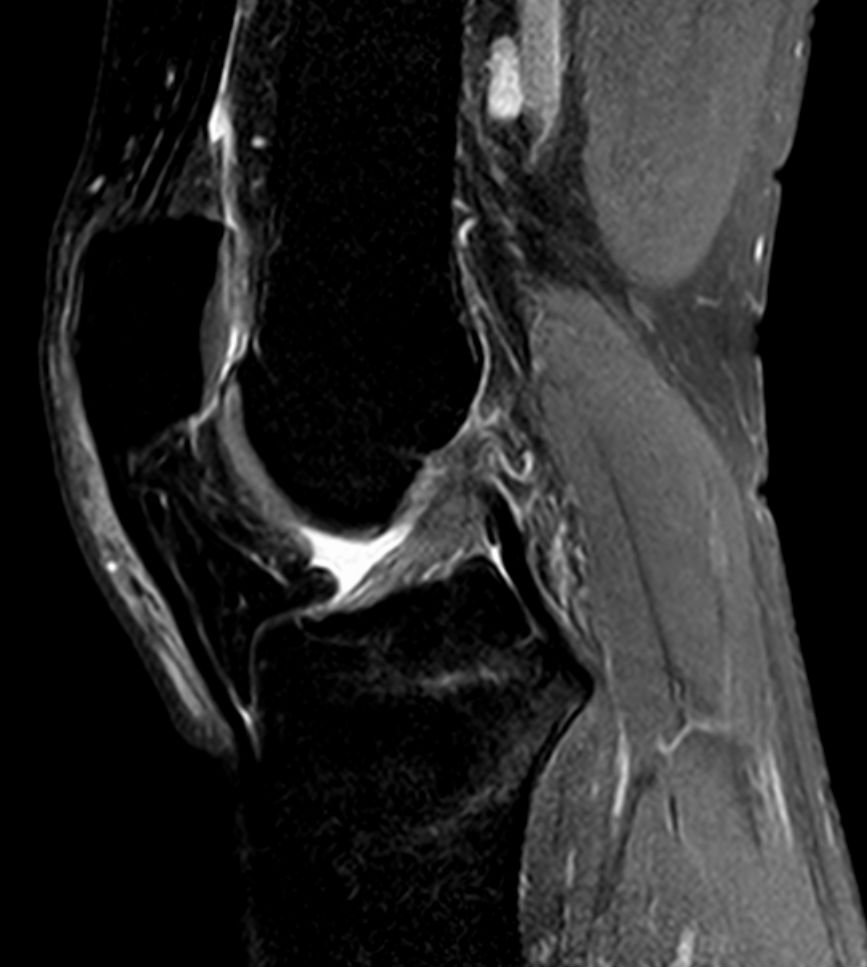
- A proper look at the MRI. Not just the ACL, but the meniscus, the cartilage and the bone bruise pattern. A repairable meniscus tear changes the plan completely, because the window to save a meniscus is limited.
- What you need the knee to do. A 45 year old who walks and cycles and a 20 year old footballer with the same tear are correctly given different advice. Neither one is being misled.
If you want to think this through further, our guide on comparing surgery and rehabilitation walks through how that decision is actually made, including what the trials show about people who started with rehabilitation.
Common questions
My MRI says complete tear. Is there any chance it heals?
There is a chance the ends form a scar bridge that looks continuous on a later scan, and in some patients that is associated with a knee that functions well. It is not something to count on, and it is not the same as getting the original ligament back. The practical approach is to start rehabilitation, get re-examined after six to eight weeks, and judge the knee by how it behaves rather than by what the first report said.
How long should I wait before deciding about surgery?
For an isolated ACL tear with no locking, waiting six to twelve weeks while doing supervised rehabilitation is reasonable and does not harm your result if you do go on to surgery. Waiting is not advised if the knee locks, if there is a repairable meniscus tear, or if it keeps giving way, because the delay then costs you cartilage.
Can I avoid surgery just by strengthening my muscles?
Sometimes, yes. Strong quadriceps, hamstrings and hip muscles, combined with good landing and turning control, genuinely stabilise some knees. It works better for straight line activity than for pivoting sport, and it needs to be real progressive training under supervision, not a few exercises at home. The test is simple: after a serious block of rehabilitation, does the knee still give way?
Should I try the cross bracing protocol?
Discuss it rather than start it. It needs to begin within days of the injury, it involves eight weeks of blood thinning medication, it requires close supervision, and the evidence is still developing with one unfavourable comparison study in athletes. It is not something to attempt based on an internet video, and for most patients who have already been diagnosed weeks later, the window has passed.
Does a knee brace help the ACL heal?
An ordinary hinged brace does not make a torn ACL heal. It can make a knee feel more secure in the early weeks, and it has a role after certain surgeries, but it does not bring the torn ends together or restore stability on its own. The cross bracing protocol is a specific and very different thing, described above.
If I do nothing, will I definitely get arthritis?
No, and it is worth being careful with this claim. The risk of later arthritis is driven mainly by the damage to the meniscus and cartilage, both at the time of injury and from repeated episodes of giving way afterwards. Surgery reduces the episodes of giving way, but it has not been shown to prevent arthritis by itself. Protecting the meniscus and keeping the knee stable, by whichever route, is the part that matters.
What should I ask at my consultation?
Four questions cover most of it. Is my knee actually unstable on examination, or only on the report? Is there a meniscus tear that needs attention now? If I train seriously for eight weeks, what will you re-test to decide? And what specifically about my knee or my activity makes you lean the way you are leaning?
- Filbay SR et al. Evidence of ACL healing on MRI following ACL rupture treated with rehabilitation alone may be associated with better patient reported outcomes. British Journal of Sports Medicine, 2023.
- Filbay SR et al. Healing of acute anterior cruciate ligament rupture on MRI and outcomes following non-surgical management with the Cross Bracing Protocol. British Journal of Sports Medicine, 2023.
- Frobell RB et al. A randomized trial of treatment for acute anterior cruciate ligament tears, and five year follow up. New England Journal of Medicine and British Medical Journal.
- Grindem H et al. Nonsurgical or surgical treatment of ACL injuries, Delaware-Oslo ACL Cohort Study.
Dr. Prince Uchadiya, an experienced ACL surgeon in Indore, treats ACL and knee ligament injuries using arthroscopic techniques, and sees a large number of patients who arrive unsure whether surgery is necessary at all. He believes that decision belongs to the patient, once the examination findings have been explained plainly.
This article is for general information and does not replace an in person examination. Every knee is different, and treatment advice should come from a surgeon who has examined yours and reviewed your scans.