


When can I play football again?
Around nine months, and only after you pass the tests. Here is where that number comes from, what the tests are, and what the data says happens to people who go back early.

Around nine months after surgery, and only after passing strength and hop testing. Not at six months because the knee feels fine, and not on a date fixed in advance.
The nine month figure is not caution for its own sake. In one closely followed group of pivoting sport athletes, the reinjury rate dropped by 51 percent for every month return was delayed, up to nine months. After nine months, delaying further gave no additional benefit.
Time alone is not the whole answer either. In the same study, of the athletes who passed the full test battery before returning, only one out of eighteen was reinjured. Among those who returned without passing, more than a third were.
Why nine months, and not six
By four months most patients walk normally, climb stairs without thinking and have very little pain. The knee feels, to them, repaired. This is the single most dangerous phase of the whole recovery, because what you feel and what is happening inside the joint have come apart.
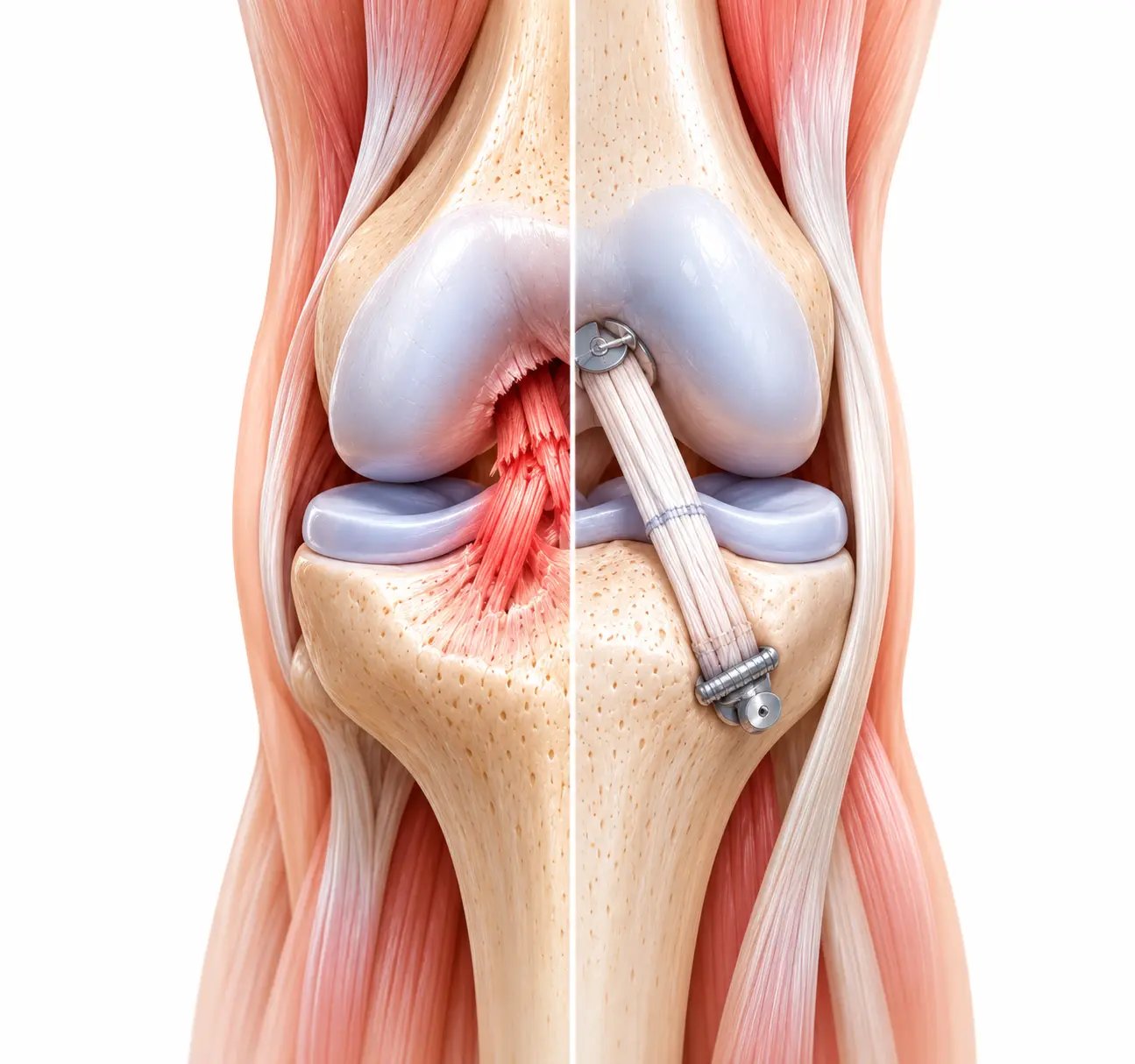
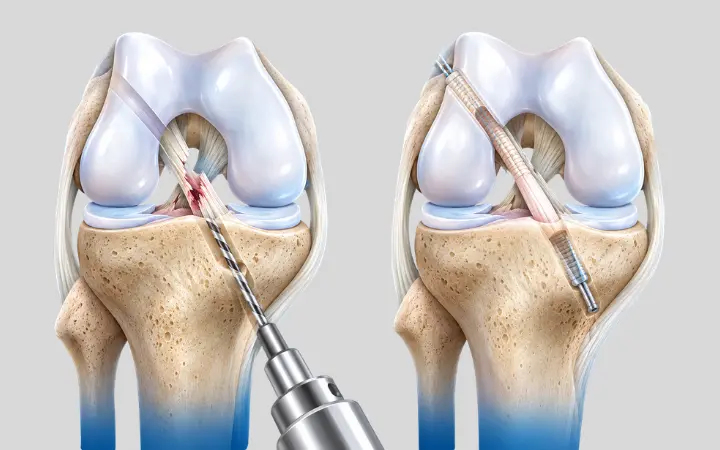
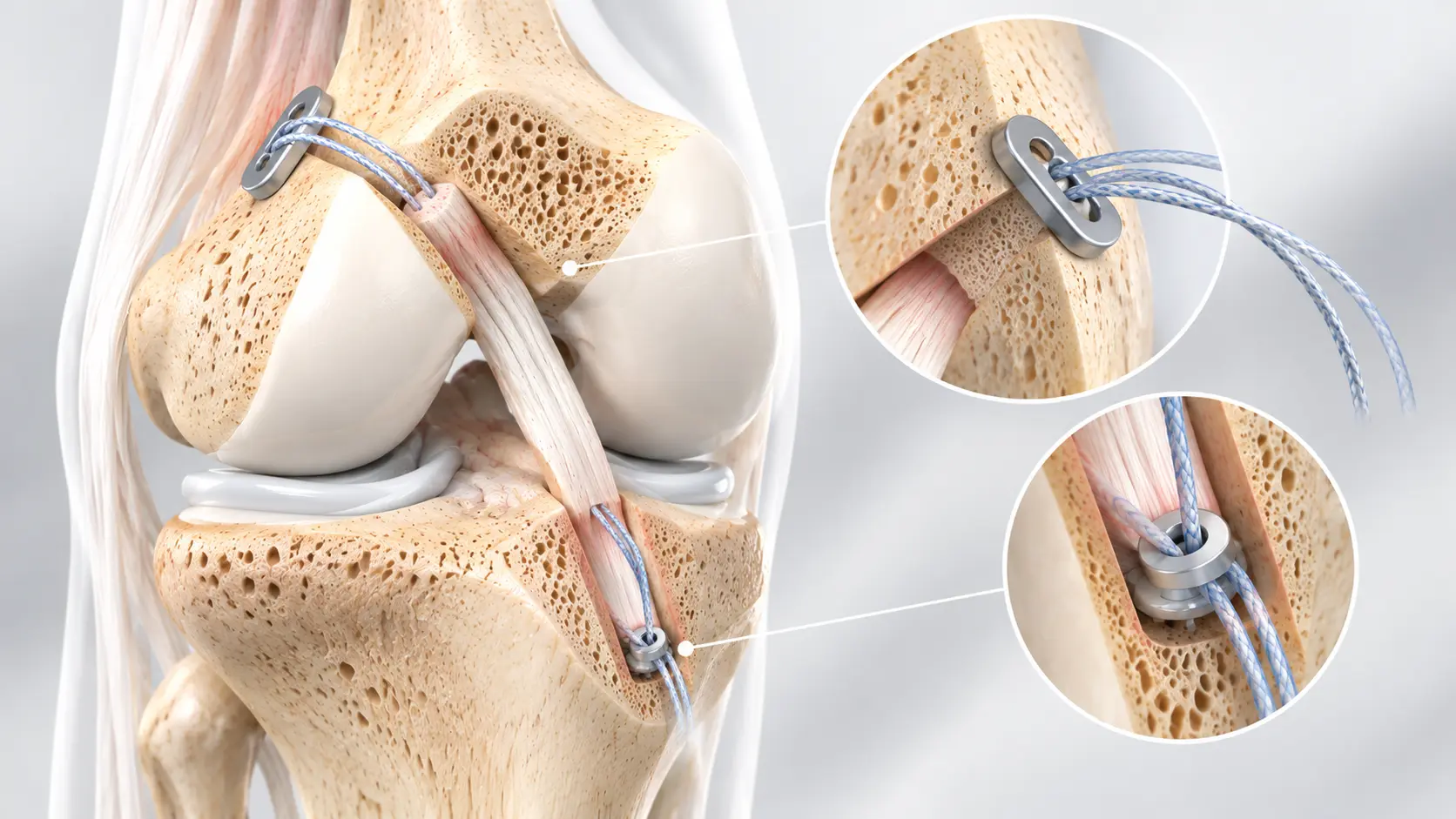
Your graft is a tendon that was moved into a new job. The body does not simply accept it. It breaks the tissue down and rebuilds it as ligament, and during that rebuild the graft is weaker than it was on the day it was implanted. That process runs for most of the first year.
- Months 0 to 2. Healing and basic movement. The graft is still essentially the tendon that was put in.
- Months 2 to 6. Remodelling. The graft is at its weakest, and this is when it feels best. Most failures cluster here.
- Months 6 to 9. Strength returning. Running and controlled change of direction begin, if testing allows.
- Months 9 to 12. The graft behaves like a ligament. Pivoting sport becomes reasonable.
At five months the knee feels ready and the graft is not. That mismatch is what the nine month rule exists to survive.
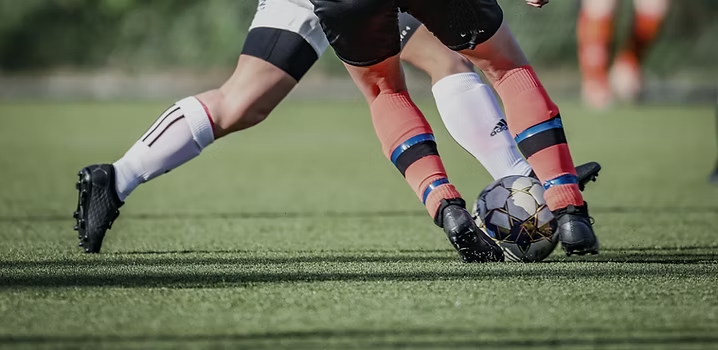
Football is not a general fitness activity. A single match asks for sprinting, stopping, planting the foot and turning the body over a fixed leg, jumping, landing on one leg, and reacting to someone else's movement without planning your own. That last one matters most. Planned movements are controlled by your brain in advance. Unplanned ones are caught by the ligament.
The numbers behind the date
A study of pivoting sport athletes tracked exactly this question, following them after reconstruction and recording who returned when, who passed testing and who tore the knee again.
Read those three figures together, because separately each one misleads. Returning late is safer than returning early. Passing the tests is safer still. And the group that did both had very few reinjuries at all.
The important finding for anyone impatient is the shape of the curve. Each month of delay cut the reinjury rate by roughly half, up to nine months and then no further. Nine months is not an arbitrary round number chosen to be safe. It is where the benefit of waiting runs out.
Waiting past nine months with no testing is not a strategy, and returning at seven months because a test was passed is not a shortcut. The evidence supports both conditions together: enough time, and proven function.
The tests you have to pass
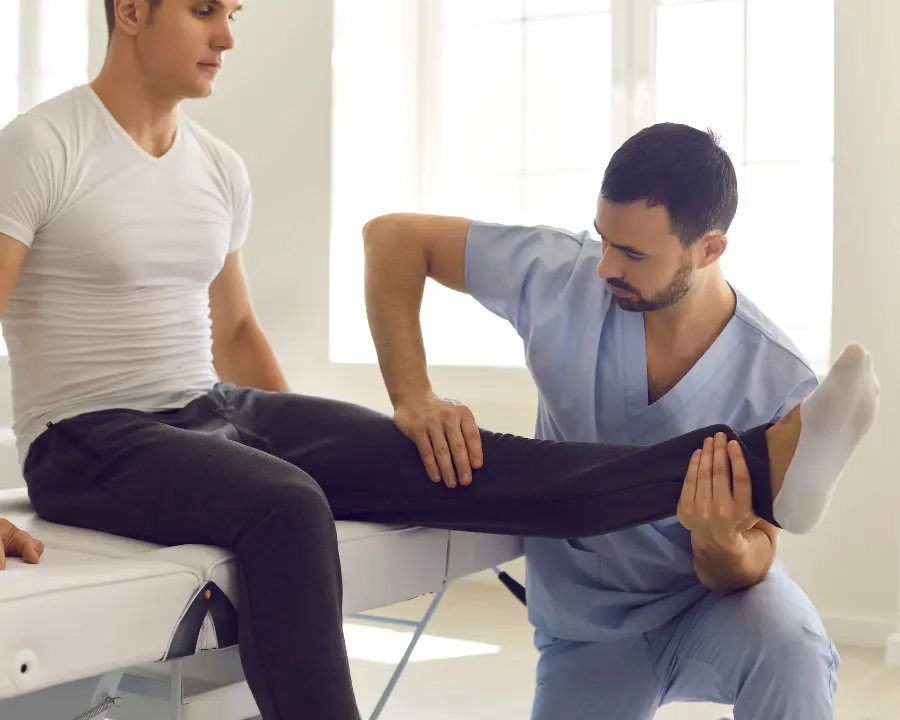
These are measurements, not opinions. Each compares your operated leg against your healthy leg, and the usual bar is at least 90 percent of the other side on every single one.
Many patients in India are discharged with a timeline and no testing at all. If you have not been measured, ask your surgeon or physiotherapist for strength and hop testing before you return. This is the step that most changes your odds, and it is not expensive.
What the return actually looks like
You do not go from rehabilitation straight into a match. The return is staged, and each stage is earned.
Two warnings about this table. First, the months are typical, not promised, and a meniscus repair done at the same time usually pushes everything later. Second, the stage that catches people out is the last one. Training with the team at eight months feels like being back, and the temptation to join a friendly match is strong. The match is where the unplanned movements live.
A weekend game on the local ground with friends involves the same planting, turning and reacting as a competitive match, often on a worse surface and with no warm up. The knee does not know the match was informal.
The honest odds of getting back
You deserve realistic expectations rather than reassurance. A large review pooling 69 studies and more than seven thousand patients found this.
Most people get back to sport. Fewer get back to exactly the level they were at before. That gap is not usually about the knee failing. It is about time, work, age, family, fear of reinjury, and in many cases a decision the person makes themselves that the risk is no longer worth it.
If you are young and playing competitively, the odds of returning are better than average. They are also attached to a higher risk of a second injury, which is covered next.
What raises your risk of a second tear
Some of these you control, and some you do not. Knowing which is which is the useful part.
Within your control
- Returning before nine months. The single clearest modifiable factor in the data.
- Returning without passing testing. Feeling ready is not the same as measuring ready.
- Stopping rehabilitation once you feel normal. The quadriceps deficit often persists well past the point where walking feels easy.
- Skipping neuromuscular and landing training. How you land and cut is trainable, and it reduces risk.
- Going straight into full matches. Without a staged build-up, your first exposure to unplanned movement comes at full speed.
Not within your control
- Being young. Athletes under about twenty carry the highest reinjury risk of any group.
- Playing a pivoting sport at a high level, which is simply more exposure.
- Family history and some differences in anatomy and joint laxity.
- A graft that came out thinner than planned, which is why graft choice and diameter matter.
One more thing worth knowing. The opposite knee is also at raised risk after an ACL injury, particularly in young athletes. Rehabilitation should train both legs, not just the operated one.
Common questions
My knee feels completely fine at five months. Why can I not play?
Because feeling fine is exactly what the five month mark produces, and it is not information about the graft. The remodelling process makes the graft weaker during this period even as pain disappears and walking normalises. This is the most common story behind an early re-tear: not a bad tackle, but a routine turn on a knee that felt healed.
Can I return at seven months if I pass all the tests?
Some surgeons and physiotherapists do allow it for athletes who pass everything convincingly, but the data favours waiting, because time and testing each contribute separately. If you are considering it, have the conversation explicitly rather than just turning up to training. The honest framing is that you would be accepting a somewhat higher risk in exchange for two months.
What if I only play casually with friends on weekends?
The timeline does not change much, and in some ways casual football is riskier. Pickup games often have no warm up, uneven ground, mismatched fitness levels and no substitutions when you tire. Fatigue is when landing control fails. Treat it as the pivoting sport it is.
Will a knee brace let me go back sooner?
No. Functional braces have not been shown to prevent graft re-tears or to justify an earlier return. Some players find one gives confidence, and there is no harm in that, but it should not move your date forward by a single week.
Does a meniscus repair change the timeline?
Yes, usually. A meniscus repair needs protection in the early months, which often means restricted weight bearing and limited deep bending, and that pushes the whole programme later. Expect your return to sit at the longer end of the range. Your surgeon should tell you this clearly before surgery rather than afterwards.
How do I know whether my rehabilitation is good enough?
Three markers. Someone is measuring your strength rather than watching you walk. The programme progresses in difficulty rather than repeating the same exercises for months. And there is a planned testing date before return rather than a vague timeline. If none of those are present, ask for a referral to a physiotherapist who does sports rehabilitation.
What if I tear it again?
It is not the end of playing, but it is a harder road. Revision reconstruction is a more complex operation, results are generally a step below a first reconstruction, and the rehabilitation is longer. This is the main reason the nine month rule is worth respecting the first time.
What should I ask at my six month review?
Four questions. What is my quadriceps strength compared with the other leg, as a number? When will you do hop testing? Which specific stage am I cleared for right now, running or cutting or team training? And what exactly do I need to achieve before full match play?
- Grindem H et al. Simple decision rules can reduce reinjury risk by 84% after ACL reconstruction, the Delaware-Oslo ACL cohort study. British Journal of Sports Medicine, 2016.
- Ardern CL et al. Fifty-five per cent return to competitive sport following anterior cruciate ligament reconstruction surgery, an updated systematic review and meta-analysis of 69 studies and 7,556 participants. British Journal of Sports Medicine, 2014.
- Kyritsis P et al. Likelihood of ACL graft rupture, not meeting six clinical discharge criteria before return to sport is associated with a four times greater risk of rupture.
- Paterno MV et al. Incidence of second ACL injury after primary reconstruction and return to sport in young athletes.
Dr. Prince Uchadiya, an experienced sports and ACL surgeon in Indore, treats ACL injuries in footballers, kabaddi, and basketball players, and clears patients for pivoting sport on the basis of strength and hop testing rather than the calendar alone.
This article is for general information and does not replace an in person examination. Your return to sport date should be set by the surgeon and physiotherapist managing your recovery, based on testing of your own knee.