

Primary ACL Repair
Instead of building a new ligament, your own torn ACL is stitched back to the bone it pulled off from. It suits only a small group of fresh injuries, and the decision is often confirmed after the camera is inside the knee.
Animation or OT footage showing the torn ligament being stitched and pulled back to its footprint.
What is primary ACL repair?
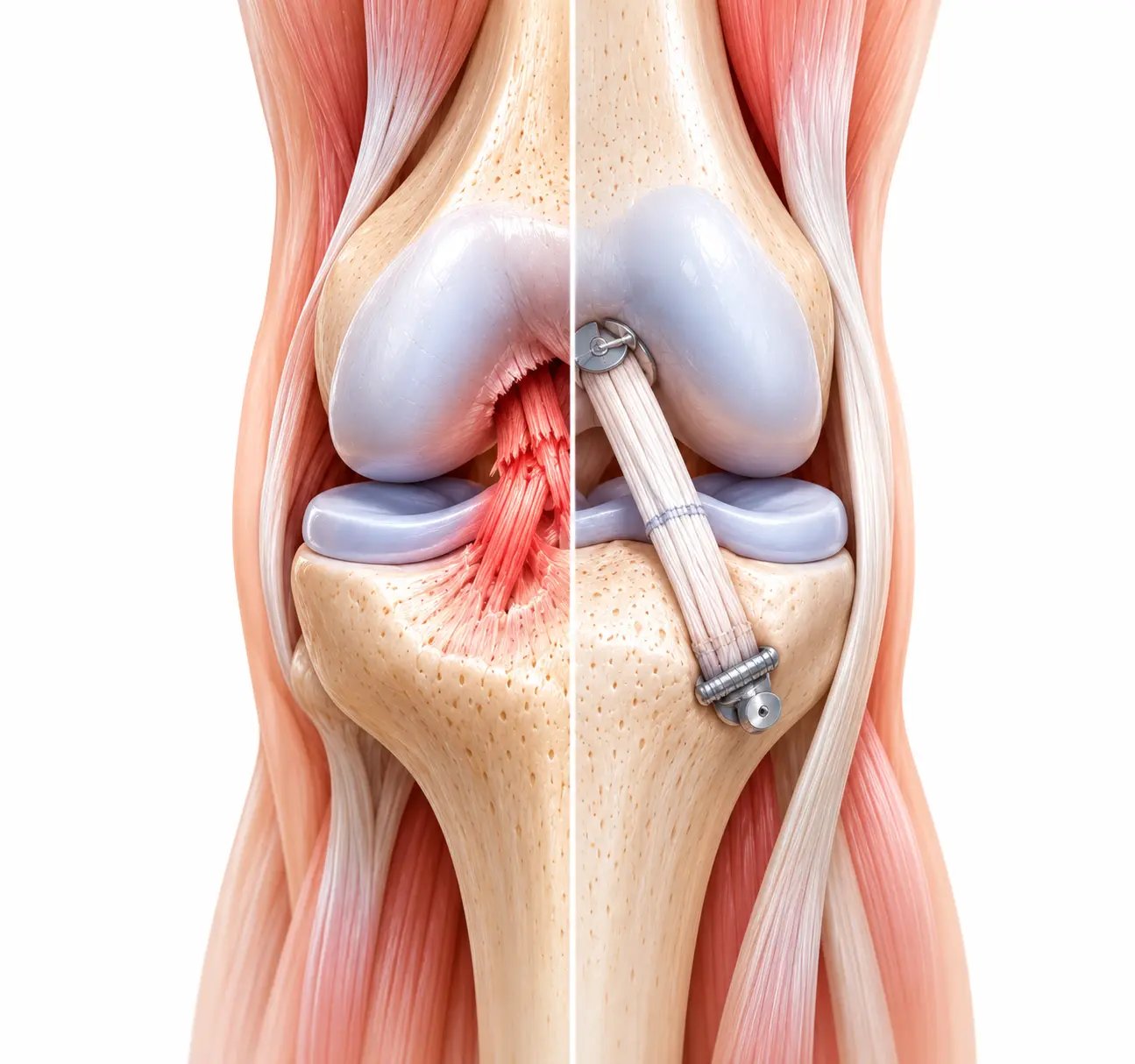
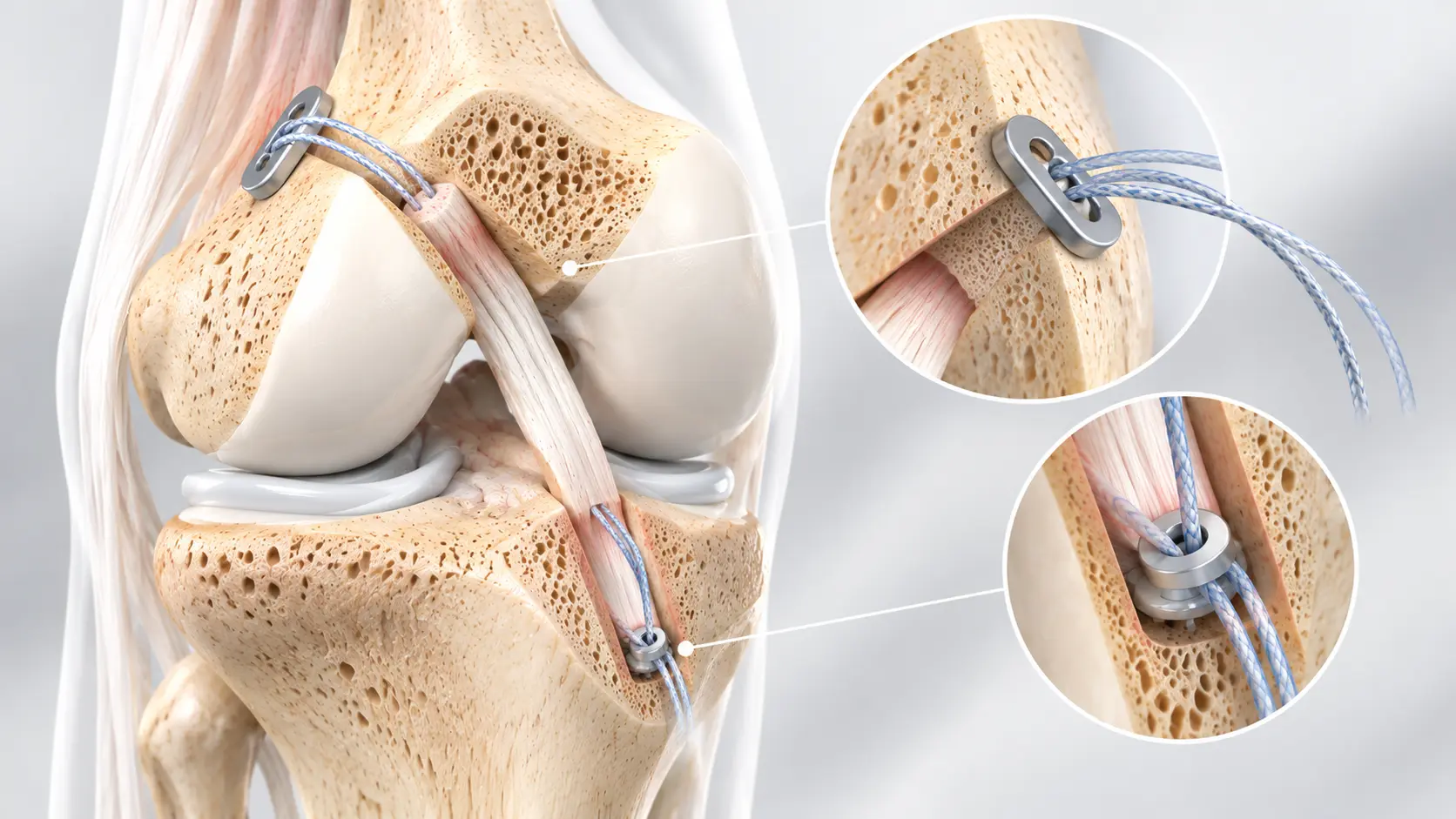
In a repair, nothing is taken from your leg. The surgeon stitches your own torn ACL and pulls it back onto the spot on the thigh bone where it tore away, so the original ligament heals back in place.
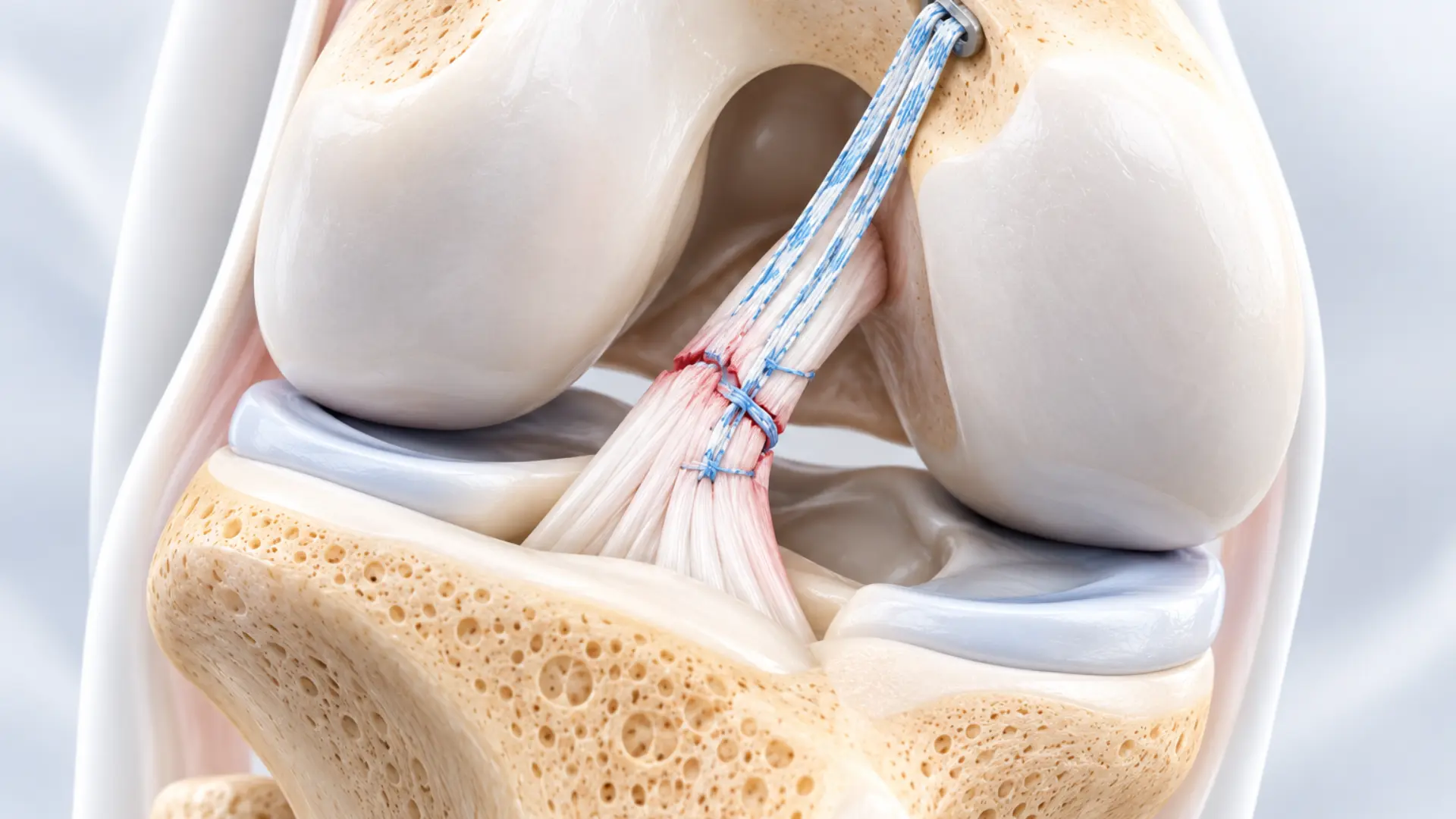
This only works when the ligament has come off cleanly from the top end, like a rope pulled off its hook, and the tissue itself is still healthy. If the ligament is torn in the middle or has frayed and shrunk, there is nothing solid to reattach, and a reconstruction is the right operation instead.
Repair was tried widely in the 1970s and 1980s and largely abandoned because so many knees became unstable again. It has returned in recent years with much stricter patient selection and with a suture tape brace to protect the healing ligament. The honest position today is that it is a good option for a small, carefully chosen group, and reconstruction remains the standard for everyone else.
Who this technique suits
Selection matters more here than in any other ACL technique. In published series, only a small share of all ACL tears turned out to be repairable.
Usually a good fit
- A tear at the top end, where the ligament pulled off the thigh bone
- A recent injury, operated before the ligament end shrinks back
- Healthy looking ligament tissue when the camera goes in
- Adults in their thirties and above with moderate sporting demands
- Patients who strongly wish to keep their own ligament
Not suitable
- Tears in the middle of the ligament, which is the commonest pattern
- Older tears where the ligament has shrunk or dissolved away
- Teenagers and young adults, where failure rates run higher
- High level pivoting athletes and physically demanding jobs
- Poor tissue quality seen during the arthroscopy
How the surgery is done
-
01
Anaesthesia and examination
The surgery is done under spinal or general anaesthesia. Once you are relaxed, the knee is examined again to confirm how loose it is.
-
02
The deciding look
The camera goes in and the surgeon sees where the tear is and how healthy the tissue looks. This is the moment the final call is made, which is why consent is taken for both repair and reconstruction.
-
03
Stitches are woven into the ligament
Strong sutures are passed up and down the torn end of your ACL so the pull is spread along the ligament rather than cutting through one spot.
-
04
Ligament is pulled back to its footprint
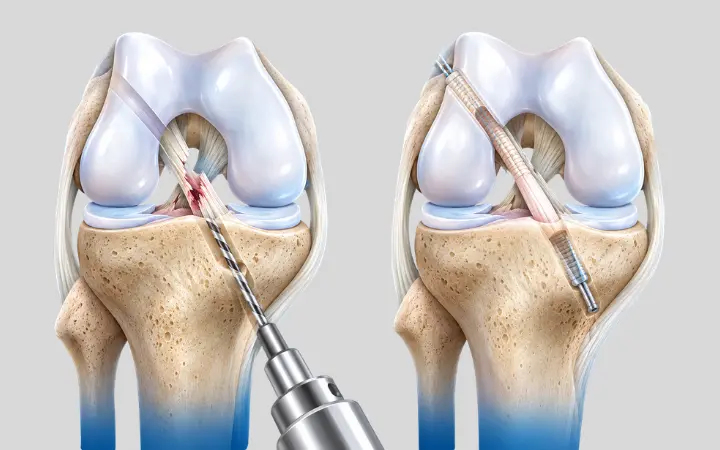
A small tunnel or anchor is placed at the original attachment on the thigh bone. The stitches draw the ligament back onto that exact spot and hold it there.
-
05
A suture tape brace is added
In most modern repairs a tape is placed alongside the ligament and anchored at both ends. It protects the repair while your own ligament heals back into the bone.
-
06
Movement checked and closure
The knee is bent and straightened to confirm the repair holds and nothing catches. The cuts are closed and physiotherapy usually starts the same day or the next morning.
Please plan for both possibilities. If the tissue does not look repairable once the camera is inside, your surgeon will proceed with a reconstruction in the same sitting rather than settle for a repair that is likely to fail.
Is a graft used?
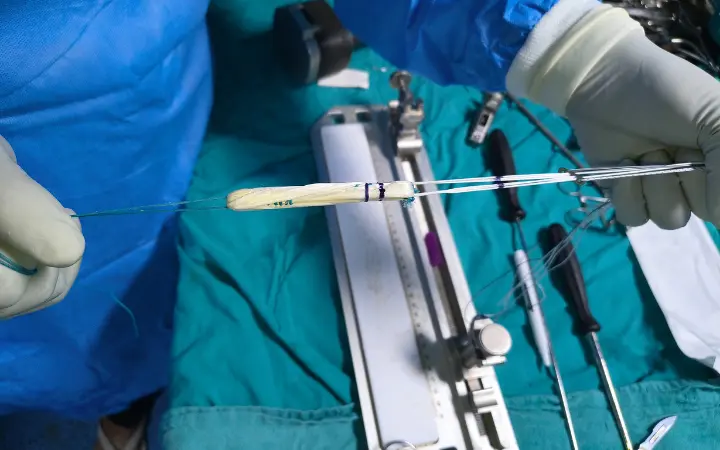
No tendon is taken from your leg. Three things do the work instead.
Your own ligament
The original ACL stays, with its own blood supply and nerve endings intact.
Sutures and anchors
Strong stitches and a small anchor hold the ligament against its footprint while it heals.
Suture tape brace
A tape alongside the repair shares the load during the healing months.
Recovery at a glance
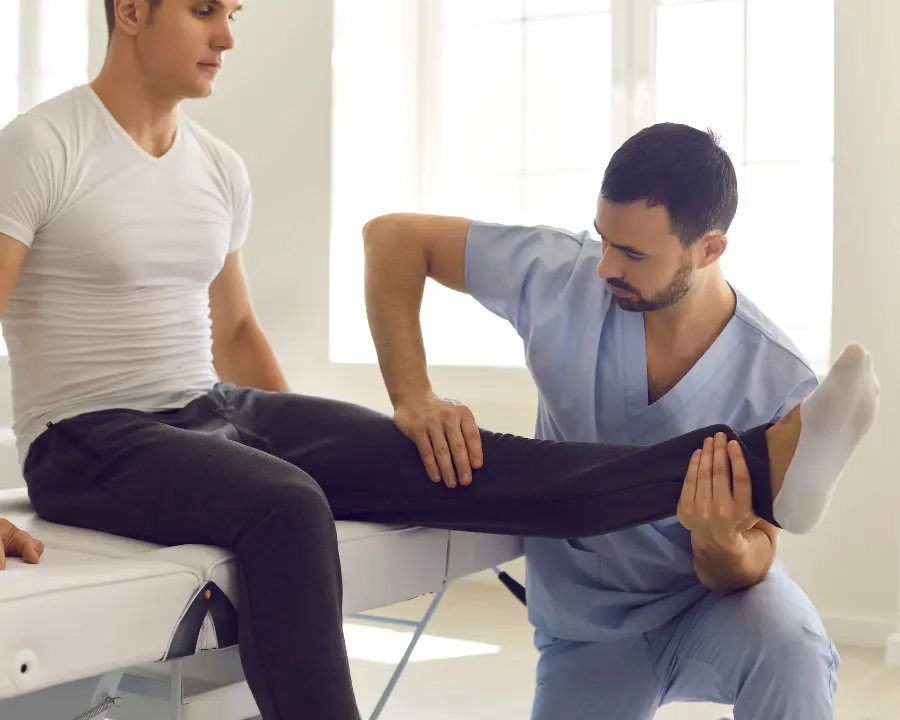
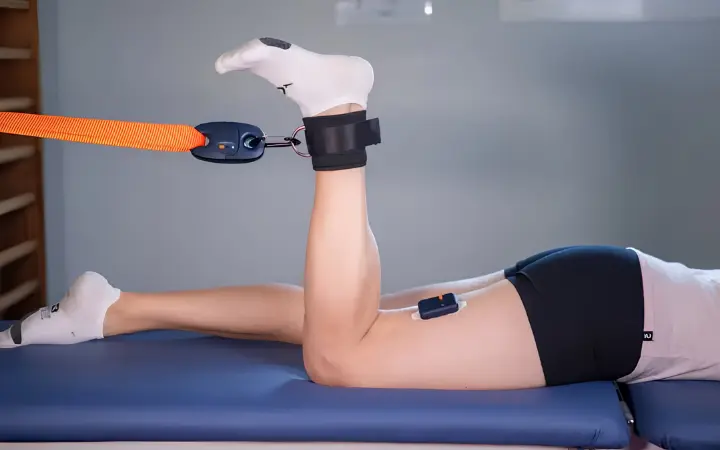
There is no graft to take, so the first two weeks are often easier and the front of the knee stays comfortable. The early bending may be kept more protected than after a reconstruction, since the stitches are holding soft tissue to bone. Return to pivoting sport is still judged by your tests, not by the calendar.
Open the full recovery roadmapBenefits and trade-offs
Benefits
- Your own ligament is kept, along with its nerve endings and blood supply
- No tendon is taken, so there is no donor site pain or weakness
- Less bone is drilled than in a full reconstruction
- Early comfort is usually better, with a quieter first few weeks
- A reconstruction is still fully possible later if the repair does not hold
Trade-offs to know
- Only a small minority of ACL tears are suitable at all
- Pooled studies report failure in roughly one in eight knees
- Failures are clearly more common in younger and more active patients
- It must be done early, before the torn end shrinks back
- Long term evidence is thinner than for reconstruction
To put it plainly, when a repair is done in the right knee the reported function scores are excellent and close to normal. The catch is the failure rate, which pooled reviews place around thirteen percent overall and higher again in patients in their teens and early twenties. That is why most surgeons, including ours, treat reconstruction as the default and repair as a considered exception.
Cost of this surgery
Depends on the anchors and suture tape used, room category and whether a meniscus repair is added.
Please budget for a reconstruction as well, since the final decision is made during the surgery. Most health insurance policies cover both after their waiting periods, and our team can help you with the paperwork.
Common questions
Can my ACL be repaired instead of reconstructed?
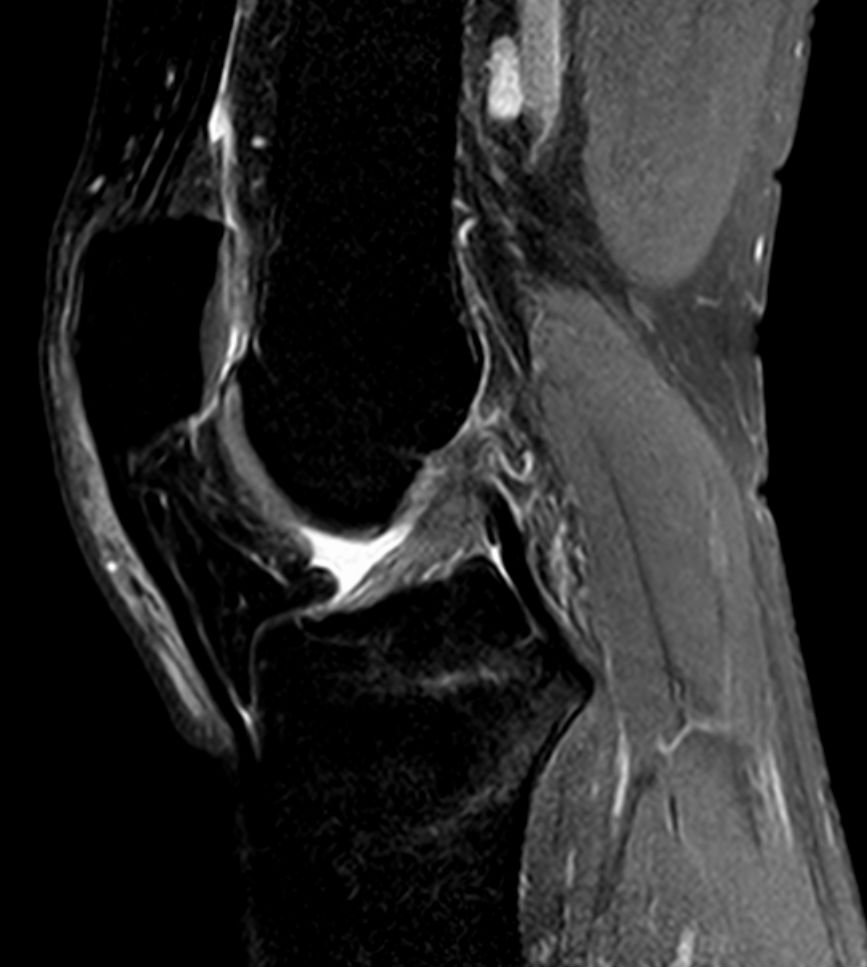
Only if your MRI shows the tear at the top end, the injury is recent and the tissue still looks healthy during the arthroscopy. Most ACL tears do not meet all three conditions. Bring your MRI and we will tell you honestly where you stand.
What happens if the tissue is not good once you look inside?
Your surgeon will go ahead with a reconstruction in the same operation. This is discussed and consented beforehand, so there is no second surgery and no second anaesthesia.
Is repair better than reconstruction?
Not in general. In the right knee the results are very good and you keep your own ligament. Across all published patients, though, failures are more common after repair than after a well done reconstruction, so it is the better choice only for a selected group.
Why was ACL repair abandoned earlier?
In the 1970s and 1980s it was offered to almost everyone, including midsubstance tears that cannot heal, and a large share of those knees became unstable. Today it is offered to a narrow group and the repair is protected with a suture tape.
Will I recover faster than after a reconstruction?
The first weeks are usually more comfortable because no tendon is taken. The return to sport timeline does not move, because your ligament still needs months to heal firmly back into the bone.
If the repair fails, have I lost anything?
No. A standard reconstruction can still be done afterwards, and your hamstring and other tendons are still available because nothing was taken at the first surgery.
This page explains a surgical technique in general terms. What suits your knee is decided after a clinical examination and MRI review with a top arthroscopic ACL surgeon in Indore.


Dr. Prince Uchadiya

Thank You,
Patient!
Your appointment request has been received.
Our clinic team will call you shortly to confirm your consultation and share further details.
 Confirm on WhatsApp
