

Revision ACL Reconstruction
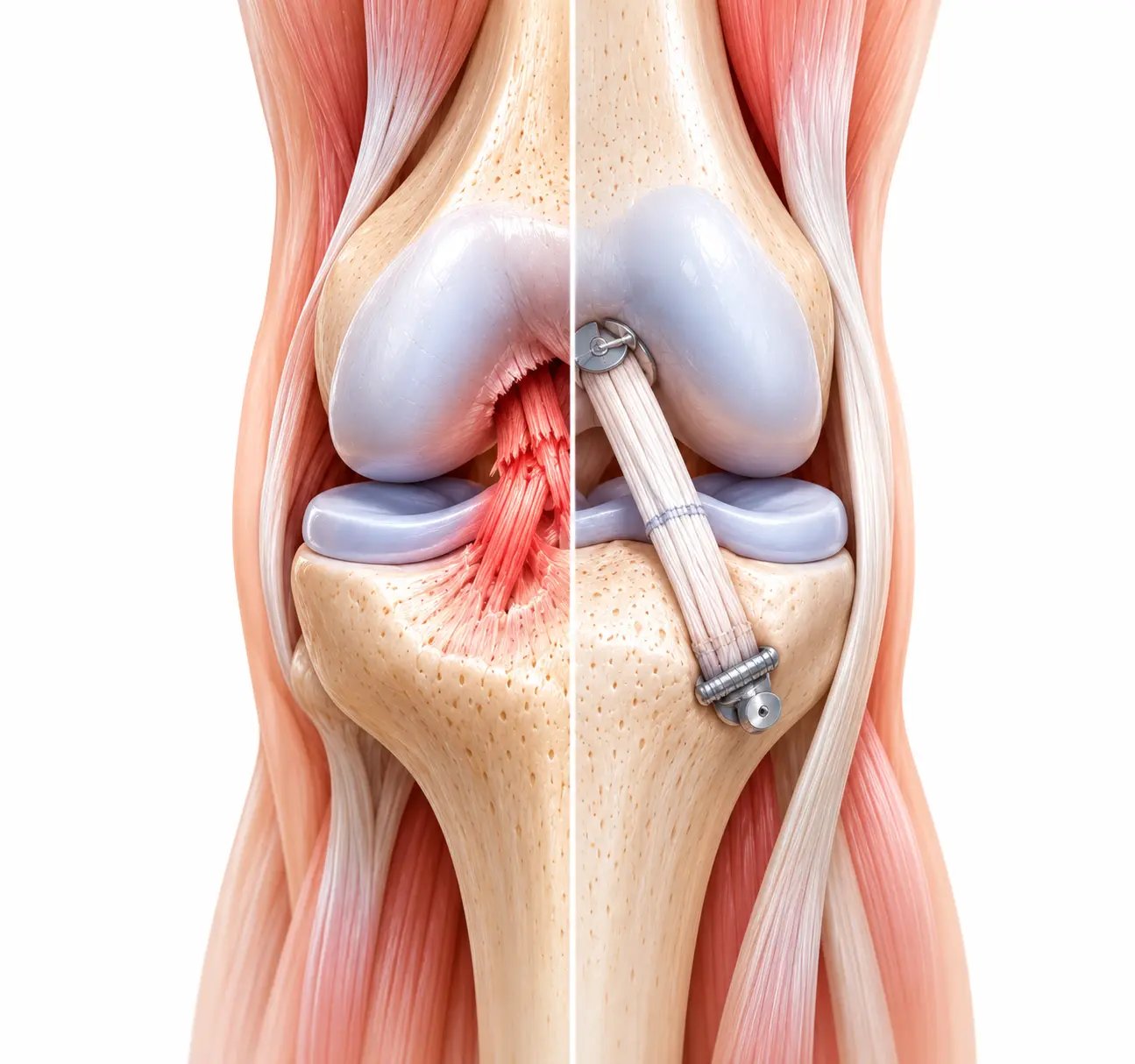
Surgery for a knee where the first ACL reconstruction has failed. The new graft is the easy part. The real work is finding out why the first one did not hold, and correcting that before anything else.
Animation or OT footage showing old tunnels being assessed and a new graft being placed.
What is revision ACL reconstruction?
It is a redo operation for a knee where the ACL graft has torn or stretched out and the knee gives way again. Roughly one in twenty to one in ten reconstructions eventually needs it.
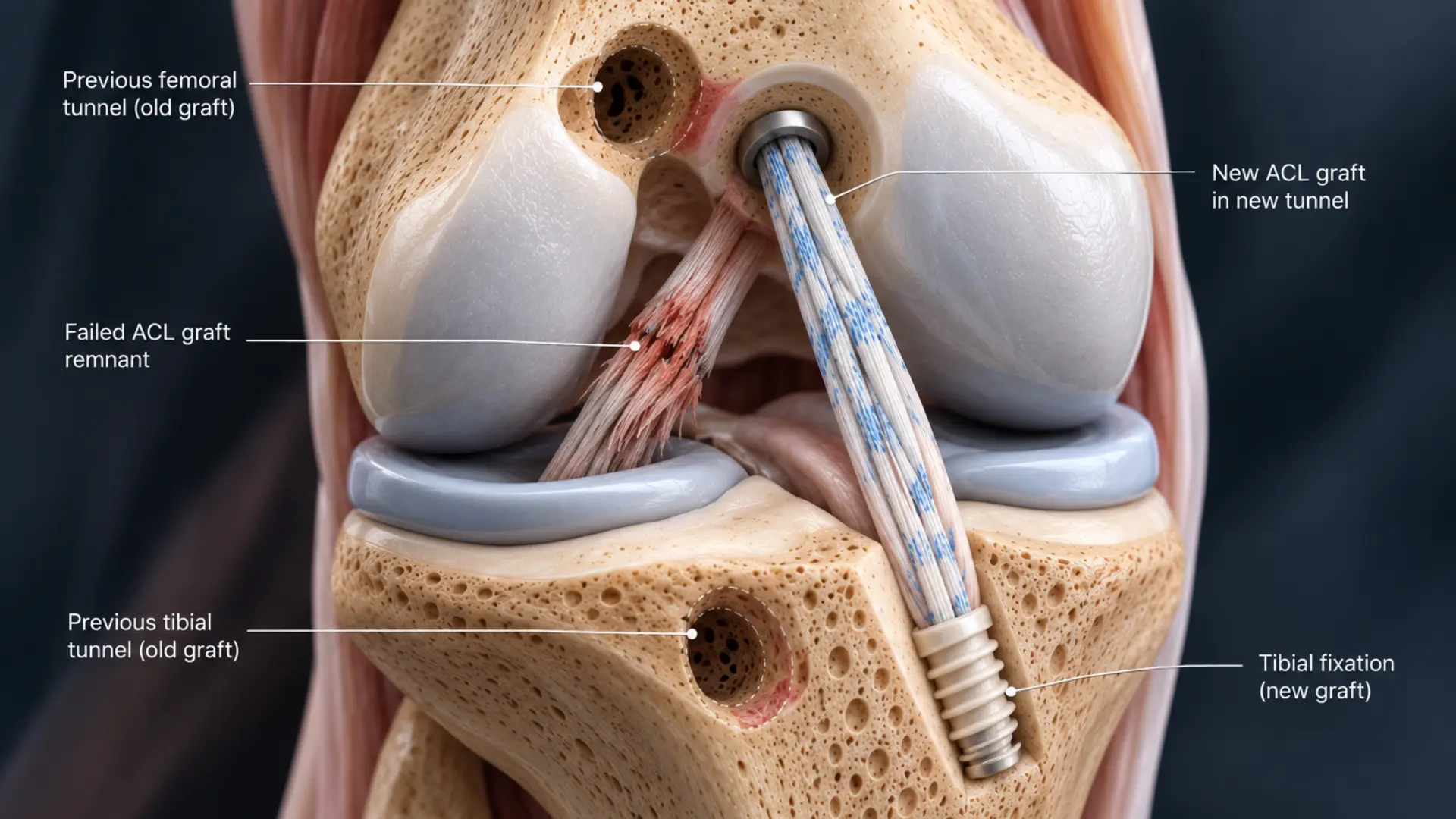
Grafts fail for three broad reasons. A fresh injury can tear a perfectly good graft. The graft may have been placed in the wrong position, which loads it in a way it cannot survive. Or it may never have healed properly into the bone. The treatment is different for each, so the whole purpose of the work before surgery is to find out which one applies to you.
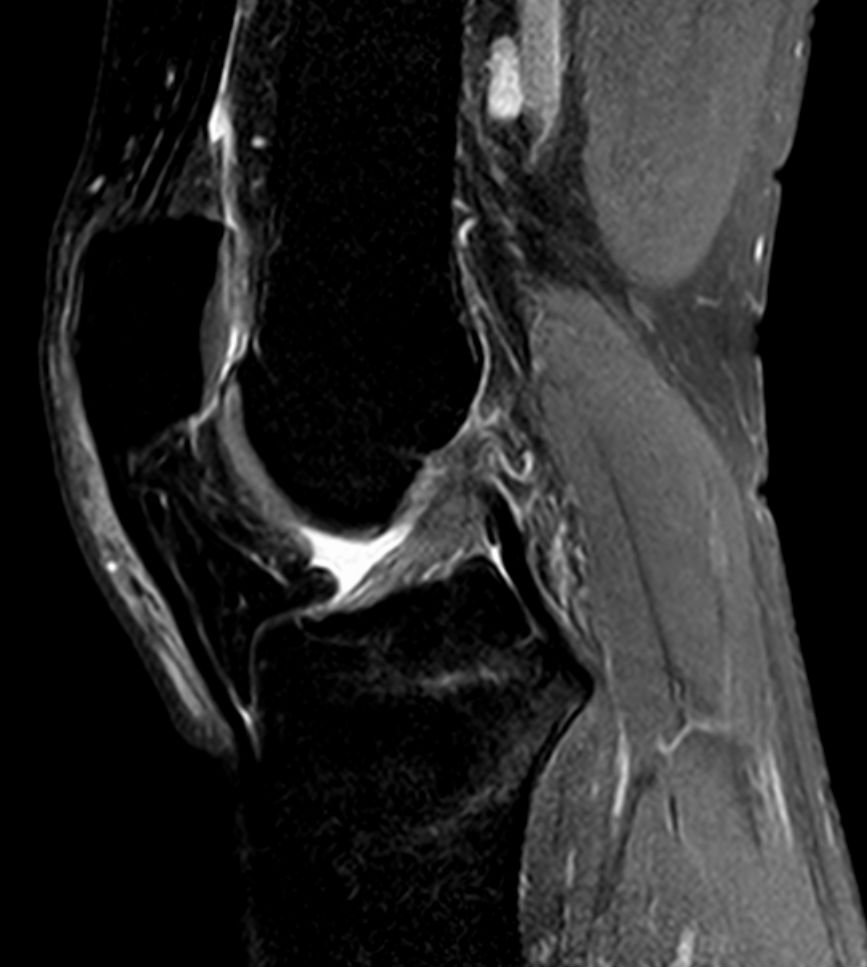
That assessment usually means a CT scan to measure the old tunnels, an MRI to check the graft, meniscus and cartilage, an examination for looseness on the outer side of the knee, and X-rays to look at the shape and alignment of your leg. Only after this is the operation planned.
Who this technique suits
The deciding question is whether your knee is unstable, not simply painful. A knee that aches but never gives way is usually a different problem.
Usually a good fit
- A knee that gives way again after an earlier ACL reconstruction
- Confirmed graft failure on examination and MRI
- A remaining meniscus worth protecting from further damage
- Patients who want to return to pivoting sport or demanding work
- Knees where a correctable cause of failure has been identified
Not suitable yet
- A stable knee where pain, not giving way, is the main problem
- Any suspicion of infection, which must be treated first
- A stiff knee, which needs movement restored before a new graft
- Wide or badly placed old tunnels, which need bone grafting first
- Advanced arthritis, where a different operation may serve you better
How the surgery is done
-
01
Finding the cause of failure
Before any surgery is booked, the old operation notes, implant details, CT, MRI and alignment X-rays are reviewed together. Replacing a graft without correcting the cause is how second failures happen.
-
02
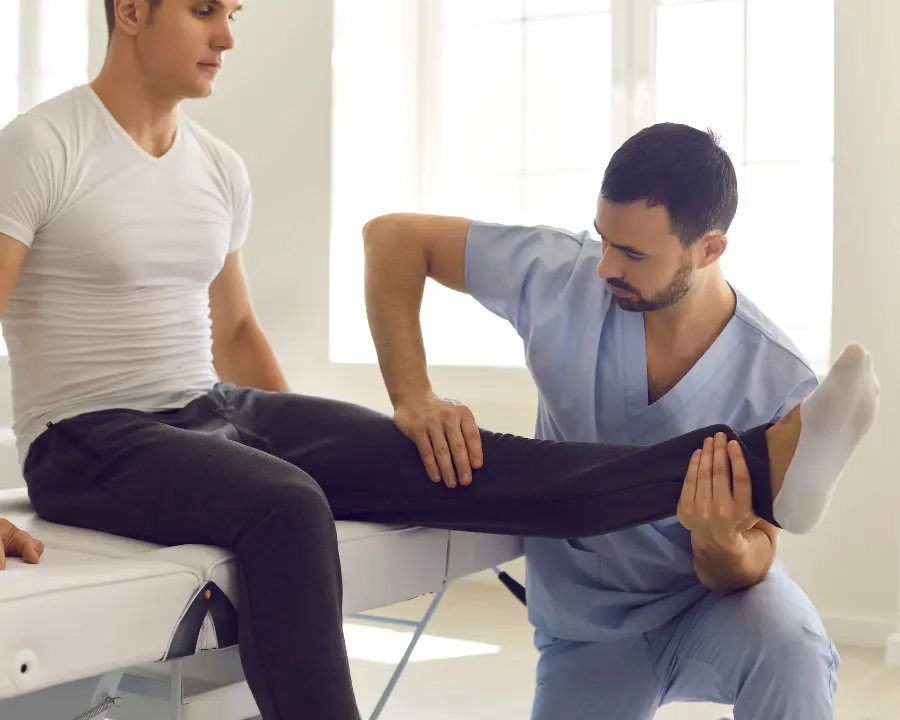
Anaesthesia and examination
Under anaesthesia the knee is tested for forward and twisting looseness, which shows whether the outer side structures also need attention.
-
03
Old graft and implants are dealt with
The failed graft is cleared and the old screws or buttons are removed only where they block the new tunnel. Hardware that is out of the way is usually left alone.
-
04
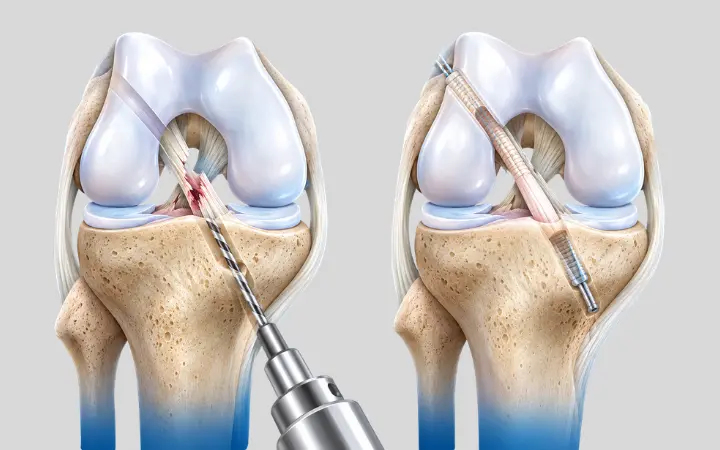
New tunnels, or bone grafting first
If fresh bone is available at the correct spot, new tunnels are made in one sitting. If the old tunnels are too wide, they are filled with bone and the reconstruction is done a few months later as a second stage.
-
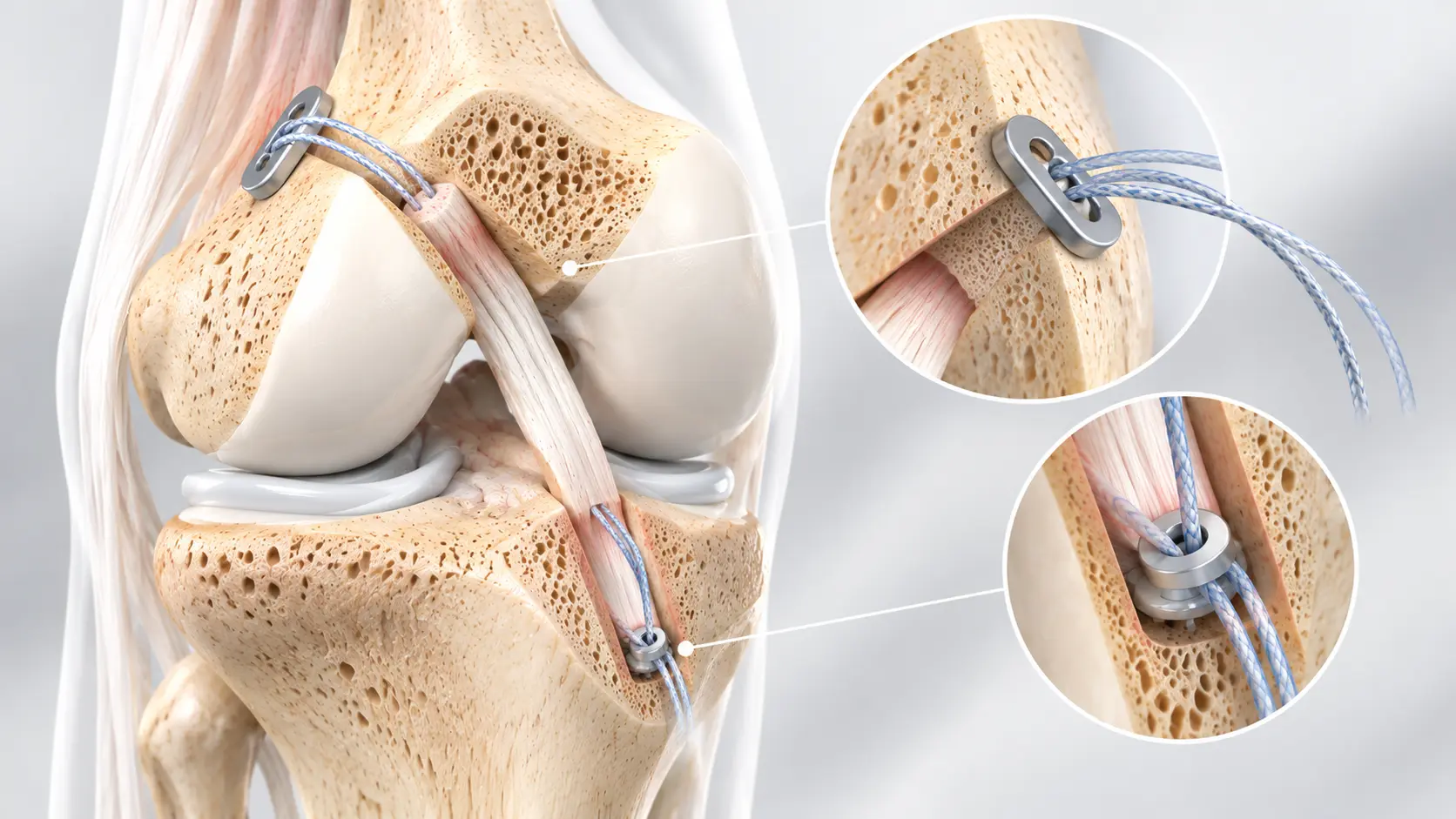
05
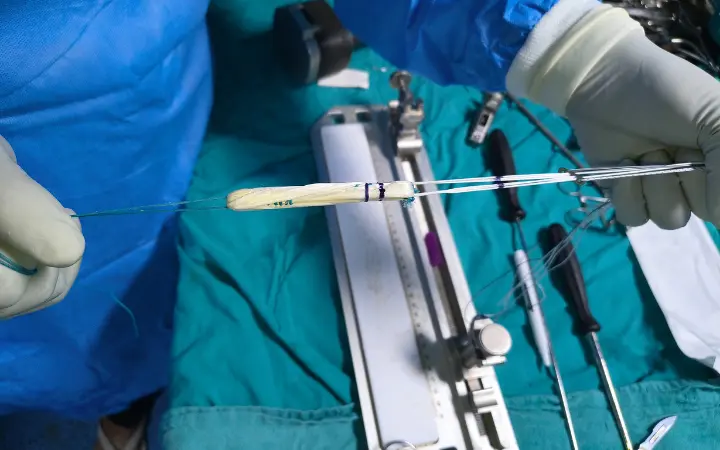
New graft is placed with backup fixation
Bone around old or grafted tunnels holds less firmly, so surgeons often use two methods of fixation on the same end rather than relying on one.
-
06
Everything else is corrected
A torn meniscus is repaired, and outer side augmentation is often added, since revision knees carry a higher risk of twisting looseness. The cuts are then closed.
If your surgeon recommends a two stage plan, it is not a setback. Placing a graft into a wide tunnel gives it poor hold from day one, and the delay buys solid bone for the new graft to grip.
Which graft is used
Your own tissue is preferred wherever possible. In large revision registries, grafts taken from the patient had a lower re-tear rate than donor tissue.
Quadriceps or patellar tendon
Strong, thick options often chosen when the hamstrings were used the first time.
Hamstring from the other leg
An option when the same side has already been harvested.
Donor tissue
Reserved for cases with no good own tissue, and usually combined with outer side augmentation.
Recovery at a glance
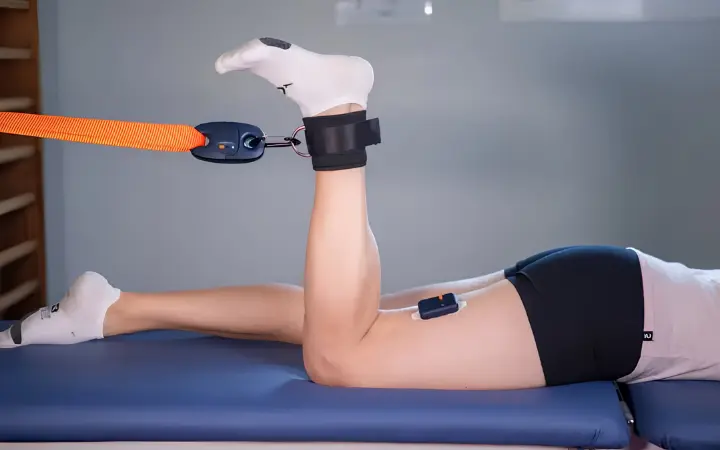
Revision rehabilitation runs a little longer and is guided more cautiously, because the new graft is often sitting in bone that is not as solid as it was the first time. Early failures tend to happen between six and twelve weeks, which is exactly when patients feel good and start doing too much.
If you have a two stage plan, add roughly four to six months between the bone grafting and the reconstruction, with a scan in between to confirm the bone has filled in.
Open the full recovery roadmapBenefits and trade-offs
Benefits
- Restores stability so the knee stops giving way
- Protects what is left of your meniscus and cartilage
- The original error, if there was one, gets corrected
- Other problems found along the way are treated in the same plan
- Most patients return to daily life and recreational activity
Trade-offs to know
- Results are generally not as good as a first time reconstruction
- Some knees need two operations several months apart
- Return to the same level of sport is less certain
- Longer surgery, more implants and a higher total cost
- Existing cartilage damage does not reverse with a new graft
It is worth being clear about expectations. Stability is usually restored and the knee becomes reliable for daily life and most recreational sport. Function scores after revision, however, tend to sit below those after a first time reconstruction, largely because of the meniscus and cartilage damage that accumulated while the knee was unstable. The earlier a failed graft is addressed, the less of that damage there is.
Cost of this surgery
Depends on one or two stages, bone graft material, implants used and whether a meniscus repair is added.
If a two stage plan is advised, please budget for both admissions. Most health insurance policies cover revision ACL surgery, though some ask for the records of your first operation, and our team can help you with the paperwork.
Common questions
Why did my first ACL fail?
Usually one of three things. A fresh injury tore a good graft, the graft was placed in a position that overloaded it, or it never healed properly into the bone. Your scans and the earlier operation notes usually tell us which.
Will I need two operations?
Only if the old tunnels are too wide or badly placed for a new graft to hold. Most revisions are done in one sitting. The CT scan is what answers this, and we tell you before surgery rather than during it.
Can you use my leg again if the hamstring is already gone?
Yes. The quadriceps and patellar tendons on the same leg, the peroneus longus, or the hamstring from the other leg are all workable. Donor tissue is kept as a last option.
Will I get back to my sport?
Most patients return to daily life and recreational sport. Return to the same competitive level is less certain than after a first reconstruction, and depends heavily on the state of your meniscus and cartilage.
Is the recovery harder than the first time?
It is usually slower rather than more painful. The graft is often held in less solid bone, so the early months are protected more carefully and the sport milestone sits a little further out.
Should I wait and see if the knee settles?
Waiting is reasonable only if the knee is not giving way. Every episode of giving way risks the meniscus and cartilage, and that damage is the single biggest factor in how good a revision knee feels afterwards.
This page explains a surgical technique in general terms. What suits your knee is decided after a clinical examination and MRI review with an experienced revision ACL surgeon in Indore.


Dr. Prince Uchadiya

Thank You,
Patient!
Your appointment request has been received.
Our clinic team will call you shortly to confirm your consultation and share further details.
 Confirm on WhatsApp
