
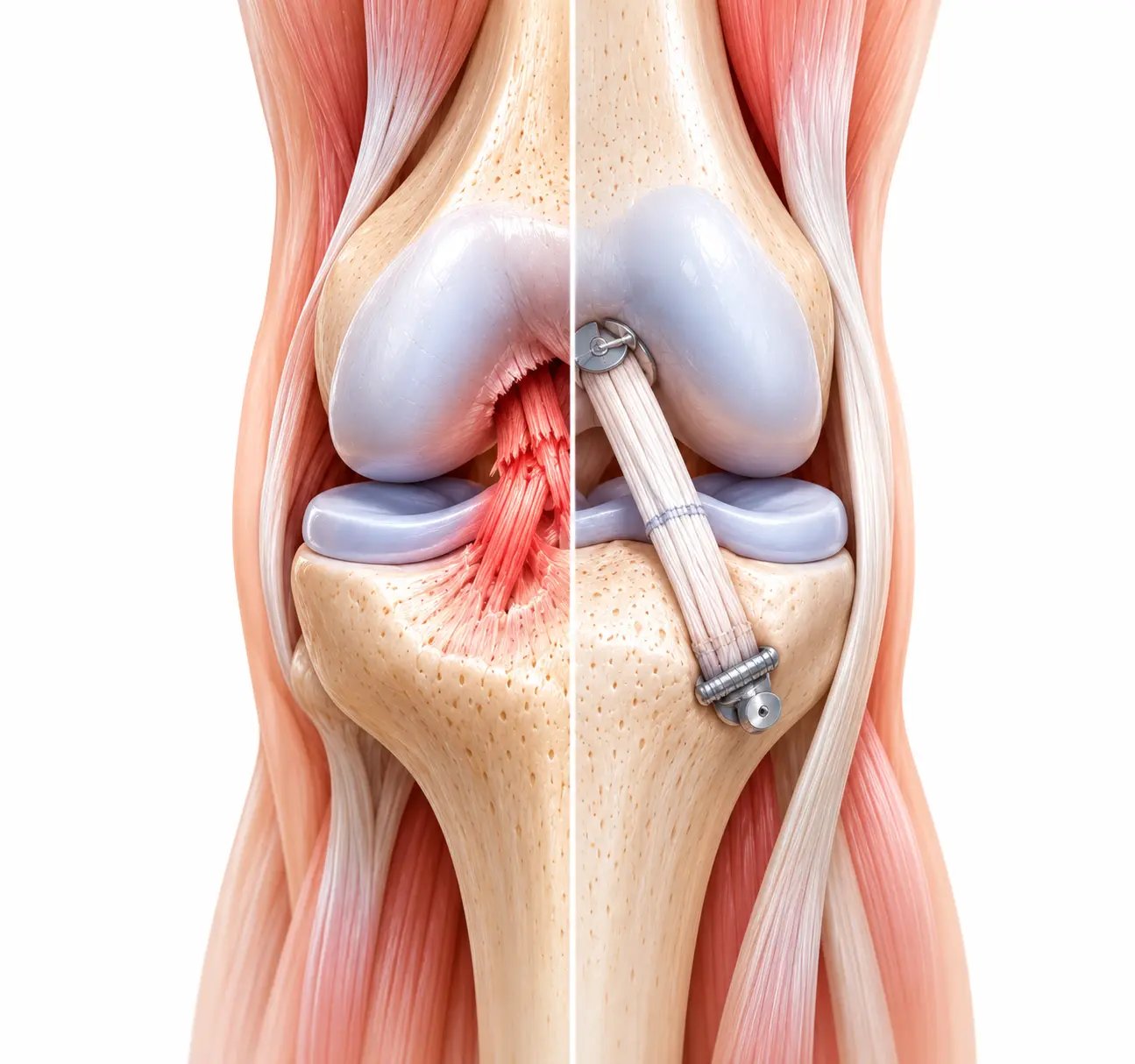
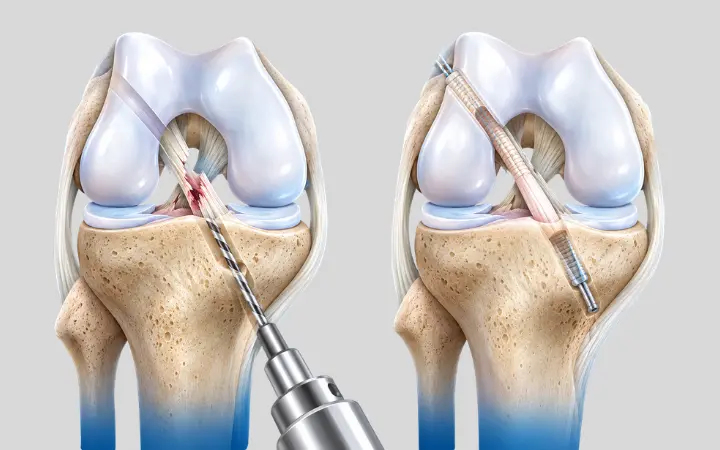
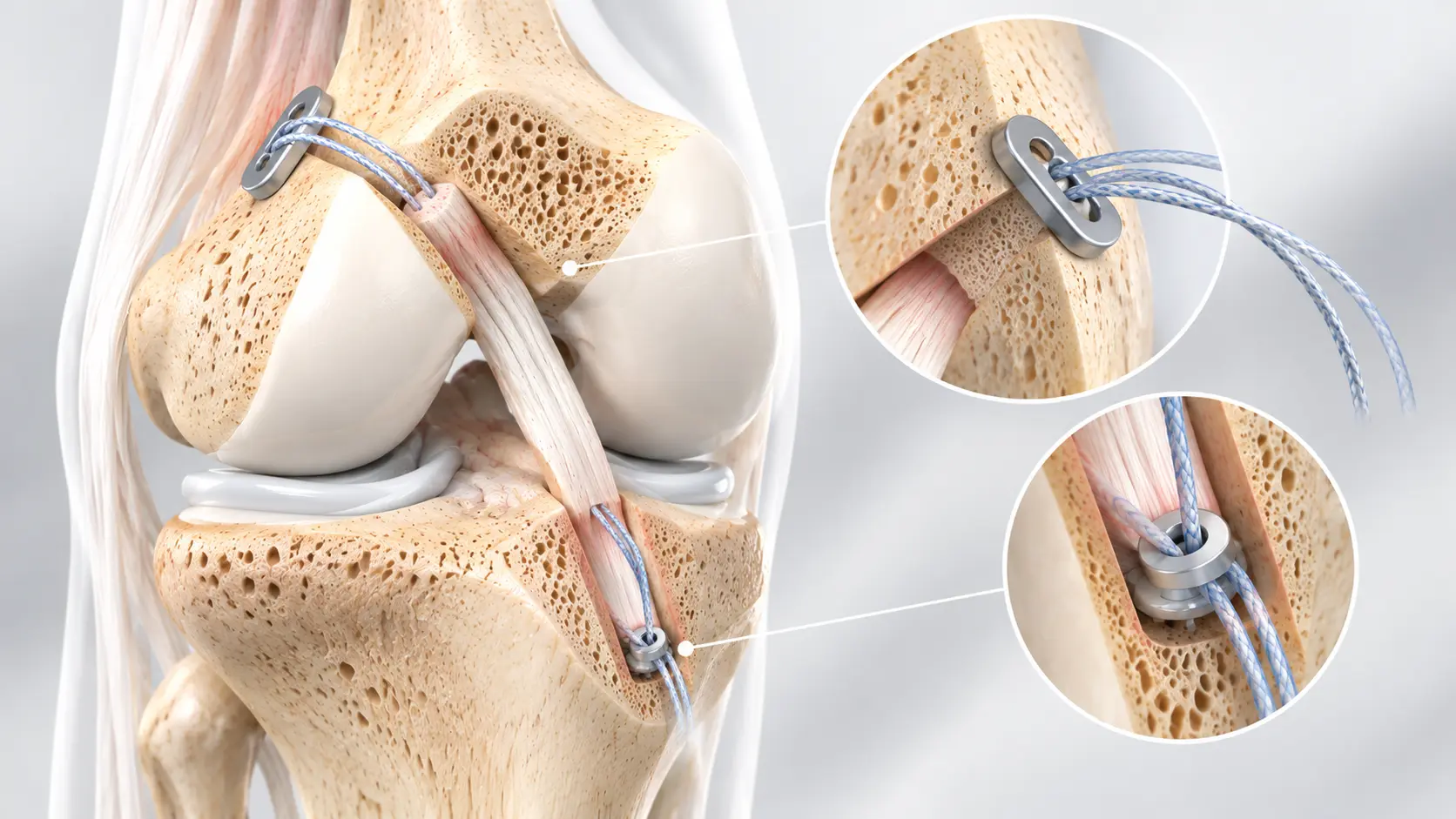

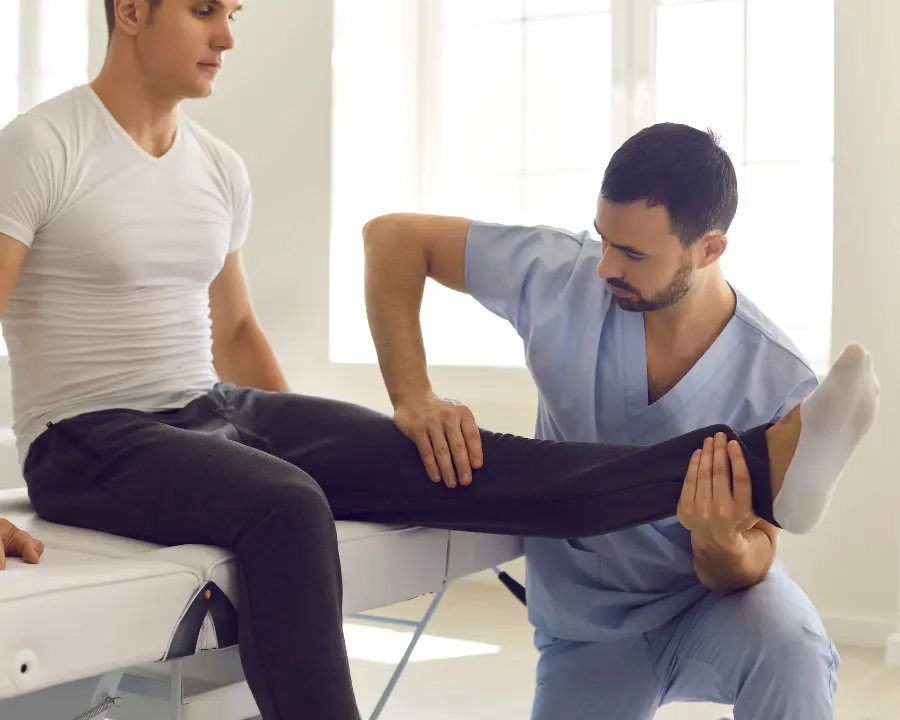

Peroneus Longus Graft
A tendon taken from the outer side of your lower leg instead of from around the knee. It gives a reliably thick graft and leaves both the hamstrings and the front of the knee completely untouched.
Animation or OT footage showing the peroneus longus tendon being harvested and prepared.
What is a peroneus longus graft?
Running down the outer side of your lower leg is a long tendon called the peroneus longus. It helps turn the foot outward and supports the arch. Right beside it sits a second tendon, the peroneus brevis, which does much the same job.
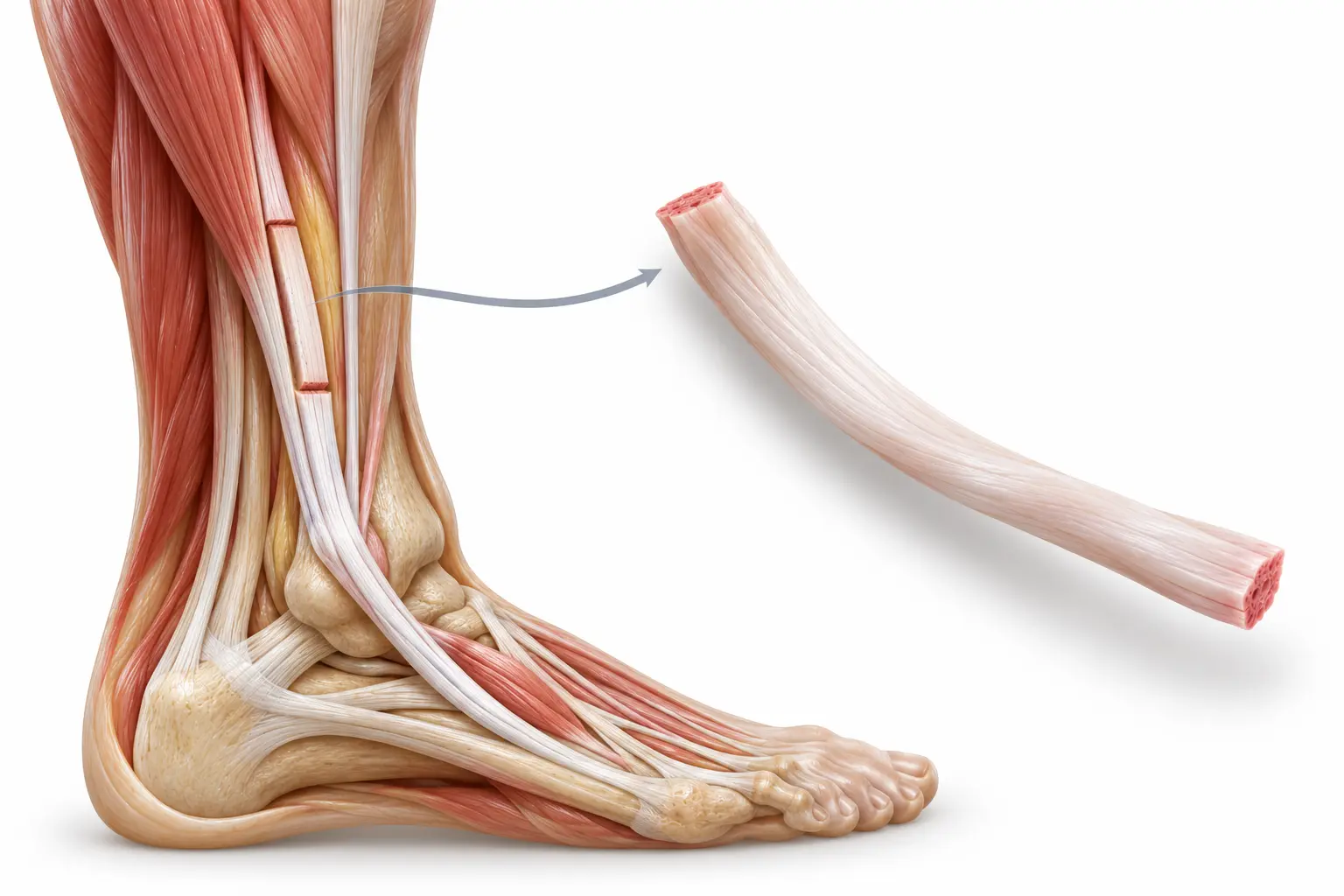
That spare partner is the whole logic of this graft. The surgeon can take a long, thick tendon without weakening the knee at all, and the foot keeps most of its function because the brevis carries on.
It has become a popular choice across India and much of Asia, for two practical reasons. The tendon is long and consistently thick, so a good sized graft is almost always achievable. And because nothing is taken from around the knee, the hamstrings stay strong and the front of the knee stays untouched.
Who this graft suits
Usually a good fit
- Patients whose hamstring tendons are thin or already used
- Athletes who depend on hamstring power, such as sprinters
- People who kneel, squat or sit on the floor regularly
- Revision surgery, where knee side tissue is limited
- Double bundle surgery, which needs more graft length
May not be the first choice
- Existing ankle instability or a history of repeated sprains
- Flat feet or other foot deformity, where arch support matters more
- Sports built on sudden lateral ankle control, such as court sports
- Any skin problem or infection over the outer lower leg
- Patients unwilling to accept a scar away from the knee
How the graft is taken
-
01
A small cut above the outer ankle
A cut of about two to three centimetres is made just above and behind the bony bump on the outer side of the ankle, where the two tendons run together.
-
02
The two tendons are told apart
The peroneus longus and the brevis lie side by side. The surgeon confirms which is which by pulling on each and watching how the foot moves, before anything is cut.
-
03
The stump is tied to its neighbour
Before the tendon is removed, its lower end is stitched onto the brevis. This is the step that preserves outward movement of the foot, and it is done first so nothing is left loose.
-
04
The tendon is stripped free
A tube shaped instrument is passed up along the tendon to release it cleanly from the muscle higher in the leg, through the same small cut.
-
05
Cleaned, folded and measured
Leftover muscle is scraped off and the tendon is folded two, three or four times depending on its length, then passed through sizing rings to confirm the thickness.
-
06
Stitched, loaded and tensioned
The ends are whip stitched, the fixation is attached, and the graft is held under steady tension on the back table until the knee tunnels are ready.
Stitching the cut end onto the neighbouring tendon is not an optional extra. It is what allows the foot to keep turning outward normally, and skipping it is the main reason a patient would notice an ankle difference afterwards.
Thickness and strength
This is the strongest practical argument for the graft. The peroneus longus is long and substantial, so folding it gives a thick bundle in almost every patient, including those whose hamstrings would have fallen short.
Reliable thickness
A graft of eight millimetres or more is achievable in the large majority of patients.
Comparable strength
Laboratory testing places its tensile strength in the same range as a hamstring graft.
Generous length
Long enough for double bundle work or for cases that need extra graft.
Knee results reported in studies using this graft have been broadly similar to hamstring grafts on the usual stability and function scores. The discussion in the literature is therefore less about the knee and more about what happens at the ankle, which the next sections cover honestly.
Compare all graft and implant typesRecovery at a glance
The knee side of recovery follows the usual plan. What is added is the ankle. The harvest site is sore for the first week or two, and single leg balance work is brought into the programme early, because that is what retrains the foot after one of its tendons has been borrowed.
Most patients walk normally within a few weeks and report no everyday difficulty at the foot. Athletes in sports with heavy lateral ankle demand should expect balance and ankle strengthening to stay in the plan for longer.
Open the full recovery roadmapBenefits and trade-offs
Benefits
- The knee is left entirely alone, with no hamstring or kneecap tendon taken
- A thick graft is achievable in almost every patient
- No front of knee pain, so kneeling and squatting stay comfortable
- Plenty of length, useful for double bundle and revision work
- Knee outcome scores reported as similar to hamstring grafts
Trade-offs to know
- The donor site is a different limb area, so there is a second region to heal
- Some studies show reduced outward and inward ankle strength on testing
- Changes in foot pressure distribution have been reported even with normal scores
- Long term evidence is shorter than for hamstring or patellar grafts
- Not advised where the ankle is already unstable or the arch is flat
An honest reading of the research is this. Standard ankle scoring systems usually come back close to normal, and most patients have no complaint at the foot. At the same time, careful testing has picked up reduced ankle torque in some studies, and one author group advised against making it a routine first choice. For a patient with a normal foot and a good reason to protect the knee muscles, it is a sound option. For someone with a weak ankle already, it is not.
Cost of this graft
Your reconstruction cost. The graft is your own tissue, so there is no separate graft charge.
Like the hamstring, this graft comes from your own body, so there is no purchase cost. The bill is driven by the implants and the hospital stay. Most health insurance policies cover ACL surgery after their waiting periods, and our team can help you with the paperwork.
Common questions
Why take a tendon from my ankle for a knee operation?
Because it leaves the knee muscles completely intact. The hamstrings keep their full strength and nothing is taken from the front of the knee, while the ankle has a second tendon that does a similar job and can carry the load.
Will my foot or ankle become weak?
Everyday function is preserved in most patients, because the cut end is stitched onto the neighbouring tendon during surgery. Sensitive testing has shown some reduction in ankle turning strength in certain studies, which is why balance and ankle work are part of your rehabilitation.
Will I be able to run, jump and play normally?
Most patients return to their previous activity without foot complaints. If your sport depends heavily on sudden sideways ankle control, discuss this specifically before choosing the graft.
Does the tendon grow back?
Imaging studies suggest tendon like tissue can reform along the old sheath in many patients. Whether it functions like the original is not yet settled, so the stitching to the neighbouring tendon remains the main safeguard.
Is this graft as good as a hamstring graft for the knee?
On reported knee stability and function scores it performs similarly, with the advantage of a more reliably thick graft. Its long term track record is shorter than that of hamstring and patellar tendon grafts.
Can it be used for revision surgery?
Yes, and this is one of its common uses. It gives a fresh source of long, thick tendon when the hamstrings have already been taken during the first operation.
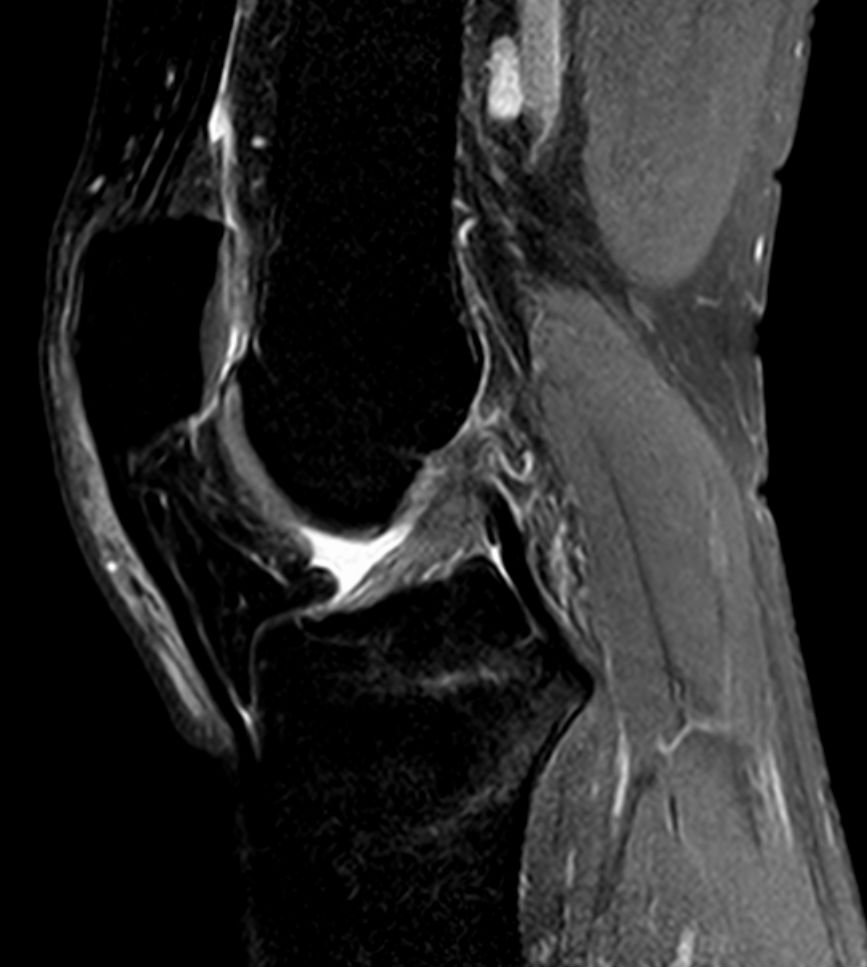
This page explains a graft option in general terms. Which graft suits your knee is decided after an examination and MRI with a leading ACL surgeon in Indore, including a careful foot and ankle assessment.

Dr. Prince Uchadiya

Thank You,
Patient!
Your appointment request has been received.
Our clinic team will call you shortly to confirm your consultation and share further details.
 Confirm on WhatsApp
