

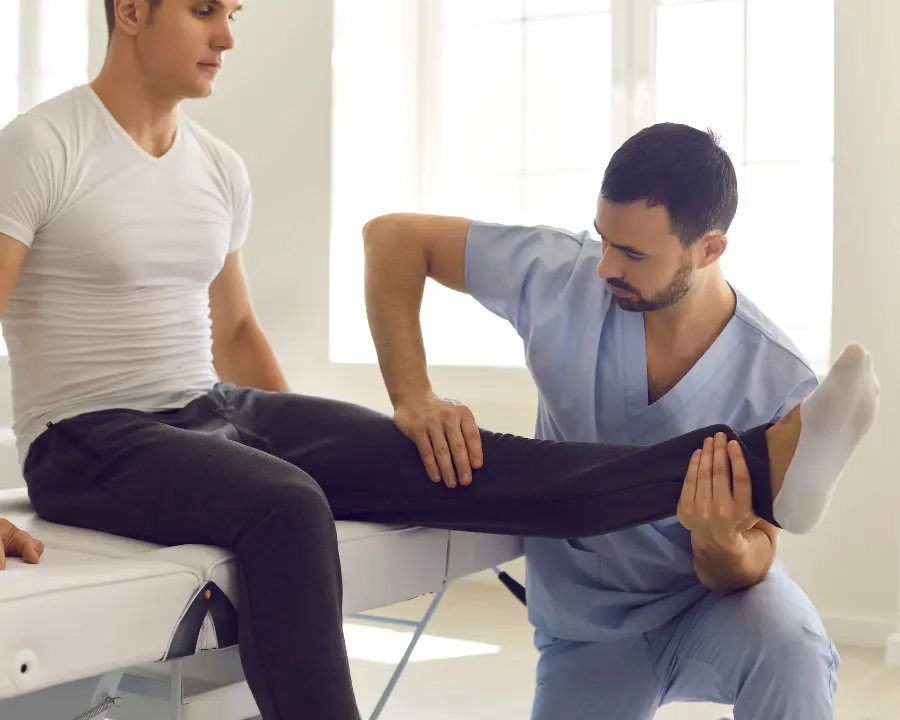

Is ACL surgery always necessary?
No. Four things decide it, and only one of them is the MRI. Here is how surgeons actually weigh the choice, and when the answer stops being a choice at all.


No, ACL surgery is not always necessary. It depends on how unstable the knee actually feels, what you need the knee to do, your age, and whether the meniscus or cartilage is also injured.
In the two largest trials on this question, roughly half the patients who started with serious rehabilitation never ended up needing an operation, and they did about as well two years later as those who had surgery straight away.
But there is a flip side that matters just as much. For some knees, surgery is not really optional, and delaying it costs cartilage that does not grow back. The sections below show which group you are likely in.
What ACL surgery actually fixes
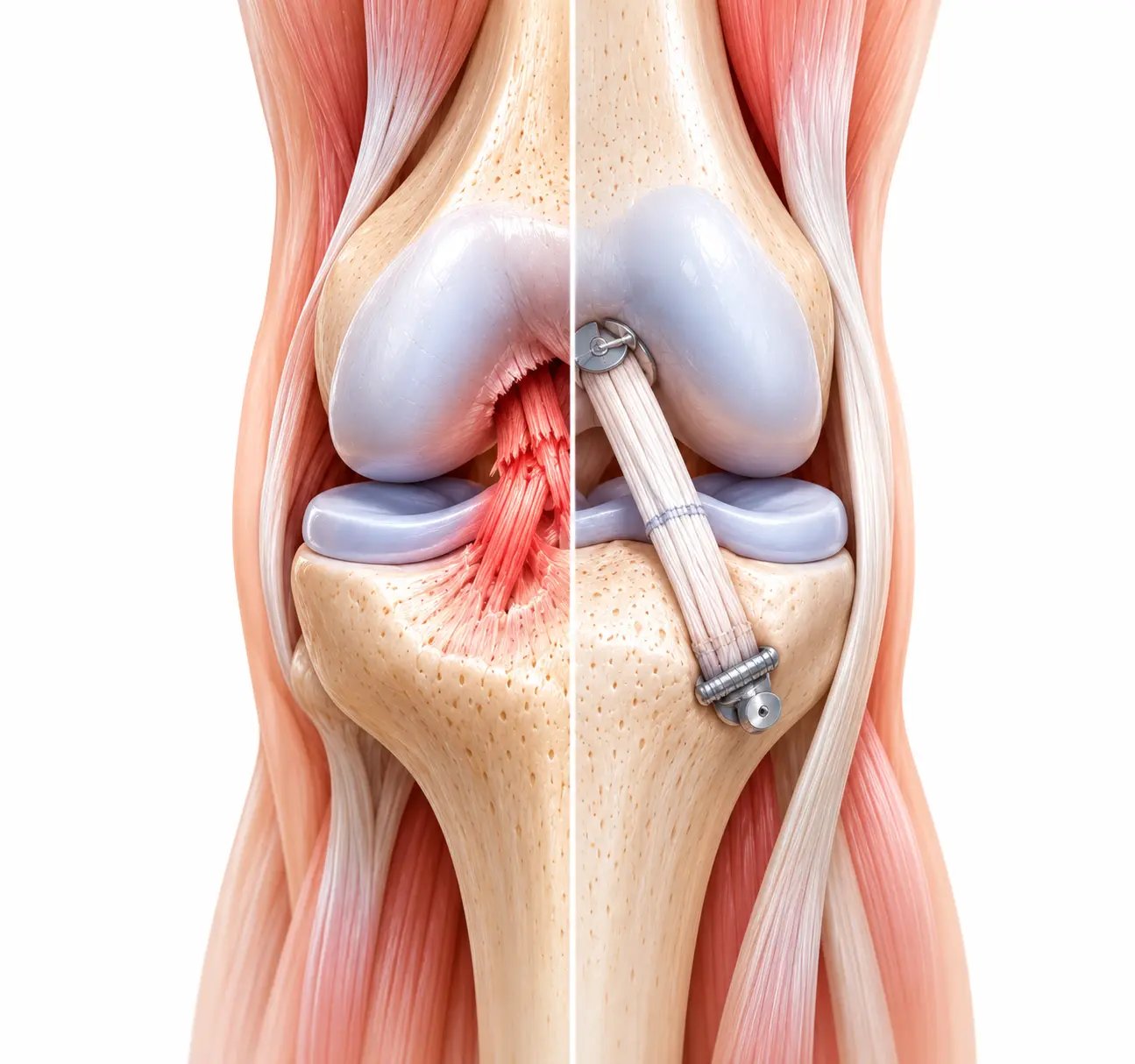
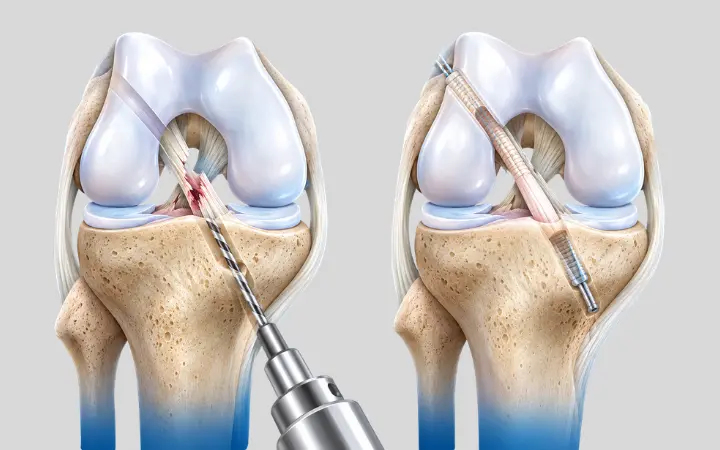
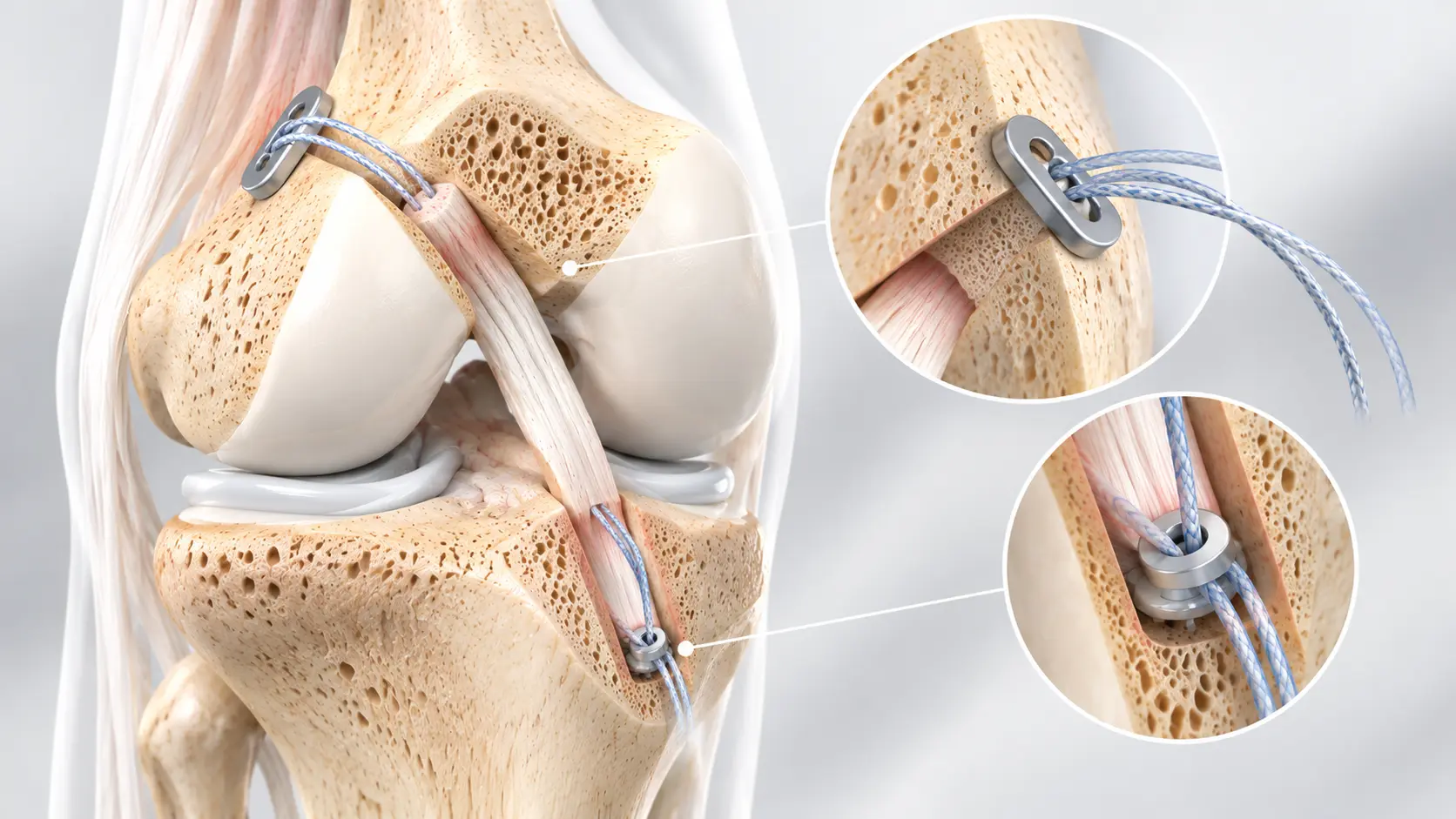
Most of the confusion around this question comes from an unclear idea of what the operation is for. ACL reconstruction does one job well. It restores the restraint that stops the shin bone sliding forward and rotating under the thigh bone.
That is it. Knowing what it does not do is just as useful.
- It is not a pain operation. Most ACL tears stop hurting within a few weeks on their own. If your knee aches but never gives way, the ACL may not be what is causing the ache.
- It does not guarantee you avoid arthritis. This surprises people. Later arthritis is driven mainly by the damage to meniscus and cartilage. Reconstruction has not been shown to prevent it by itself.
- It does not replace rehabilitation. A graft is a passive restraint. The muscle strength and control that keep a knee safe still have to be trained, surgery or no surgery.
Surgery is for a knee that gives way, or is going to. It is not treatment for a line on a scan.
The four things that decide it
When a surgeon says surgery is or is not needed, these are the four inputs behind that sentence. The MRI contributes to one of them.
1. How unstable the knee actually is
This is the biggest factor and it is measured by examination, not imaging. Your surgeon tests how far the shin slides forward under the thigh, and whether the joint shifts and clunks when the knee is rotated under load.
Equally important is what you report. Giving way means the knee buckling or shifting suddenly, usually on a turn. A knee that gives way during ordinary activity is making the argument for surgery by itself. A knee that feels solid on stairs, slopes and straight line jogging is not.
2. What you need the knee to do
A 34 year old who walks, cycles and uses a gym puts almost no rotational load through the ACL. A 22 year old who plays football, kabaddi, basketball or badminton loads it on every change of direction. Same tear, genuinely different advice, and neither patient is being misled.
Pivoting sport is the clearest reason to reconstruct. Straight line activity such as running, cycling, swimming and most gym work is where people manage well without a graft.
3. Your age
Age matters in two directions, which is why it is often misunderstood.
Younger patients have the most to lose from an unstable knee, because they have decades of loading ahead and the highest chance of pivoting during that time. In teenagers and children the plan also has to work around growth plates, which is a specialised decision in itself.
Older and lower demand patients are often served perfectly well by rehabilitation, unless the knee is genuinely unstable in daily life. Age alone never rules surgery out, though. A 55 year old whose knee keeps collapsing on the stairs still needs it fixed.
4. Meniscus and cartilage damage
This is the factor that can override the other three. If there is a meniscus tear that can still be stitched back, the clock is running. Meniscus tissue that is left torn and unstable degenerates, and once it is beyond repair the only option is to trim it away, which raises the long term risk to the joint.
A repairable meniscus tear alongside the ACL tear often converts a patient who could have waited into a patient who should be operated soon. If your report mentions a bucket handle tear, or the knee cannot fully straighten, that is not a wait and watch situation.
What happens when people skip surgery
This has actually been tested properly. Two randomised trials took patients with a fresh ACL tear and assigned them either to early reconstruction or to structured rehabilitation first, with surgery available later if it became necessary.
In the COMPARE trial, 167 patients across six hospitals were followed for two years. Early surgery scored slightly higher on knee function, but the gap was smaller than the difference a patient can actually feel. Around half the rehabilitation group never had an operation. Those who did convert waited around ten months on average and still did well.
The earlier KANON trial found much the same pattern over five years, with no difference in arthritis on X-ray between the groups.
Two honest limits on these findings, because they are often quoted without them. These trials recruited isolated ACL tears in knees that were not locked, so they say nothing about a patient with a bucket handle meniscus tear. And the comparison was never surgery against doing nothing. It was surgery against serious, supervised, months long rehabilitation.
When surgery stops being optional
For some presentations, waiting is not a neutral choice. Book an early consultation if any of these describe your knee.
- The knee locks or will not fully straighten. A displaced meniscus fragment may be caught in the joint, and this needs attention in weeks, not months.
- It gives way during ordinary activity. Flat ground, stairs, turning in the kitchen. Every episode risks the meniscus and cartilage.
- More than one ligament is injured. A multi ligament knee is a different and more urgent problem than an isolated ACL tear.
- There is a repairable meniscus tear. The window to stitch rather than trim is limited.
- You play pivoting sport and intend to return to it. Rehabilitation rarely holds up against planting and turning at speed.
- The knee has already failed a proper rehabilitation block. Eight to twelve weeks of real training and it still shifts under you. That is your answer.
When rehabilitation first is a fair plan
Equally, there is a group for whom starting with rehabilitation is a sound medical decision rather than avoidance.
- The knee is stable on examination and has not given way since the first few days
- There is no meniscus tear needing repair, and the knee moves through its full range
- Your activities are mainly straight line: walking, running, cycling, swimming, gym work
- You can commit to supervised physiotherapy properly, not a few exercises at home
- You are willing to be re-tested after eight to twelve weeks and change plan if the knee says so
There is good evidence that this works better than people expect, and that the first assessment is not the final one. In one well known cohort, just over half of patients passed the stability tests at first screening. After around ten sessions of progressive training, that rose to roughly two thirds, with close to half of those who initially failed converting to passing.
Choosing rehabilitation first is only safe if someone is actually checking. Trial the training, then test again. A plan with no review date is not a plan, it is a delay.
How the decision should be made
A good consultation for this question looks roughly like this, and you are entitled to all of it.
| Step | What it tells you |
|---|---|
| Your history | How the injury happened, whether the knee has given way since, and what you need to get back to. |
| Examination | Lachman and pivot shift testing show how much the knee is actually sliding. This outranks the report wording. |
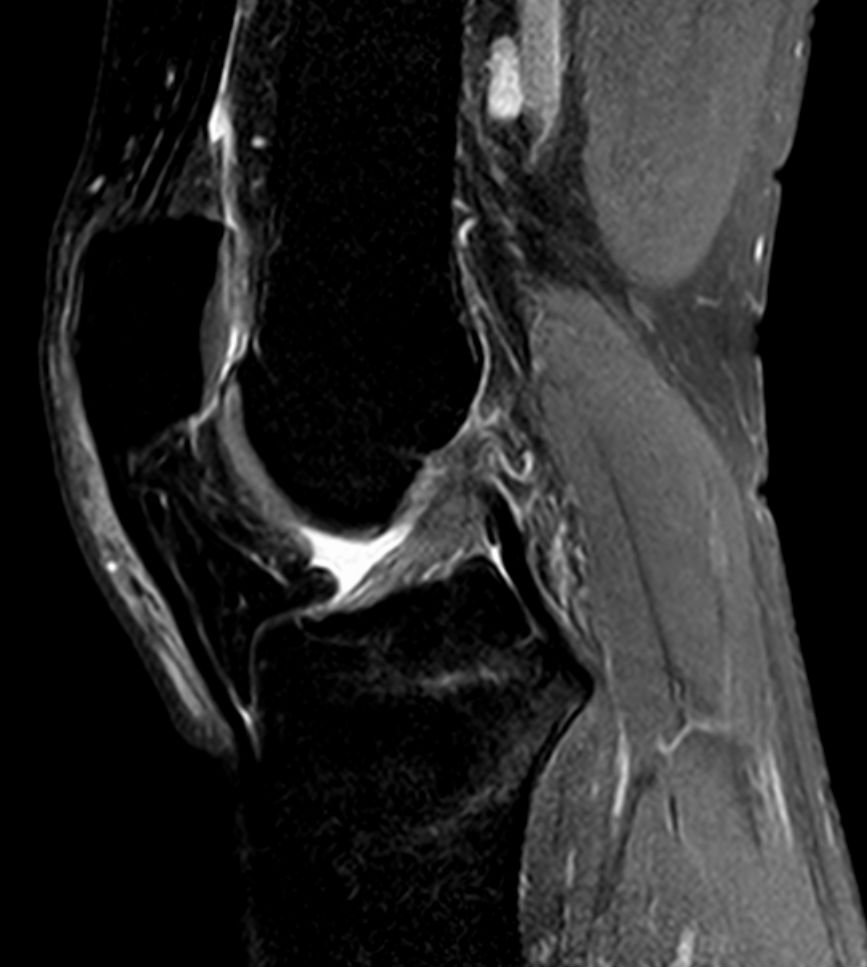
| Reading the MRI properly | Not only the ACL. The meniscus, the cartilage and the bone bruise pattern often change the plan. |
| A trial of rehabilitation | Where it is safe, eight to twelve weeks of real training, with a date to re-test strength, hop symmetry and stability. |
| A decision you make | With the trade-offs of both paths stated plainly, including cost, time off work and the chance of needing surgery later anyway. |
If you want to go deeper into the trade-offs of each path, our guide on comparing surgery and rehabilitation covers the timelines, the costs and what the trials found. If you are still wondering whether the ligament could repair itself, see can a torn ACL heal on its own.
Common questions
My MRI says complete ACL tear. Does that mean I need surgery?
Not by itself. A complete tear on MRI describes the tissue, not what the knee does under load. Plenty of people with a complete tear have a knee that stays steady for daily life and straight line activity. The examination findings and your symptoms decide, and the scan supports that rather than replacing it.
If I wait, will it be too late for surgery later?
For an isolated ACL tear with a knee that moves fully and does not lock, waiting two to three months while doing supervised rehabilitation does not harm your result if you do go on to surgery. What waiting can cost you is the meniscus, if there is a repairable tear or if the knee keeps giving way. That is the real deadline, not the ligament.
Can I play sport again without an ACL?
Straight line sport, often yes. Running, cycling, swimming, gym training and most recreational fitness are realistic with strong muscles and good control. Pivoting sport is where it usually falls apart, because planting and turning asks the ACL to do the exact job muscles cannot take over. Many people return to one and not the other.
I am 45. Am I too old for ACL surgery?
No. Age is not a cut-off. The question is whether the knee is unstable enough to interfere with what you want to do, and what the cartilage looks like. Plenty of patients in their forties and fifties have reconstruction and do well. Many others in the same age group are better served by rehabilitation. It depends on the knee, not the birth year.
What if two doctors give me different advice?
This happens often and it usually does not mean one of them is wrong. One is weighting your sport and instability more heavily, the other is weighting the months of rehabilitation and the chance of avoiding an operation. Both readings are defensible. Ask each of them the same question: what specifically about my examination makes you lean that way?
Does surgery prevent arthritis later?
The evidence does not support that claim, and you should be cautious about anyone who makes it strongly. Later arthritis tracks with meniscus and cartilage damage, both from the original injury and from repeated giving way afterwards. Reconstruction reduces giving way, which protects those structures, but it is not a guarantee against arthritis on its own.
What should I ask at my consultation?
Four questions cover most of it. Is my knee unstable on examination, or only on the report? Is there a meniscus tear that needs attention now? If I train seriously for eight to twelve weeks, what exactly will you re-test to decide? And what about my knee or my activity makes you lean the way you are leaning?
- Reijman M et al. Early surgical reconstruction versus rehabilitation with elective delayed reconstruction for patients with anterior cruciate ligament rupture, COMPARE randomised controlled trial. BMJ, 2021.
- Frobell RB et al. A randomized trial of treatment for acute anterior cruciate ligament tears, and the five year follow up. New England Journal of Medicine and BMJ.
- Grindem H et al. Nonsurgical or surgical treatment of ACL injuries, Delaware-Oslo ACL Cohort Study.
- Hurd WJ, Axe MJ, Snyder-Mackler L. A ten year prospective trial of a patient management algorithm and screening examination for highly active individuals with ACL injury.
Dr. Prince Uchadiya, a leading ACL surgeon in Indore, treats ACL and knee ligament injuries arthroscopically, and regularly sees patients who have been told surgery is unavoidable without ever having had the knee examined properly. He believes the decision belongs to the patient, once the findings have been explained in plain language.
This article is for general information and does not replace an in person examination. Every knee is different, and treatment advice should come from a surgeon who has examined yours and reviewed your scans.